A Natural Solution for California's Herds: African Catfish Peptides

California's cattle producers and agricultural communities are all too familiar with the rising challenge of antibiotic resistance, making common bacterial infections harder to treat in livestock. But imagine a future where we could tackle these infections with a natural, powerful alternative. Our research points to just that: antimicrobial peptides (AMPs) found in African catfish.

We're really excited about these peptides because African catfish thrive in pathogen-rich freshwater, naturally producing these robust immune compounds in their skin mucus as a defense. This natural origin makes them highly appealing alternatives to synthetic drugs.

Predicted Safety and Potent Action

One of the most compelling aspects of these AMPs is their predicted safety for mammals. Our initial computer analyses suggest that various catfish AMPs are generally recognized as safe (GRAS). We predict they'll be absorbed in the human intestine without causing liver, brain, or heart toxicity. Furthermore, lab tests on a promising peptide, NACAP-II, confirmed it was non-hemolytic, meaning it didn't damage rabbit red blood cells—a strong indicator of its potential safety for mammalian cells.

Beyond safety, these peptides demonstrate effectiveness against problematic bacteria. One study revealed NACAP-II's strong activity against Extended-Spectrum Beta-Lactamase (ESBL)-producing Escherichia coli—a critical concern for both animal and human health due to its resistance to many common antibiotics. Another peptide, ACAP-IV, also showed antibacterial activity against E. coli and Staphylococcus aureus. We believe these AMPs work by directly disrupting bacterial cell membranes, a mechanism that makes it harder for bacteria to develop resistance compared to how they resist traditional antibiotics.
Primary Image
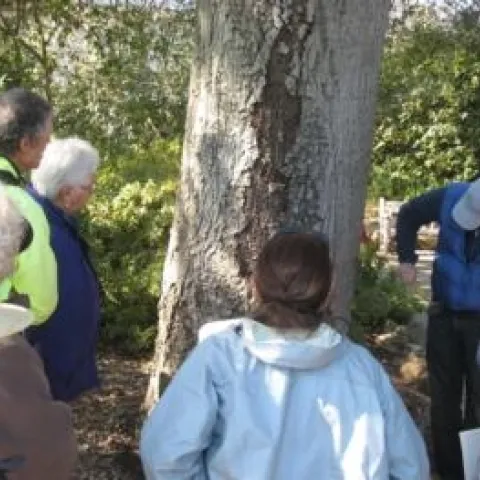
The USDA has trained dogs to detect huanglongbing disease in Florida. (Photo: USDA)
ANR News Blog: Article

Dogs enlisted to sniff out disease in citrus trees

September 18, 2018
By Jeannette Warnert
The Citrus Research Board is arranging to bring specially trained dogs to the UC Lindcove Research and Extension Center to test their ability to sniff out the devastating citrus disease huanglongbing, reported Bob Rodriguez in the Fresno Bee.
View Article
Stanislaus County: Article

Advances in Walnut Production Short Course

September 18, 2018
Good morning The University of California Agriculture and Natural Resources and Cooperative Extension is pleased to announce the upcoming Walnut Production Short Course. Over the course of three days, you will learn the latest in research and information involving walnut culture and production.
View Article
Primary Image
...Problem-solving through engineering projects
News from UC ANR South Coast REC and Beyond: Article

Growing the Learners and Leaders of Tomorrow

September 18, 2018
The 2018-2019 4-H year has officially begun! Orange County 4-H provides local youth with informal educational opportunities in the context of positive youth development, with the goal of growing the learners and leaders of tomorrow. What does 4-H do? 4-Hers are learners.
View Article
Tulare County Cooperative Extension: Article

September 2018

September 18, 2018
SJV Agronomic Crops Field Day Thursday, September 27, 2018 UC West Side Research and Extension Center, Five Points, CA...
View Article
Primary Image
Culex mosquito larvae. (Credit: Jack Kelly Clark)
Pests in the Urban Landscape: Article

Mosquitoes in Garden Centers

September 17, 2018
By Karey Windbiel-Rojas
This article was written for the UC IPM Retail Nursery and Garden Center News, a publication directed at retail nursery store employees.
View Article