A Natural Solution for California's Herds: African Catfish Peptides

California's cattle producers and agricultural communities are all too familiar with the rising challenge of antibiotic resistance, making common bacterial infections harder to treat in livestock. But imagine a future where we could tackle these infections with a natural, powerful alternative. Our research points to just that: antimicrobial peptides (AMPs) found in African catfish.

We're really excited about these peptides because African catfish thrive in pathogen-rich freshwater, naturally producing these robust immune compounds in their skin mucus as a defense. This natural origin makes them highly appealing alternatives to synthetic drugs.

Predicted Safety and Potent Action

One of the most compelling aspects of these AMPs is their predicted safety for mammals. Our initial computer analyses suggest that various catfish AMPs are generally recognized as safe (GRAS). We predict they'll be absorbed in the human intestine without causing liver, brain, or heart toxicity. Furthermore, lab tests on a promising peptide, NACAP-II, confirmed it was non-hemolytic, meaning it didn't damage rabbit red blood cells—a strong indicator of its potential safety for mammalian cells.

Beyond safety, these peptides demonstrate effectiveness against problematic bacteria. One study revealed NACAP-II's strong activity against Extended-Spectrum Beta-Lactamase (ESBL)-producing Escherichia coli—a critical concern for both animal and human health due to its resistance to many common antibiotics. Another peptide, ACAP-IV, also showed antibacterial activity against E. coli and Staphylococcus aureus. We believe these AMPs work by directly disrupting bacterial cell membranes, a mechanism that makes it harder for bacteria to develop resistance compared to how they resist traditional antibiotics.

Primary Image
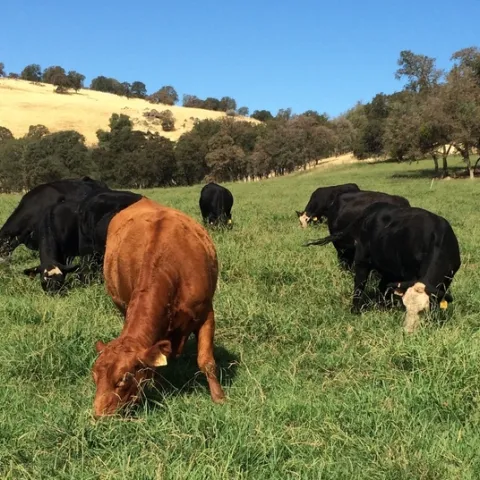
A newly eclosed female Gulf Fritillary (Agraulis vanillae) hanging from her empty chrysalis. (Photo by Kathy Keatley Garvey)

Insect Wedding Photography-- Or How a Tired Ol' Male Proved He Wasn't

September 4, 2018
By Kathy Keatley Garvey
You're heard these idioms: The early bird gets the worm First come, first served. Johnny-on-the-spot. The second mouse gets the cheese. But have you ever seen a Gulf Fritillary (Agraulis vanillae) eclose and then see her...well...engaged? Such was the case on Labor Day, Sept.
View Article
Primary Image
Houndstongue from WRIC pub
UC Weed Science (weed control, management, ecology, and minutia): Article

Houndstongue info and links

September 4, 2018
By Brad Hanson
I was debating about what to post on the weed blog this week and, like manna from heaven, a topic dropped in my lap! Well ok, it was actually the summer newsletter from the Western Society of Weed Science but it had an article about biological control agents on houndstongue (Cynoglossum officiniale)...
View Article
ANR Employee News: Article

ANR websites will be down between 6 p.m. and 10 p.m. on Sept. 13

September 4, 2018
By Pamela S Kan-Rice
IT will be upgrading equipment at the ANR datacenter on Thursday, Sept. 13, 2018, between 6 p.m. and 10 p.m. PDT. During this time, the ANR Portal, all websites and servers in ANR's Second Street building will be offline. If you have any questions, please contact IT at help@ucanr.edu.
View Article
Kings County UC Cooperative Extension: Article

California Dairy Newsletter-August 2018

September 4, 2018
In this Issue Heat Stress Impact on Cows .... 1 Forage Nutrient Yields............. 2 Sorghum Characteristics .......... 3 New Soils Advisor................... 4 Reducing Methane Emissions.. 5 Survey on Antibiotic Use.........
View Article
Primary Image
new employees
ANR Employee News: Article

Learning and development opportunities

September 4, 2018
By Pamela S Kan-Rice
Register for new administrative academic and staff orientation UC ANR employees academics and staff who have not participated in an administrative orientation in the past should register for the UC ANR Administrative Orientation for New Employees. Wednesday, Nov. 14, 2018 10 a.m. to 3 p.m.
View Article
Kern County: Article

Kern UCCE/DWR Weekly Crop Water Use Report 09-03-2018

September 4, 2018
Please see below link to access "How To Use Weekly Crop Water Use (ET) Reports to Assist Farm Water Management" How To Use Weekly Crop Water Use Report Please see below link to access "Weekly ET Report 09-03-18" ET Report 09-03-2018 Please see disclaimer link below: University of California Division...
View Article
Primary Image
UC Cooperative Extension, Tulare County
ANR Employee News: Article

UCCE Tulare County wins Healthy Snack Day contest

September 4, 2018
By Jeannette Warnert
UC Cooperative Extension in Tulare County won first place in the UC ANR Staff Assembly Wellness Committee's contest on Healthy Snack Day, Aug. 29. All UC ANR facilities were invited to hold Healthy Snack Day activities and submit one photo.
View Article