A Natural Solution for California's Herds: African Catfish Peptides

California's cattle producers and agricultural communities are all too familiar with the rising challenge of antibiotic resistance, making common bacterial infections harder to treat in livestock. But imagine a future where we could tackle these infections with a natural, powerful alternative. Our research points to just that: antimicrobial peptides (AMPs) found in African catfish.

We're really excited about these peptides because African catfish thrive in pathogen-rich freshwater, naturally producing these robust immune compounds in their skin mucus as a defense. This natural origin makes them highly appealing alternatives to synthetic drugs.

Predicted Safety and Potent Action

One of the most compelling aspects of these AMPs is their predicted safety for mammals. Our initial computer analyses suggest that various catfish AMPs are generally recognized as safe (GRAS). We predict they'll be absorbed in the human intestine without causing liver, brain, or heart toxicity. Furthermore, lab tests on a promising peptide, NACAP-II, confirmed it was non-hemolytic, meaning it didn't damage rabbit red blood cells—a strong indicator of its potential safety for mammalian cells.

Beyond safety, these peptides demonstrate effectiveness against problematic bacteria. One study revealed NACAP-II's strong activity against Extended-Spectrum Beta-Lactamase (ESBL)-producing Escherichia coli—a critical concern for both animal and human health due to its resistance to many common antibiotics. Another peptide, ACAP-IV, also showed antibacterial activity against E. coli and Staphylococcus aureus. We believe these AMPs work by directly disrupting bacterial cell membranes, a mechanism that makes it harder for bacteria to develop resistance compared to how they resist traditional antibiotics.
Primary Image
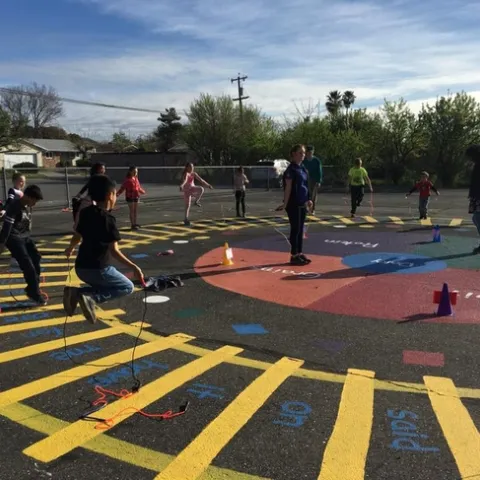
students lined up to start the 3K run
UC CalFresh Tulare / Kings Counties: Article

READY'S Healthiest 5K on the Planet

February 22, 2018
By Denise Cuendett
Hanford Elementary School District READY after school program is gearing up for this year's READY'S Healthiest 5K on the Planet! Roosevelt Elementary and Martin Luther King Elementary Ready programs joined forces to promote physical activity with their 3k Color Run in 2017.
View Article
Primary Image
UC Davis diagnostic parasitologist Lauren Camp wears a papier mache nematode hat, modeled after a hookworm mouth. At left is nematologist Chris Pagan, a graduate student in entomology. (Photo by Kathy Keatley Garvey)
Bug Squad: Article

A Spotlight on Nematodes

February 22, 2018
By Kathy Keatley Garvey
Quick question: What was diagnostic parasitologist Lauren Camp of the UC Davis Veterinary Medical Teaching Hospital wearing on her head as she talked about the nematode collection last Saturday at the seventh annual UC Davis Biodiversity Museum Day?
View Article
Primary Image
branch bark ridge HIRES

Lessons from the Lorax: Tend Your Trees!

February 22, 2018
By Karrie Reid
Tending Your Trees, Part 1 Trees in the urban landscape contribute an enormous number of benefits to the environment and the well-being and even prosperity of the urban inhabitants in the shadow of their canopies1.
View Article
Primary Image
SAPW1
Topics in Subtropics: Article

South American Palm Weevil Conference

February 22, 2018
By Sonia I Rios
The South American palm weevil has successfully invaded and established in San Diego County where it has killed hundreds of Canary Islands date palms. The weevil is spreading quickly and will likely pose a significant threat to date and ornamental palm producers in the Coachella Valley.
View Article
Primary Image
Hardenbergia-photo by Kathleen Gunther
Under the Solano Sun: Article

February Miku

February 22, 2018
Bursts of Blooms Appear Early Signs of Spring Draw Near Drops of Rain Needed...
View Article
Primary Image
Thompson-Rivers-University-shared-via-Flickr-Creative-Commons3-768x466
Blog - Forest Research and Outreach : Article

Mysterious mistletoe

February 22, 2018
By Lenya N Quinn-Davidson
To see dwarf mistletoe seeds is to experience them. These are not typical seeds that gently drop from a mature plant. Rather, they are explosive forcibly ejected from their fruits at high rates of speed.
View Article
Primary Image
citrus dieback 2
Topics in Subtropics: Article

What Damaged the Citrus this Winter? Frost? Herbicide?

February 22, 2018
By Ben A Faber
Something hit the citrus trees of Riverside in late December 2017. Some vandal spraying herbicide? It was too widespread. It was all over town, orchards and backyards. It was on the north and east sides of trees. It didn't happen in Ventura or Santa Barbara.
View Article