A Natural Solution for California's Herds: African Catfish Peptides

California's cattle producers and agricultural communities are all too familiar with the rising challenge of antibiotic resistance, making common bacterial infections harder to treat in livestock. But imagine a future where we could tackle these infections with a natural, powerful alternative. Our research points to just that: antimicrobial peptides (AMPs) found in African catfish.

We're really excited about these peptides because African catfish thrive in pathogen-rich freshwater, naturally producing these robust immune compounds in their skin mucus as a defense. This natural origin makes them highly appealing alternatives to synthetic drugs.

Predicted Safety and Potent Action

One of the most compelling aspects of these AMPs is their predicted safety for mammals. Our initial computer analyses suggest that various catfish AMPs are generally recognized as safe (GRAS). We predict they'll be absorbed in the human intestine without causing liver, brain, or heart toxicity. Furthermore, lab tests on a promising peptide, NACAP-II, confirmed it was non-hemolytic, meaning it didn't damage rabbit red blood cells—a strong indicator of its potential safety for mammalian cells.

Beyond safety, these peptides demonstrate effectiveness against problematic bacteria. One study revealed NACAP-II's strong activity against Extended-Spectrum Beta-Lactamase (ESBL)-producing Escherichia coli—a critical concern for both animal and human health due to its resistance to many common antibiotics. Another peptide, ACAP-IV, also showed antibacterial activity against E. coli and Staphylococcus aureus. We believe these AMPs work by directly disrupting bacterial cell membranes, a mechanism that makes it harder for bacteria to develop resistance compared to how they resist traditional antibiotics.

Primary Image
The Bruce Hammock lab "frontier" is collaborating with Egyptian university, Zagazig, on a three-year $190,000 grant to screen for pesticide contamination in foods in Egypt. Pictured: Bruce Hammock, distinguished professor of entomology, with postdoctoral scientist Natalia Vasylieva, who leads the Hammock lab immunoassay group. (Photo by Kathy Keatley Garvey)
Entomology & Nematology News: Article

Bruce Hammock Lab, Zagazig University Collaborating on Food Quality Grant

January 12, 2018
By Kathy Keatley Garvey
The Bruce Hammock lab, UC Davis Department of Entomology and Nematology, in collaboration with colleagues at the University of Zagazig, Egypt, will receive a three-year $190,000 grant to screen for pesticide contamination in foods in Egypt. Research begins March 1.
View Article
Santa Cruz County: Article

January 12, 2018

January 12, 2018
Hello 4-H Leaders and Volunteers, We are having a adult leader training for the new and returning leader to complete the required adult leader training on Sunday, February 11th 12 pm for New Leaders 1 pm for Returning Leaders 4-H OFFICE IN THE CONFERENCE ROOM, 1430 Freedom Blvd, Watonville Come Join...
View Article
Tehama County: Article

Jan 2018 - Meeting Announcement Vol #1

January 12, 2018
TEHAMA WALNUT DAY February 2, 2018 7:45 am-1 pm Red Bluff Elks Lodge TEHAMA PRUNE DAY February 23, 2018 7:45 am-1 pm Red Bluff Elks Lodge Butte Walnut - Almond Day January 31, 2018 Chico Silver Dollar Fairgrounds...
View Article
Primary Image
photos by Erin Mahaney
Under the Solano Sun: Article

Lisianthus

January 12, 2018
Sometimes a person connects with others in unexpected ways, creating enduring memories or sparking interests that the person will never know about. In my case, a near stranger introduced me to one of my favorite cut flowers.
View Article
Napa Master Gardener Column: Article

One Gardener CAN Make a Difference.

January 12, 2018
By David Layland, U. C. Master Gardener of Napa County Climate change, also called global warming, has been in the news lately because of the devastating wildfires in Northern and Southern California.
View Article
Primary Image
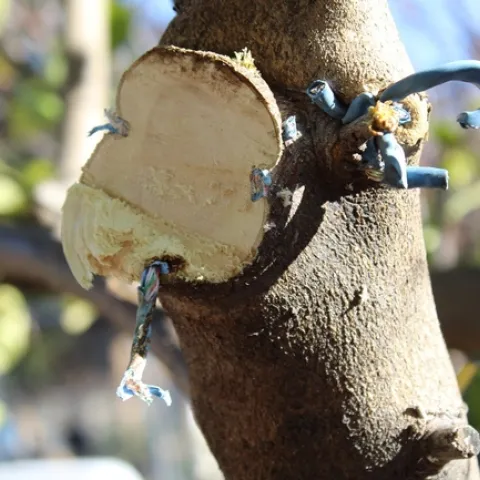
buried tree trunk
Topics in Subtropics: Article

After Flooding, Buried Trunks a Problem

January 12, 2018
By Ben A Faber
A trunk "below grade", that is a buried trunk, is a problem for most trees. Willows and other riparian trees along water ways that are inundated regularly can adapt to a change in soil depth around their trunks.
View Article
Primary Image
Redhumped caterpillars on a Western redbud tree in Vacaville, Calif. (Photo by Kathy Keatley Garvey)

Redhumped Caterpillar: Aptly Named

January 11, 2018
By Kathy Keatley Garvey
How appropriate are many of the common names of insects! Take the immature form (caterpillar) of the moth, Schizura concinna, family Notodontidae. We first spotted this caterpillar on our Western redbud tree (Cercis occidentalis) in September 2010. It has a red hump.
View Article