A Natural Solution for California's Herds: African Catfish Peptides

California's cattle producers and agricultural communities are all too familiar with the rising challenge of antibiotic resistance, making common bacterial infections harder to treat in livestock. But imagine a future where we could tackle these infections with a natural, powerful alternative. Our research points to just that: antimicrobial peptides (AMPs) found in African catfish.

We're really excited about these peptides because African catfish thrive in pathogen-rich freshwater, naturally producing these robust immune compounds in their skin mucus as a defense. This natural origin makes them highly appealing alternatives to synthetic drugs.

Predicted Safety and Potent Action

One of the most compelling aspects of these AMPs is their predicted safety for mammals. Our initial computer analyses suggest that various catfish AMPs are generally recognized as safe (GRAS). We predict they'll be absorbed in the human intestine without causing liver, brain, or heart toxicity. Furthermore, lab tests on a promising peptide, NACAP-II, confirmed it was non-hemolytic, meaning it didn't damage rabbit red blood cells—a strong indicator of its potential safety for mammalian cells.

Beyond safety, these peptides demonstrate effectiveness against problematic bacteria. One study revealed NACAP-II's strong activity against Extended-Spectrum Beta-Lactamase (ESBL)-producing Escherichia coli—a critical concern for both animal and human health due to its resistance to many common antibiotics. Another peptide, ACAP-IV, also showed antibacterial activity against E. coli and Staphylococcus aureus. We believe these AMPs work by directly disrupting bacterial cell membranes, a mechanism that makes it harder for bacteria to develop resistance compared to how they resist traditional antibiotics.
For the Love of Bees

September 5, 2017
By Kathy Keatley Garvey
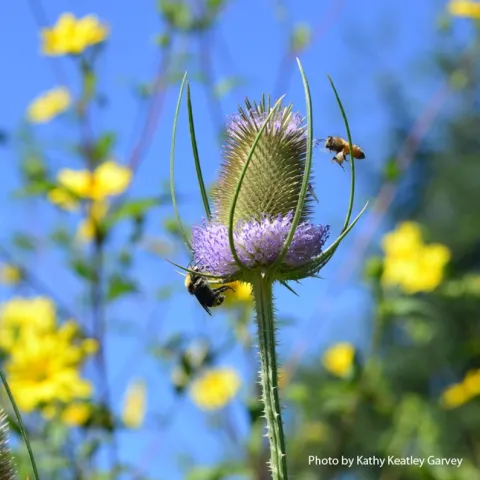
Sarah the Bee Girl stands in front of a cluster of first graders sitting by a six-foot worker bee sculpture in the UC Davis Hagen-Dazs Honey Bee Haven.
View Article
UC Weed Science (weed control, management, ecology, and minutia): Article

Fun weed photos - plants out of place

September 5, 2017
By Brad Hanson
When we talk about weeds, we often use the definition of "a plant out of place". While that's a bit human-centric for some folks, it does provide an introduction for me to share some of my favorite plants-out-of-place photos.
View Article
SJC and Delta Field Crops: Article

Kearney Alfalfa and Forage Field Day

September 5, 2017
By Michelle M Leinfelder-Miles
The annual Alfalfa and Forage Field Day at the UC Kearney Agricultural Research and Extension Center (9240 S. Riverbend Ave., Parlier, CA 93648) will take place on Wednesday, September 20, 2017. Registration begins at 7:30am, and lunch is offered at the end of event.
View Article
Primary Image
tensiometer2
Topics in Subtropics: Article

Soil Moisture Sensor Selection is Confusing

September 5, 2017
By Ben A Faber
So, every few weeks the question comes up of whether to install soil moisture meters which leads to the question of which to buy and install or have installed. And then come the questions of what do the readings mean and why aren't the readings consistent.
View Article

Meet 'Mantis Master Keeper' Andrew Pfeifer

September 1, 2017
By Kathy Keatley Garvey
Who isn't fascinated by a praying mantis, that pre-historic looking predator that lurks on a plant and snags honey bees, butterflies and other insects in lightening-quick lunges? And who isn't fascinated by those who study them, rear them and share their knowledge with others?
View Article
Primary Image
avocado seed husk
Topics in Subtropics: Article

What Value Avocado Seed Husks?

September 1, 2017
By Ben A Faber
WASHINGTON, Aug. 21, 2017 -- The least appreciated part of an avocado could soon undergo a trash-to-treasure transformation.
View Article

Migratory Monarchs Are on Their Way!

August 31, 2017
By Kathy Keatley Garvey
Migratory monarch alert! They're on their way. Camera ready? Check. Notebook ready? Check! Entomologist David James of Washington State University, Pullman, Wash., who studies the migration routes and overwintering sites of the Pacific Northwest monarch population, told us last Friday, Aug.
View Article