A Natural Solution for California's Herds: African Catfish Peptides

California's cattle producers and agricultural communities are all too familiar with the rising challenge of antibiotic resistance, making common bacterial infections harder to treat in livestock. But imagine a future where we could tackle these infections with a natural, powerful alternative. Our research points to just that: antimicrobial peptides (AMPs) found in African catfish.

We're really excited about these peptides because African catfish thrive in pathogen-rich freshwater, naturally producing these robust immune compounds in their skin mucus as a defense. This natural origin makes them highly appealing alternatives to synthetic drugs.

Predicted Safety and Potent Action

One of the most compelling aspects of these AMPs is their predicted safety for mammals. Our initial computer analyses suggest that various catfish AMPs are generally recognized as safe (GRAS). We predict they'll be absorbed in the human intestine without causing liver, brain, or heart toxicity. Furthermore, lab tests on a promising peptide, NACAP-II, confirmed it was non-hemolytic, meaning it didn't damage rabbit red blood cells—a strong indicator of its potential safety for mammalian cells.

Beyond safety, these peptides demonstrate effectiveness against problematic bacteria. One study revealed NACAP-II's strong activity against Extended-Spectrum Beta-Lactamase (ESBL)-producing Escherichia coli—a critical concern for both animal and human health due to its resistance to many common antibiotics. Another peptide, ACAP-IV, also showed antibacterial activity against E. coli and Staphylococcus aureus. We believe these AMPs work by directly disrupting bacterial cell membranes, a mechanism that makes it harder for bacteria to develop resistance compared to how they resist traditional antibiotics.

Primary Image
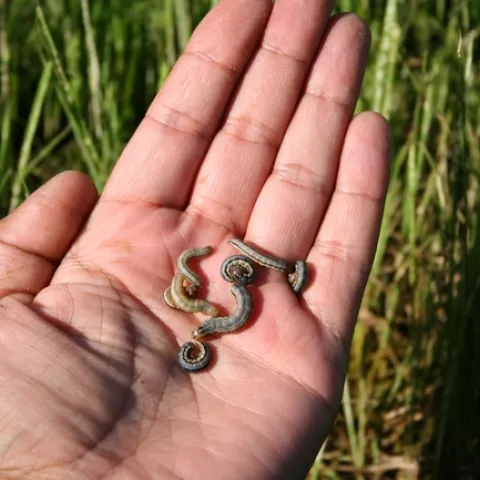
leafminer damage
Topics in Subtropics: Article

The Leafminer are Coming

August 10, 2016
By Ben A Faber
Calls are coming in about leafminer. It's there on the new growth, twisting and distorting it. In fact, it' been there most of the year. It was working new growth all winter long, because it was a warm winter. Right now, though, they are more active and more damage is being seen.
View Article
Primary Image
sam grossberger
Topics in Subtropics: Article

Samuel Grossberger Has Passed - An Important Proponent of the Cherimoya

August 9, 2016
By Ben A Faber
March 9, 1923 - August 4, 2016 Samuel was born in Cochabamba, Bolivia, the eldest of five siblings. He graduated medical school in Cochabamba and married Carmela Morales. They had two children, Lucia and Dario. Samuel moved his family to the United States, settling in California in 1959.
View Article

The Joy of Rearing Monarchs Is Releasing Them

August 8, 2016
By Kathy Keatley Garvey
Oh, the joy of rearing monarchs...from an egg to a caterpillar to a chrysalis to an adult... However, the ultimate joy is not in rearing them, but releasing them--from their confined and well-protected indoor habitat to that Spectacular Spacious World Without Boundaries.
View Article
Primary Image
IMG 2031
Topics in Subtropics: Article

Living with Fire

August 8, 2016
By Ben A Faber
The very fact that avocados can be grown in hard to get to places means that the trees are also in areas that are subject to wildfire damage. Recently several hundred acres of avocado burned in the Fillmore/Santa Paula foothills. The fire was fanned by high winds and low humidity.
View Article
IGIS: Article

Call for Maps: An Open-Source Water Atlas

August 6, 2016
By Andy Lyons
Calling all water resource managers and researchers! Do you have spatial data of water stocks, water infrastructure, or water usage? Do you have a story to go with it? Then you have everything you need to submit a map idea for an exciting open-source atlas project.
View Article

The Flight of the Bumble Bee

August 5, 2016
By Kathy Keatley Garvey
Every time we see a pollen-packing bumble bee take flight, we think of the 300,000-pound Spruce Goose, which was never flight-worthy (well, except for its brief flight on Nov. 2, 1947).
View Article