A Natural Solution for California's Herds: African Catfish Peptides

California's cattle producers and agricultural communities are all too familiar with the rising challenge of antibiotic resistance, making common bacterial infections harder to treat in livestock. But imagine a future where we could tackle these infections with a natural, powerful alternative. Our research points to just that: antimicrobial peptides (AMPs) found in African catfish.

We're really excited about these peptides because African catfish thrive in pathogen-rich freshwater, naturally producing these robust immune compounds in their skin mucus as a defense. This natural origin makes them highly appealing alternatives to synthetic drugs.

Predicted Safety and Potent Action

One of the most compelling aspects of these AMPs is their predicted safety for mammals. Our initial computer analyses suggest that various catfish AMPs are generally recognized as safe (GRAS). We predict they'll be absorbed in the human intestine without causing liver, brain, or heart toxicity. Furthermore, lab tests on a promising peptide, NACAP-II, confirmed it was non-hemolytic, meaning it didn't damage rabbit red blood cells—a strong indicator of its potential safety for mammalian cells.

Beyond safety, these peptides demonstrate effectiveness against problematic bacteria. One study revealed NACAP-II's strong activity against Extended-Spectrum Beta-Lactamase (ESBL)-producing Escherichia coli—a critical concern for both animal and human health due to its resistance to many common antibiotics. Another peptide, ACAP-IV, also showed antibacterial activity against E. coli and Staphylococcus aureus. We believe these AMPs work by directly disrupting bacterial cell membranes, a mechanism that makes it harder for bacteria to develop resistance compared to how they resist traditional antibiotics.
Primary Image
A green lacewing lands on an Iceland poppy. (Photo by Kathy Keatley Garvey)

Lacewings! Lacewings! Lacewings!

March 12, 2015
By Kathy Keatley Garvey
There it was. A beautiful green lacewing, family Chrysopidae, resting on a yellow Iceland poppy in our bee garden. It literally glowed. Nice to have it land there instead of on a green leaf; otherwise, we may never have noticed it. Lacewings are the good guys and girls.
View Article
Primary Image
Johnson preroundup
UC Rice Blog: Article

Water Allocations challenged by another disappointing winter

March 12, 2015
By Luis Espino
By California Rice Commission http://www.calricenews.org/2015/03/11/water-allocations-challenged-by-another-disappointing-winter/ We are in regular contact with the Northern California Water Association and area water managers to assess likely impacts from year four of the drought.
View Article
Primary Image
PSHB damage
Topics in Subtropics: Article

Polyphagous Shothole Borer Distribution Map

March 12, 2015
By Ben A Faber
Polyphagous Shothole Borer which is an ambrosia beetle that normally feeds on dead trees is going after live trees - over 100 species including sycamore, alder and coast live oak. It also goes after avocado.
View Article
Primary Image
A Western tiger swallowtail, Papilio rutulus, visiting a flowering quince in the UC Davis Arboretum. Butterflies are pollinators. (Photo by Kathy Keatley Garvey)

What Bees, Butterflies, Beetles, Birds and Bats Have in Common

March 11, 2015
By Kathy Keatley Garvey
Bees do it. Butterflies do it. Beetles do it. Birds do it. Bats do it. Do what, you ask? They pollinate! The Bohart Museum of Entomology at the University of California, Davis, will greet visitors on Saturday, March 14 at its open house, themed "Pollinator Nation." To be held from 1 to 4 p.m.
View Article
IGIS: Article

ESRI 2015 Developer Summit, Day 2

March 11, 2015
By Robert Johnson
It was another great day at the Dev Summit. The morning started off with a keynote address from John Tomizuka, Co-founder and CTO of Taqtile, a mobile app development company based in Seattle.
View Article
IGIS: Article

print 'Hello World (from FOSS4G NA 2015)'

March 11, 2015
By Maggi Kelly
FOSS4G NA 2015 is going on this week in the Bay Area, and so far, it has been a great conference. Monday had a great line-up of tutorials (including mine on PySAL and Rasterio), and yesterday was full of inspiring talks.
View Article
IGIS: Article

ESRI 2015 Developer Summit

March 10, 2015
By Robert Johnson
ESRI's Developer Summit in Palm Springs is taking place this week. It is a much smaller, more tightly focused event than the User Conference which takes place later in the summer.
View Article
Primary Image
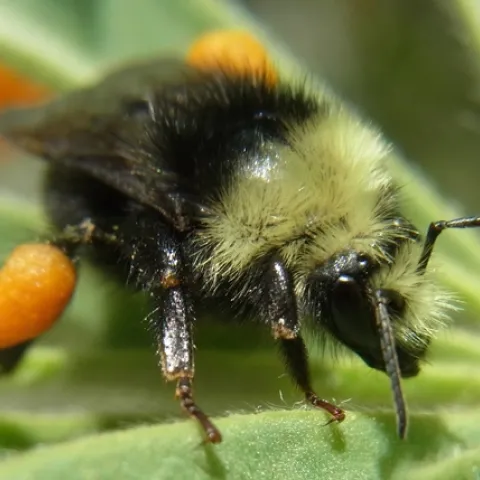
The yellow-faced bumble bee, Bombus vosnesenskii, on rock purslane. (Photo by Kathy Keatley Garvey)

How Many Bumble Bees Have You Seen This Year?

March 10, 2015
By Kathy Keatley Garvey
Quick! How many bumble bees have you seen so far this year? For me, it's zero, zilch, nada. They're out there, though. Talent insect photographer Allan Jones of Davis, shared some of his images that he captured this year.
View Article
Primary Image
ACP adult and nymph
Topics in Subtropics: Article

Central Valley ACP Quarantine Area Expands

March 10, 2015
By Ben A Faber
SACRAMENTO An additional portion of Fresno County along its southern border with Tulare County has been placed under quarantine for the Asian citrus psyllid (ACP) following the detections of ACP in two locations in an unincorporated area of northern Tulare County near the City of Orange Cove.
View Article