A Natural Solution for California's Herds: African Catfish Peptides

California's cattle producers and agricultural communities are all too familiar with the rising challenge of antibiotic resistance, making common bacterial infections harder to treat in livestock. But imagine a future where we could tackle these infections with a natural, powerful alternative. Our research points to just that: antimicrobial peptides (AMPs) found in African catfish.

We're really excited about these peptides because African catfish thrive in pathogen-rich freshwater, naturally producing these robust immune compounds in their skin mucus as a defense. This natural origin makes them highly appealing alternatives to synthetic drugs.

Predicted Safety and Potent Action

One of the most compelling aspects of these AMPs is their predicted safety for mammals. Our initial computer analyses suggest that various catfish AMPs are generally recognized as safe (GRAS). We predict they'll be absorbed in the human intestine without causing liver, brain, or heart toxicity. Furthermore, lab tests on a promising peptide, NACAP-II, confirmed it was non-hemolytic, meaning it didn't damage rabbit red blood cells—a strong indicator of its potential safety for mammalian cells.

Beyond safety, these peptides demonstrate effectiveness against problematic bacteria. One study revealed NACAP-II's strong activity against Extended-Spectrum Beta-Lactamase (ESBL)-producing Escherichia coli—a critical concern for both animal and human health due to its resistance to many common antibiotics. Another peptide, ACAP-IV, also showed antibacterial activity against E. coli and Staphylococcus aureus. We believe these AMPs work by directly disrupting bacterial cell membranes, a mechanism that makes it harder for bacteria to develop resistance compared to how they resist traditional antibiotics.
UC Weed Science (weed control, management, ecology, and minutia): Article

Germinating First: A Summary on Root Growth and Competition

January 6, 2015
By Chris J McDonald
It is weed season! There is a principle in weed management that weeds are often better competitors for resources. Competition begins as soon as seeds break dormancy. The seeds that germinate first are often the ones that obtain the most resources.
View Article
Primary Image
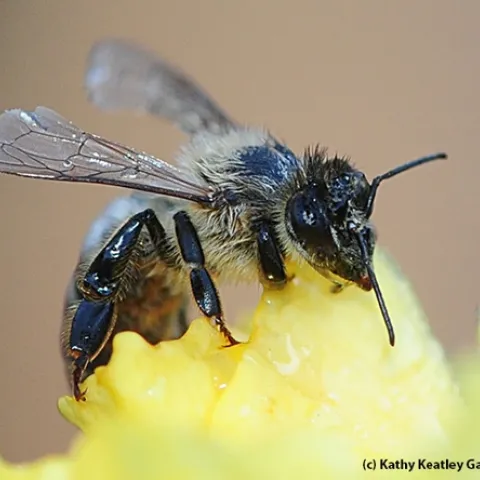
A male Valley carpenter bee (right) peers from a hole. A female (all females are solid black) occupies the hole next to him.
Bug Squad: Article

The 'Gold' That an Apple Tree Yielded

January 5, 2015
By Kathy Keatley Garvey
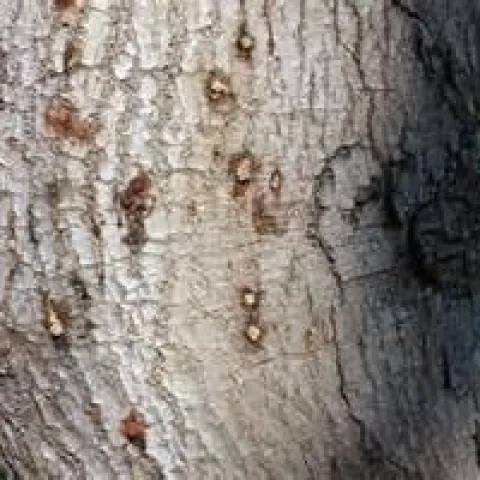
Thar's gold in them thar apple trees. Gold? When a rotten apple tree was cut down last week on private property in Davis, scores of eyes peered from the drilled holes.
View Article
UC Rice Blog: Article

2015 Annual Rice Grower Meetings

January 5, 2015
By Luis Espino
WHERE & WHEN Richvale: Tuesday, Jan. 20, 8:30 am, Evangelical Church, 5219 Church St., Richvale Glenn: Tuesday, Jan. 20, 1:00 pm, Glenn Pheasant Hall, 1522 Highway 45, south of Glenn Colusa: Friday, Jan. 23, 8:30 am, CIP Conference Room, 100 Sunrise Blvd., Colusa Yuba City: Friday, Jan.
View Article
Cooperative Extension Ventura County: Article

January 2015 CloverLines

January 5, 2015
In this issue... TOTSOCE Wrap Up, Food Faire & Fashion Revue, Operation Gratitude, Pillowcase Project, and much, much more.
View Article
Primary Image
Cabbage white butterfly on catmint. (Photo by Kathy Keatley Garvey)
Bug Squad: Article

A Posse for the Pieiris?

January 2, 2015
By Kathy Keatley Garvey
In case you've forgotten amid all the horn-blowing, champagne-sipping and singing of "Auld Lang Syne," the search is still on to collect the first cabbage white butterfly (Pieris rapae) of 2015 in the three county-area of Yolo, Sacramento and Solano.
View Article
Primary Image
This photo of a black soldier fly, by Jena Johnson, is "Mr. October" in the ESA calendar. (Photo by Jena Johnson, used with permission)
Bug Squad: Article

A Buggy New Year!

January 1, 2015
By Kathy Keatley Garvey
It's a buggy new year! One of the fascinating things about beginning the new year is the Entomological Society of America's "World of Insects" calendar. Amazing images of insects (and one spider!) jump out at you.
View Article
Primary Image
Monarchs roosting on the leaves of a Eucalyptus tree. (Photo by Kathy Keatley Garvey)
Bug Squad: Article

Dead Leaves Hanging from a Tree? No, Monarchs

December 30, 2014
By Kathy Keatley Garvey
At first glance, they looked like dead leaves hanging on an Eucalyptus tree in the Natural Bridges State Park, Santa Cruz. From 75 to 80 feet below, they bore no resemblance to monarch butterflies (Danaus plexippus), the most familiar butterfly in all of North America.
View Article