A Natural Solution for California's Herds: African Catfish Peptides

California's cattle producers and agricultural communities are all too familiar with the rising challenge of antibiotic resistance, making common bacterial infections harder to treat in livestock. But imagine a future where we could tackle these infections with a natural, powerful alternative. Our research points to just that: antimicrobial peptides (AMPs) found in African catfish.

We're really excited about these peptides because African catfish thrive in pathogen-rich freshwater, naturally producing these robust immune compounds in their skin mucus as a defense. This natural origin makes them highly appealing alternatives to synthetic drugs.

Predicted Safety and Potent Action

One of the most compelling aspects of these AMPs is their predicted safety for mammals. Our initial computer analyses suggest that various catfish AMPs are generally recognized as safe (GRAS). We predict they'll be absorbed in the human intestine without causing liver, brain, or heart toxicity. Furthermore, lab tests on a promising peptide, NACAP-II, confirmed it was non-hemolytic, meaning it didn't damage rabbit red blood cells—a strong indicator of its potential safety for mammalian cells.

Beyond safety, these peptides demonstrate effectiveness against problematic bacteria. One study revealed NACAP-II's strong activity against Extended-Spectrum Beta-Lactamase (ESBL)-producing Escherichia coli—a critical concern for both animal and human health due to its resistance to many common antibiotics. Another peptide, ACAP-IV, also showed antibacterial activity against E. coli and Staphylococcus aureus. We believe these AMPs work by directly disrupting bacterial cell membranes, a mechanism that makes it harder for bacteria to develop resistance compared to how they resist traditional antibiotics.
Colusa County: Article

Tomato Meeting Announcement

December 22, 2014
South Sacramento Valley Processing Tomato Production Meeting Thursday, January 8, 2015 8am-noon Woodland Community Center...
View Article
Colusa County: Article

January 2015 Newsletter

December 22, 2014
In This Issue: Home Ec Committee Meeting Club Treasurer Training Chico State Swine Day Chico State Sheep & Goat Day Livestock Loans Theme for our County Fair 4H Night at the Sacramento Kings and so much more.....
View Article
Primary Image
PSHB damage
Topics in Subtropics: Article

New Tools for Managing Polyphagous Shot Hole Borer

December 22, 2014
By Ben A Faber
As discussed in previous issues of this newsletter, polyphagous shot hole borer (PSHB; Euwallacea sp.) is a new pest/fungal complex attacking a wide variety of host trees in Southern California, from avocado to common residential and street trees and native oaks and riparian species.
View Article
IGIS: Article

The mapping process: musings at the end of 2014

December 20, 2014
By Maggi Kelly
Here are some evocative words about mapping from an unlikely source: in her astounding and engrossing book Wolf Hall, Hilary Mantel has Thomas Cromwell say: But the trouble is, maps are always last year's.
View Article
Primary Image
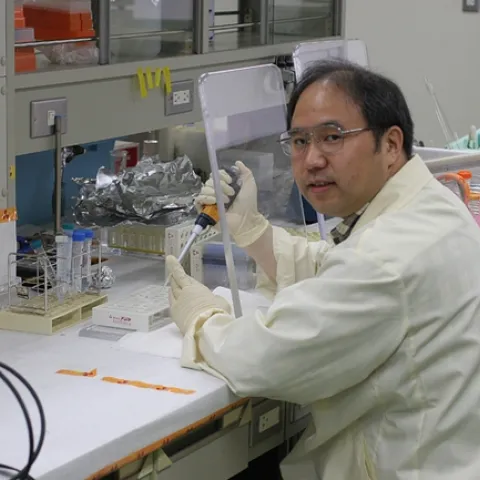
Bruce Hammock is a new fellow of the National Academy of Inventors. (Photo by Kathy Keatley Garvey)

Bruce Hammock: Scientist Extraordinaire

December 19, 2014
By Kathy Keatley Garvey
It's obvious that Bruce Hammock doesn't spend much time in a hammock. Research lab, yes. With colleagues, postdoctoral researchers, graduate students and undergraduate students, yes.
View Article
Primary Image
Overwintering lady beetles, aka ladybugs, in Colusa County. (Photo by Greg Kareofelas)
Bug Squad: Article

Don't Miss Bohart Museum Open House Dec. 20: Insects and Art

December 18, 2014
By Kathy Keatley Garvey
When you use the words "insects," "art" and the "Bohart Museum of Entomology" in the same sentence, you immediately think of the artistic/scientific team of Fran Keller and Greg Kareofelas. And you'll meet them and see their amazing work at the Bohart Museum of Entomology's open house from 1 to 4 p.
View Article
Primary Image
The UC Davis team included (from left) Margaret “Rei” Scampavia, Ralph Washington Jr., Jenny Carlson, captain Mohammad-Amir Aghaee and Danny Klittich. At far right is ESA president Frank Zalom of UC Davis who presented the team with its award. (Photo by Trav Williams of Broken Banjo Photography
Bug Squad: Article

Great ESA Student Debate Topic: Neonics

December 17, 2014
By Kathy Keatley Garvey
It was great to see the Entomological Society of America (ESA) select "neonicotinoids" as a student debate topic for its recent meeting in Portland, Ore. Bee health is a challenge, and this hot topic tied in with ESA President Frank Zalom's theme "Grand Challenges Beyond the Horizons.
View Article
Primary Image
photo
UC Rice Blog: Article

2015 Annual Rice Growers Meetings

December 17, 2014
By Luis Espino
Save the date! Richvale: Tuesday, Jan 20, 8:30 to 12:00. Evangelical Church, 5219 Church St., Richvale Glenn: Tuesday, Jan 20, 1:00 to 4:30. Glenn Pheasant Hall, 1522 Highway 45, south of Glenn Colusa: Friday, Jan 23, 8:30 to 12:00. CIP Conference Room, 100 Sunrise Blvd.
View Article