A Natural Solution for California's Herds: African Catfish Peptides

California's cattle producers and agricultural communities are all too familiar with the rising challenge of antibiotic resistance, making common bacterial infections harder to treat in livestock. But imagine a future where we could tackle these infections with a natural, powerful alternative. Our research points to just that: antimicrobial peptides (AMPs) found in African catfish.

We're really excited about these peptides because African catfish thrive in pathogen-rich freshwater, naturally producing these robust immune compounds in their skin mucus as a defense. This natural origin makes them highly appealing alternatives to synthetic drugs.

Predicted Safety and Potent Action

One of the most compelling aspects of these AMPs is their predicted safety for mammals. Our initial computer analyses suggest that various catfish AMPs are generally recognized as safe (GRAS). We predict they'll be absorbed in the human intestine without causing liver, brain, or heart toxicity. Furthermore, lab tests on a promising peptide, NACAP-II, confirmed it was non-hemolytic, meaning it didn't damage rabbit red blood cells—a strong indicator of its potential safety for mammalian cells.

Beyond safety, these peptides demonstrate effectiveness against problematic bacteria. One study revealed NACAP-II's strong activity against Extended-Spectrum Beta-Lactamase (ESBL)-producing Escherichia coli—a critical concern for both animal and human health due to its resistance to many common antibiotics. Another peptide, ACAP-IV, also showed antibacterial activity against E. coli and Staphylococcus aureus. We believe these AMPs work by directly disrupting bacterial cell membranes, a mechanism that makes it harder for bacteria to develop resistance compared to how they resist traditional antibiotics.
Event Primary Image
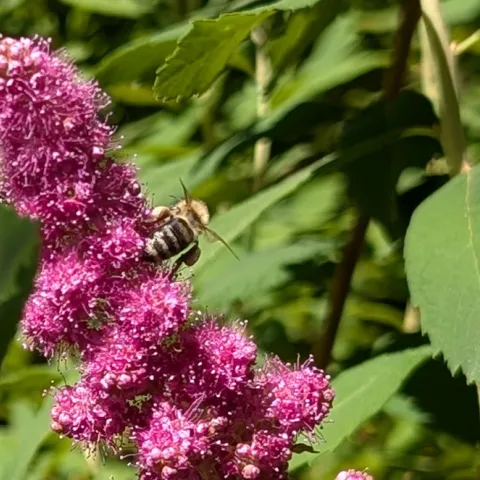
Garden Allies Talk
UC Master Gardener Program of Sonoma County: Event

Garden Allies

Event Date
Aug 16, 2025

 Join author Frédérique Lavoipierre for an enlightening presentation on “Garden Allies: The Insects, Birds, and Other Animals That Keep Your Garden Beautiful and Thriving” based on her highly acclaimed and beautifully illustrated book of the same title. Lavoipierre will delve into the intricate web…
UC Master Gardener Program of Sonoma County
View Event
FlySpotter©: Article

Download FlySpotter©

July 21, 2025
By Stephen Dampier
This License governs the use of the accompanying Software, and your use of the Software constitutes acceptance of this License.The Licensee acknowledges that this is a limited nonexclusive license. Licensor is and remains the owner of all right, title and interest in the Software.The Licensee may use this…
View Article
FlySpotter©: Article

Software

July 21, 2025
By Stephen Dampier
The FlySpotter© software was developed to provide a house fly monitoring system that is simple, efficient, and reliable over time.  Since the 1970’s, “Spot cards” or 4 x 6 inch blank white index cards have been used by researchers to monitor house fly activity at animal facilities.  Spot cards …
View Article
The Stanislaus Sprout: Article

Fall is a Great Time for Veggies! 

July 21, 2025
By Anne E Schellman
 Summer in the Central Valley is hot, hot, hot. As I try to stay cool during the relentless heat, my thoughts turn to fall, one of my favorite times of year. Fall brings with it the welcome cooler weather, the beauty of the turning leaves and thoughts of pumpkins, spiced cider, and cuddling up in my…
View Article
The Stanislaus Sprout: Article

The Dogface Butterfly – California’s Golden Butterfly 

July 21, 2025
By Anne E Schellman
 California is often called the “Golden State” because of its Gold Rush history, the golden California poppy (our state flower) which can cover the foothills and valleys in the spring months, and the golden-brown colors the state’s wild grasses become during the summer months. Many people are not aware…
View Article
Primary Image
Peat bogs
UC Marin Master Gardeners: Article

Which soil amendments are healthy for the garden and the planet?

July 21, 2025
By Bonnie A Nielsen
Seems like every time I go to the nursery, there are new things to buy – and I’m not talking about the plants. This is especially true when it comes to soil amendments. Some of these packaged materials are helpful. Worm castings are packed with millions of beneficial microbes. Leaf mold boosts nutrients…
View Article
Primary Image
Tomato blossoms
HOrT COCO-UC Master Gardener Program of Contra Costa: Article

Tomatoes Not Producing

July 21, 2025
By Help Desk Team
Note: This article was previously published in 2018. We are rerunning it because we are noticing this happening in many gardens right now.Client's Request: Why no tomatoes? Starting to get lots of flowers but almost NO tomatoes? Plants look very healthy. I live in central Contra Costa County.MGCC Help Desk…
View Article
Inyo and Mono Counties: Page

4-H Projects

 Project work is at the heart of 4‑H learning. Through hands‑on, project‑based activities, 4‑H members develop practical skills, explore their interests, and gain confidence by doing. Whether raising animals, learning about science and technology, practicing creative arts, or developing leadership…
View Page
Primary Image
Rules, rules, rules
Inyo and Mono Counties: Article

Reserving Rooms and Facilities

July 21, 2025
By Dustin W Blakey
A Quick Guide for Local 4-H Leaders in Inyo and Mono CountiesAs a 4-H leader you probably will need a place to meet. Local 4-H staff can help with this process! We recommend you start here. Read on.4-H has access to meeting rooms and locations throughout Inyo and Mono counties. Some of these rooms are…
View Article