A Natural Solution for California's Herds: African Catfish Peptides

California's cattle producers and agricultural communities are all too familiar with the rising challenge of antibiotic resistance, making common bacterial infections harder to treat in livestock. But imagine a future where we could tackle these infections with a natural, powerful alternative. Our research points to just that: antimicrobial peptides (AMPs) found in African catfish.

We're really excited about these peptides because African catfish thrive in pathogen-rich freshwater, naturally producing these robust immune compounds in their skin mucus as a defense. This natural origin makes them highly appealing alternatives to synthetic drugs.

Predicted Safety and Potent Action

One of the most compelling aspects of these AMPs is their predicted safety for mammals. Our initial computer analyses suggest that various catfish AMPs are generally recognized as safe (GRAS). We predict they'll be absorbed in the human intestine without causing liver, brain, or heart toxicity. Furthermore, lab tests on a promising peptide, NACAP-II, confirmed it was non-hemolytic, meaning it didn't damage rabbit red blood cells—a strong indicator of its potential safety for mammalian cells.

Beyond safety, these peptides demonstrate effectiveness against problematic bacteria. One study revealed NACAP-II's strong activity against Extended-Spectrum Beta-Lactamase (ESBL)-producing Escherichia coli—a critical concern for both animal and human health due to its resistance to many common antibiotics. Another peptide, ACAP-IV, also showed antibacterial activity against E. coli and Staphylococcus aureus. We believe these AMPs work by directly disrupting bacterial cell membranes, a mechanism that makes it harder for bacteria to develop resistance compared to how they resist traditional antibiotics.
Primary Image
image 24033
IGIS: Article

Google Geo for Higher Education Summit 2014

August 14, 2014
By Maggi Kelly
Just got back from an amazing workshop with the Google Earth Outreach Geo Team and 50+ geospatial educators, researchers, and lab managers! In between stealing off on the colorful google bikes and spending time wandering the amazing Google campus, we engaged each other in discussions of integrating...
View Article
Primary Image
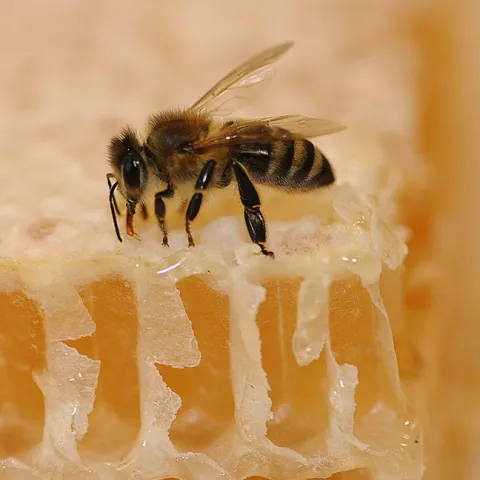
Jar of lavender honey rests next to the UC Davis Honey and Pollination Center's Honey Flavor Wheel. (Photo by Kathy Keatley Garvey)

A Taste of Honey

August 14, 2014
By Kathy Keatley Garvey
Honey connoisseur Amina Harris, director of the UC Davis Honey and Pollination Center, opens the jar of lavender honey from France and sniffs the aroma. She breathes in deeply. The "miel de lavande" produced by "apiculteur Marc Agnel" is creamed, as most lavender honeys are, she says.
View Article
Primary Image
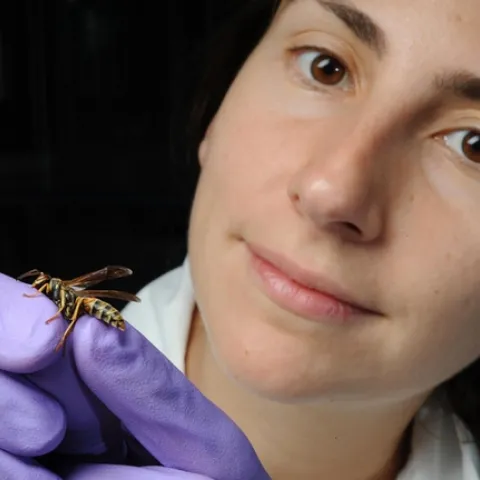
European paper wasp targets a crippled Gulf Fritillary. (Photo by Kathy Keatley Garvey)

Wasp Attack

August 13, 2014
By Kathy Keatley Garvey
When you're trying to rear Gulf Fritillary butterflies (Agraulis vanillae), expect the expected: predators. It doesn't take long for European paper wasps (Polistes dominula) to find the butterfly's host plant, the passionflower vine (Passsiflora) and prey.
View Article
Primary Image
mulch
Topics in Subtropics: Article

Mulch, Avocados and the Home Garden

August 13, 2014
By Ben A Faber
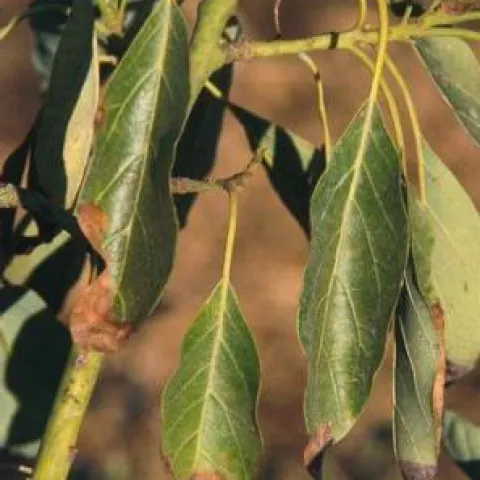
I just raked up all the leaves under the avocado and it looks so nice. PUT THEM RIGHT BACK. The avocado is shallow-rooted and really depends on the natural leaf mulch to protect its roots. In fact the roots will actually colonize the rotted leaves as if it were soil.
View Article
Primary Image
Red-shouldered stink bugs mating. (Photo by Kathy Keatley Garvey)

Stink Bugs Do It, Too!

August 12, 2014
By Kathy Keatley Garvey
"Birds do it," sang Ella Fitzgerald. "Bees do it..." "Even educated" (insert "stink bugs") "do it." But she didn't sing that; that wasn't part of Cole Porter's lyrics. But it's true. Stink bugs do it. Unfortunately. We'd rather they NOT.
View Article
Primary Image
A syrphid fly, aka flower fly or hover fly, nectaring on a tower of jewels. (Photo by Kathy Keatley Garvey)

The Good Guys--and Girls!

August 11, 2014
By Kathy Keatley Garvey
Think of them as "the good guys" and "the good girls." Insects such as lacewings, lady beetles and flower flies. We're delighted to see that the Xerces Society for Invertebrate Conservation has just published a 250-page book on "Farming with Native Beneficial Insects.
View Article
IGIS: Article

More from the 2014 ESRI User Conference

August 8, 2014
By Robert Johnson
The ESRI User Conference is always an exciting and educational experience, and this year was no different. In addition to the new offerings discussed in the previous post, there were a few very interesting new developments in the web mapping arena.
View Article
Primary Image
Damselfly with water mites (see egglike mass). The insect next to it is probably thrips, according to Lynn Kimsey, director of the Bohart Museum of Entomology, UC Davis. (Photo by Kathy Keatley Garvey)

Delightful Damselflies

August 8, 2014
By Kathy Keatley Garvey
When an egret swooped down and ate all the goldfish in our fish pond--quite a smorgasbord of goldies--we left the pond bare for a couple of months. The result was a good one: more damselflies.
View Article