A Natural Solution for California's Herds: African Catfish Peptides

California's cattle producers and agricultural communities are all too familiar with the rising challenge of antibiotic resistance, making common bacterial infections harder to treat in livestock. But imagine a future where we could tackle these infections with a natural, powerful alternative. Our research points to just that: antimicrobial peptides (AMPs) found in African catfish.

We're really excited about these peptides because African catfish thrive in pathogen-rich freshwater, naturally producing these robust immune compounds in their skin mucus as a defense. This natural origin makes them highly appealing alternatives to synthetic drugs.

Predicted Safety and Potent Action

One of the most compelling aspects of these AMPs is their predicted safety for mammals. Our initial computer analyses suggest that various catfish AMPs are generally recognized as safe (GRAS). We predict they'll be absorbed in the human intestine without causing liver, brain, or heart toxicity. Furthermore, lab tests on a promising peptide, NACAP-II, confirmed it was non-hemolytic, meaning it didn't damage rabbit red blood cells—a strong indicator of its potential safety for mammalian cells.

Beyond safety, these peptides demonstrate effectiveness against problematic bacteria. One study revealed NACAP-II's strong activity against Extended-Spectrum Beta-Lactamase (ESBL)-producing Escherichia coli—a critical concern for both animal and human health due to its resistance to many common antibiotics. Another peptide, ACAP-IV, also showed antibacterial activity against E. coli and Staphylococcus aureus. We believe these AMPs work by directly disrupting bacterial cell membranes, a mechanism that makes it harder for bacteria to develop resistance compared to how they resist traditional antibiotics.
Primary Image
IMG 0074
UC Rice Blog: Article

2013 Annual Rice Grower Meetings

January 4, 2013
By Luis Espino
Four Locations: Richvale: Monday, Jan. 28, 8:30 am, Evangelical Church, 5219 Church St., Richvale Yuba City: Monday, Jan. 28, 1:00 pm, Veterans Hall, 1425 Veterans Memorial Circle, Yuba City Colusa: Tuesday, Feb. 5, 8:30 am, CIP Conference Room, 100 Sunrise Blvd., Colusa Glenn: Tuesday, Feb.
View Article
Primary Image
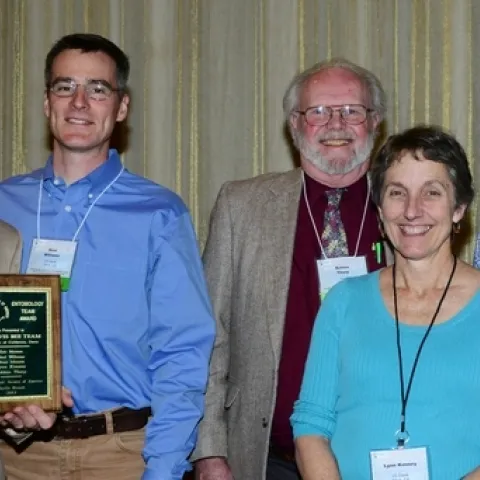
Pollination ecologist Neal Williams of UC Davis with native bees. (Photo by Kathy Keatley Garvey)
Bug Squad: Article

The Importance of Pollinators

January 3, 2013
By Kathy Keatley Garvey
It's a brief appearance but the message is important. Pollination ecologist Neal Williams, assistant professor of entomology at UC Davis, appears briefly in a segment on native pollinators produced by America's Heartland. The show is now airing throughout the country.
View Article
UC Weed Science (weed control, management, ecology, and minutia): Article

An introduction to Palmer amaranth

January 3, 2013
Despite the fact that I am currently working in orchards and vineyards, I receive lots of requests to discuss Palmer amaranth (Amaranthus palmeri S. Wats.), a weed that I spent almost six years studying.
View Article
Primary Image
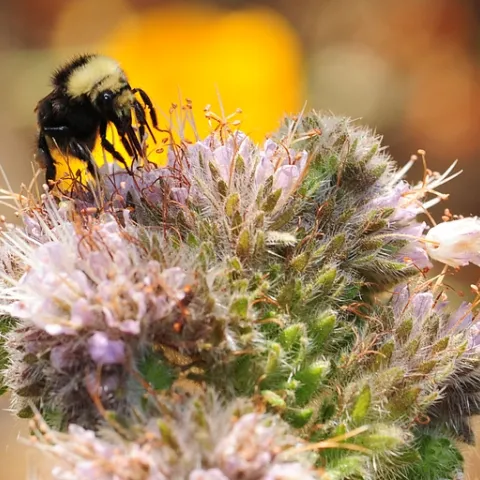
A queen black-tailed bumble bee, Bombus melanopygus, heading for manzanita blossoms. (Photo by Kathy Keatley Garvey)
Bug Squad: Article

A New Year and a First Bumble Bee

January 2, 2013
By Kathy Keatley Garvey
What an unexpected find! It was the first day of 2013 and what did we see: a queen bumble bee, Bombus melanopygus, aka black-tailed bumble bee. Like scores of others, we decided to take a walk on Jan. 1 in the Benicia State Recreation Area.
View Article

Long-lasting orchard weed control

January 2, 2013
By Brad Hanson
Happy New Year! A quick post today to share an article I wrote last fall for Western Fruit Grower (Nov/Dec 2012) It was in a section called "California Nut Report" which is about California nuts, not by them.. I think). The online, and professionally edited version of the article can be found here.
View Article
Primary Image
Close-up of cabbage white butterfly in mid-2012. (Photo by Kathy Keatley Garvey)
Bug Squad: Article

He Nabbed It on New Year's Day

January 1, 2013
By Kathy Keatley Garvey
Art Shapiro knows where to find the cabbage white butterflies (Pieris rapae). No sooner had he announced his annual "Beer-for-a-Butterfly" Contest, then he found one. Actually, two.
View Article
Primary Image
beecopy 3692
Bug Squad: Article

Bye, Bye 2012

December 31, 2012
By Kathy Keatley Garvey
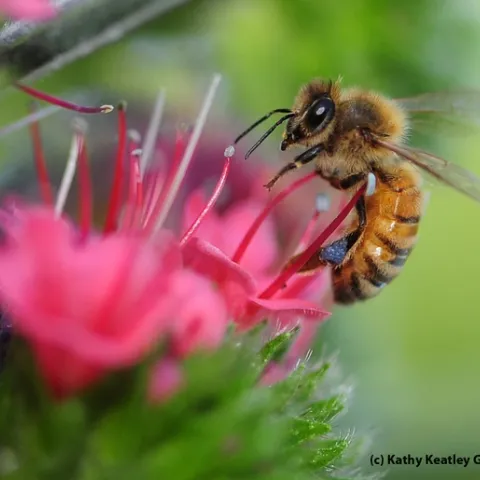
The last honey bee of 2012. Despite the cold weather at Bodega Bay last Friday, we managed to see a few honey bees nectaring a New Zealand tea tree, aka Leptospermum scoparium.
View Article

California tree and vine acreage

December 28, 2012
By Brad Hanson
A couple years ago, I posted some statistics on the tree, vine, and berry acreage in California because I find that kind of thing interesting and thought others might too.
View Article

Managing Herbicide Resistance in Roundup Ready Alfalfa

December 28, 2012
By Brad Hanson
Today, instead of posting something about weed control and herbicide resistance in orchards and vineyards, I thought I'd go out on a limb and discuss weed management and herbicide resistance in... alfalfa! (Yes, it gets a little wild around the holidays at UC Weed Science...
View Article