A Natural Solution for California's Herds: African Catfish Peptides

California's cattle producers and agricultural communities are all too familiar with the rising challenge of antibiotic resistance, making common bacterial infections harder to treat in livestock. But imagine a future where we could tackle these infections with a natural, powerful alternative. Our research points to just that: antimicrobial peptides (AMPs) found in African catfish.

We're really excited about these peptides because African catfish thrive in pathogen-rich freshwater, naturally producing these robust immune compounds in their skin mucus as a defense. This natural origin makes them highly appealing alternatives to synthetic drugs.

Predicted Safety and Potent Action

One of the most compelling aspects of these AMPs is their predicted safety for mammals. Our initial computer analyses suggest that various catfish AMPs are generally recognized as safe (GRAS). We predict they'll be absorbed in the human intestine without causing liver, brain, or heart toxicity. Furthermore, lab tests on a promising peptide, NACAP-II, confirmed it was non-hemolytic, meaning it didn't damage rabbit red blood cells—a strong indicator of its potential safety for mammalian cells.

Beyond safety, these peptides demonstrate effectiveness against problematic bacteria. One study revealed NACAP-II's strong activity against Extended-Spectrum Beta-Lactamase (ESBL)-producing Escherichia coli—a critical concern for both animal and human health due to its resistance to many common antibiotics. Another peptide, ACAP-IV, also showed antibacterial activity against E. coli and Staphylococcus aureus. We believe these AMPs work by directly disrupting bacterial cell membranes, a mechanism that makes it harder for bacteria to develop resistance compared to how they resist traditional antibiotics.
Primary Image
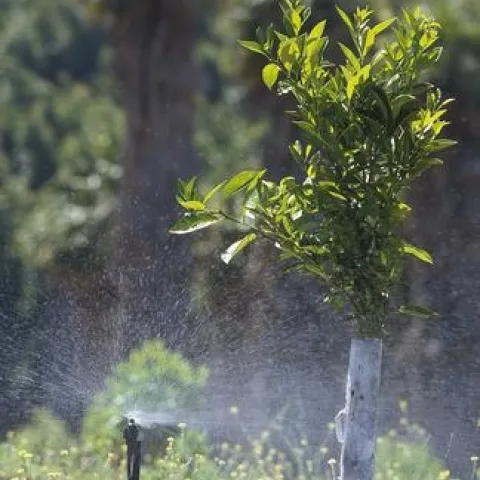
Bruce Hammock lab: a victim of the rainstorm. (Photo by Bruce Hammock)
Bug Squad: Article

Not That Kind of Water

December 3, 2012
By Kathy Keatley Garvey
It's no secret that Bruce Hammock, distinguished professor of entomology at the University of California, Davis, loves the water. Well, there's white-water kayaking for one. And, two, his water balloon battles.
View Article
Primary Image
Male yellowjacket heads toward a honey bee. (Photo by Kathy Keatley Garvey)
Bug Squad: Article

Kissin' Cousins

November 30, 2012
By Kathy Keatley Garvey
What's that? A honey bee and a male yellowjacket on the same blossom? That's exactly what we saw Nov. 14 at the Hagen-Dazs Honey Bee Haven, located next to the Harry H. Laidlaw Jr. Honey Bee Research Facility on Bee Biology Road, University of California, Davis.
View Article
Primary Image
Honey bee on a blanket flower, Galliardia. (Photo by Kathy Keatley Garvey)
Bug Squad: Article

The Buzz About Pesticides

November 29, 2012
By Kathy Keatley Garvey
"Reducing the Usage of Bee-Killing Pesticides in My Community." That's the topic--and a good one it is--of the 2013 4-H Honey Bee Essay Contest, sponsored by The Foundation for the Preservation of Honey Bees.
View Article
Colusa County: Article

December Newsletter

November 29, 2012
Presentation Day info and form CANstruction articles & photos Home Ec Review date 4-H Enrollment closes December 1st!...
View Article
Primary Image
Professor Marc Tatar of Brown State University, Providence, R.I., will deliver the Thomas and Nina Leigh Distinguished Alumni Seminar at UC Davis on Dec. 5.
Bug Squad: Article

He'll Give the Leigh Distinguished Seminar

November 28, 2012
By Kathy Keatley Garvey
It's quite an honor to be singled out to deliver the Thomas and Nina Leigh Distinguished Alumni Seminar, hosted annually by the UC Davis Department of Entomology. This year's recipient is Marc Tatar, an authority on the aging of insects.
View Article
Primary Image
This species, from genus Macrocopturus, is waiting to be described. And waiting for a name. (Photo by Andrew Richards)
Bug Squad: Article

The Perfect Gift

November 27, 2012
By Kathy Keatley Garvey
So, you're looking for that perfect, one-of-a-kind holiday gift. One that will not only be memorable but a conversation piece.
View Article
Primary Image
A Jerusalem cricket. (Photo by Kathy Keatley Garvey)

Strange Little Insect

November 26, 2012
By Kathy Keatley Garvey
It's a strange little insect. A reader likens it to "a cricket on steroids." A Van Nuys resident says she always wondered what they were. "I've lived in this house for 17 years, and a few times a year I see this strange insect in my backyard. It is always either dead or dying.
View Article
Primary Image
Bruce Graham Hammock at the Observation Basin in Kings Canyon National Park, a large fishless basin where much of his research occurred.
Bug Squad: Article

Getting the Drift

November 23, 2012
By Kathy Keatley Garvey
It's exciting to see a son follow in the footsteps of his father: soon there will be more than one Hammock with a Ph.D. at the University of California, Davis.
View Article
Primary Image
Squash bee inside pumpkin blossom. (Photo by Kathy Keatley Garvey)
Bug Squad: Article

Thanks Be to the Squash Bee

November 22, 2012
By Kathy Keatley Garvey
If youre having pumpkin muffins, pumpkin pancakes and pumpkin pie today (Thanksgiving), you can thank a squash bee. The photos posted below are genus Peponapis, common name "squash bee." They emerge in mid- to late summer, nest in the ground, and are approximately half an inch in length.
View Article