A Natural Solution for California's Herds: African Catfish Peptides

California's cattle producers and agricultural communities are all too familiar with the rising challenge of antibiotic resistance, making common bacterial infections harder to treat in livestock. But imagine a future where we could tackle these infections with a natural, powerful alternative. Our research points to just that: antimicrobial peptides (AMPs) found in African catfish.

We're really excited about these peptides because African catfish thrive in pathogen-rich freshwater, naturally producing these robust immune compounds in their skin mucus as a defense. This natural origin makes them highly appealing alternatives to synthetic drugs.

Predicted Safety and Potent Action

One of the most compelling aspects of these AMPs is their predicted safety for mammals. Our initial computer analyses suggest that various catfish AMPs are generally recognized as safe (GRAS). We predict they'll be absorbed in the human intestine without causing liver, brain, or heart toxicity. Furthermore, lab tests on a promising peptide, NACAP-II, confirmed it was non-hemolytic, meaning it didn't damage rabbit red blood cells—a strong indicator of its potential safety for mammalian cells.

Beyond safety, these peptides demonstrate effectiveness against problematic bacteria. One study revealed NACAP-II's strong activity against Extended-Spectrum Beta-Lactamase (ESBL)-producing Escherichia coli—a critical concern for both animal and human health due to its resistance to many common antibiotics. Another peptide, ACAP-IV, also showed antibacterial activity against E. coli and Staphylococcus aureus. We believe these AMPs work by directly disrupting bacterial cell membranes, a mechanism that makes it harder for bacteria to develop resistance compared to how they resist traditional antibiotics.
Primary Image
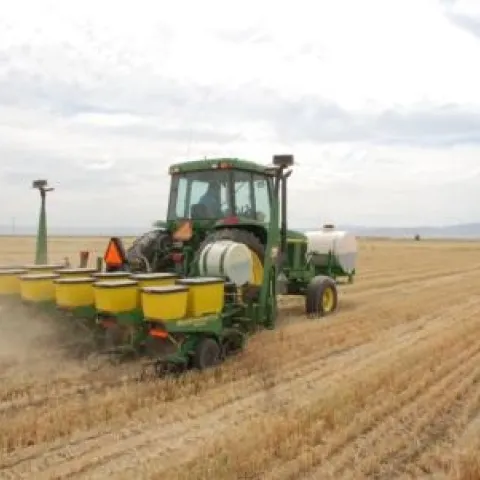
Agricultural spray adjuvants are materials added to the spray tank when loading the sprayer. Photo by Jack Kelly Clark.
Topics in Subtropics: Article

Activator Spray Adjuvant Selection: Crop Spraying

January 11, 2012
By Jeannette Warnert
Agricultural spray adjuvants are materials added to the spray tank when loading the sprayer. They include products classified as activator adjuvants and marketed as wetters/spreaders, stickers, humectants, and/or penetrators.
View Article
Primary Image
This is a parasitic orchid bee, Exaerete kimseyae, named for Lynn Kimsey.
Bug Squad: Article

Names Matter

January 10, 2012
By Kathy Keatley Garvey
The names are delightful. There's a fairy moth named Adela thorpella. Its namesake: native pollinator specialist Robbin Thorp, emeritus professor of entomology at UC Davis. Who wouldn't want to be Adela thorpella? The name just rolls off the tongue.
View Article
Cooperative Extension Ventura County: Article

Volume 9 No. 2 -- Winter 2011

January 10, 2012
This issue of Topics in Subtropics contains the following articles: Vertebrate Damage Chemical Thinning of Olives Tips on Producing the Earliest Early Citrus in the San Joaquin Valley Herbicide Registration Chart Resource and Market Information for Enterprise Selection...
View Article
Primary Image
Professor Art Shapiro with his newly found cabbage white butterfly. (Photo by Kathy Keatley Garvey)
Bug Squad: Article

Pop Goes the Pieris

January 9, 2012
By Kathy Keatley Garvey
Pop goes the Pieris. So wrote professor Art Shapiro of the UC Davis Department of Evolution and Ecology from his office in Storer Hall. Yes, he won his own contest again.
View Article
Primary Image
A honey bee heads toward a tower of jewels (Echium wildpretii). (Photo by Kathy Keatley Garvey)
Bug Squad: Article

Honey Bees and Malaria

January 6, 2012
By Kathy Keatley Garvey
You don't usually see "honey bees" and "malaria" in the same sentence.
View Article
Primary Image
Conservation agriculture is gaining acceptance in many parts of the world as an alternative to both conventional and organic agriculture.
Conservation Agriculture: Article

UC launches “Conservation Agriculture Systems Initiative” Jan. 27

January 6, 2012
By Jeannette Warnert
A diverse group of public and private sector agricultural professionals are joining the University of California to form the Conservation Agriculture Systems Initiative (CASI), an organization that will be formally launched at a public meeting Jan. 27 in Clovis, Calif.
View Article
Primary Image
Ladybugs in the fava beans at the Haagen-Dazs Honey Bee Haven. (Photo by Kathy Keatley Garvey)
Bug Squad: Article

Love in the Fava Beans

January 5, 2012
By Kathy Keatley Garvey
It was lovely day today, in more ways than one. During the lunch hour, we stopped by the Hagen-Dazs Honey Bee Haven on Bee Biology Road, University of California, Davis, and discovered more than just blossoms in the planter box filled with fava beans.
View Article