A Natural Solution for California's Herds: African Catfish Peptides

California's cattle producers and agricultural communities are all too familiar with the rising challenge of antibiotic resistance, making common bacterial infections harder to treat in livestock. But imagine a future where we could tackle these infections with a natural, powerful alternative. Our research points to just that: antimicrobial peptides (AMPs) found in African catfish.

We're really excited about these peptides because African catfish thrive in pathogen-rich freshwater, naturally producing these robust immune compounds in their skin mucus as a defense. This natural origin makes them highly appealing alternatives to synthetic drugs.

Predicted Safety and Potent Action

One of the most compelling aspects of these AMPs is their predicted safety for mammals. Our initial computer analyses suggest that various catfish AMPs are generally recognized as safe (GRAS). We predict they'll be absorbed in the human intestine without causing liver, brain, or heart toxicity. Furthermore, lab tests on a promising peptide, NACAP-II, confirmed it was non-hemolytic, meaning it didn't damage rabbit red blood cells—a strong indicator of its potential safety for mammalian cells.

Beyond safety, these peptides demonstrate effectiveness against problematic bacteria. One study revealed NACAP-II's strong activity against Extended-Spectrum Beta-Lactamase (ESBL)-producing Escherichia coli—a critical concern for both animal and human health due to its resistance to many common antibiotics. Another peptide, ACAP-IV, also showed antibacterial activity against E. coli and Staphylococcus aureus. We believe these AMPs work by directly disrupting bacterial cell membranes, a mechanism that makes it harder for bacteria to develop resistance compared to how they resist traditional antibiotics.
Primary Image
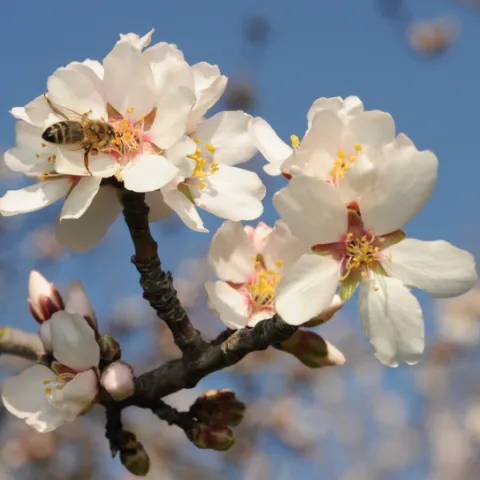
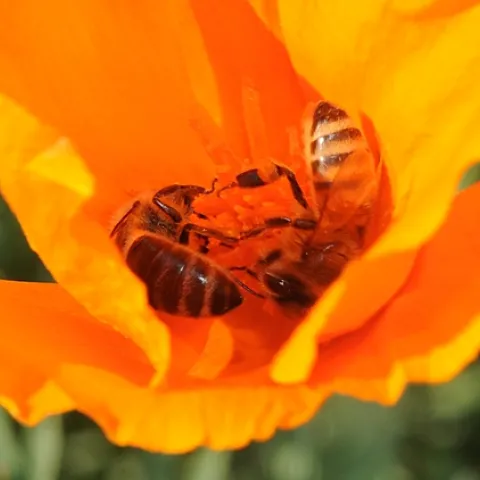
Honey bees working the hive. (Photo by Kathy Keatley Garvey)
Bug Squad: Article

Bee Gone!

December 2, 2011
What a remarkable project a biologist launched in Kenya involving honey bees. It all began with farmers complaining that migratory elephants were raiding their crops and destroying their livelihood.
View Article
Primary Image
Larvae of a blister beetle, Meloe franciscanus on a digger bee, Habropoda pallida. (Photo by Leslie Saul-Gershenz, used with permission))
Bug Squad: Article

Phoresy!

December 1, 2011
Phoresy! If that word is not in your everyday vocabulary, just think of a symbiotic relationship where one organism transports another organism of a different species for the benefit of both.
View Article
Primary Image
This little critter will be displayed at the Cabinets of Curiosity show on Saturday, Dec. 3 in Davis. (Photo courtesy of Anna Davidson)
Bug Squad: Article

Curious? Be There!

November 30, 2011
It's top secret as to what's in those drawers. And they're not letting the secret out until Saturday, Dec. 3. What it is: the UC Davis Art/Science Fusion Program will sponsor a "Cabinets of Curiosity" scientific art show on Saturday, Dec. 3 in Davis.
View Article
Colusa County: Article

December 2011

November 30, 2011
Dates for Presentation Day and Home Ec Review announced, Thrive training, Poultry field day, and much more!...
View Article
Primary Image
This is one of Rollin Coville's stunning photos of a male green sweat bee, Agapostemon. (Photo by Rollin Coville, used with permission),
Bug Squad: Article

Not Your Average Garden-Variety Calendar

November 29, 2011
It's not your average garden variety calendar. It's absolutely bee-utiful. Native bees reign supreme in Garden Variety Native Bees of North America, a calendar produced by University of California alumni as a benefit for two non-profit organizations.
View Article
UC Weed Science (weed control, management, ecology, and minutia): Article

Are weeds taking over your garden?

November 29, 2011
My calendar says November but the weeds in my garden think its spring. That nice rain last month followed by warm, sunny days has prompted them to grow like, well, weeds and thats not good news for my winter crops.
View Article
Primary Image
The dengue mosquito, Aedes aegypti. (Photo courtesy of James Gathany, Centers for Disease Control and Prevention)
Bug Squad: Article

Fevers from the Forest

November 28, 2011
Fevers from the forest... Dengue is one of them. Dengue, transmitted by the daybiting Aedes aegypti mosquito, globally infects 50 to 100 million people yearly, according to dengue expert Tom Scott, professor of entomology at UC Davis. At risk are some 2.
View Article
Primary Image
Bug Girl talks with Ayanava Majumdar, Auburn University, Alabama. (Photo by Kathy Keatley Garvey)
Bug Squad: Article

'I Am Bug Girl'

November 25, 2011
Gotta love that Bug Girl. Oh, sure, there are lots of bug girls and bug boys out there--bug women, bug men and real insects, too--but there's only one Bug Girl. She's the one who writes that witty/informative/tell-it-like-it-is-not-what-you-want-it-to-be bug blog called...drum roll...Bug Girl.
View Article
Primary Image
Gulf fritillary nectaring a passionflower vine. (Photo by Kathy Keatley Garvey)
Bug Squad: Article

Grateful for the Gulf Frits!

November 24, 2011
It's Thanksgiving, and time to be grateful. In the bug world, we're all grateful for the people who study insects, monitor them, and share information to impart scientific data and help save declining species.
View Article
Primary Image
Metallic green sweat bee (Agapostemon texanus) on coneflower. (Photo by Kathy Keatley Garvey)
Bug Squad: Article

Tiny Saviors in Our Backyard

November 23, 2011
If you're interested in native bees, you'll want to read the newly published University of California research article, "Tiny Saviors in Our Backyard.
View Article