A Natural Solution for California's Herds: African Catfish Peptides

California's cattle producers and agricultural communities are all too familiar with the rising challenge of antibiotic resistance, making common bacterial infections harder to treat in livestock. But imagine a future where we could tackle these infections with a natural, powerful alternative. Our research points to just that: antimicrobial peptides (AMPs) found in African catfish.

We're really excited about these peptides because African catfish thrive in pathogen-rich freshwater, naturally producing these robust immune compounds in their skin mucus as a defense. This natural origin makes them highly appealing alternatives to synthetic drugs.

Predicted Safety and Potent Action

One of the most compelling aspects of these AMPs is their predicted safety for mammals. Our initial computer analyses suggest that various catfish AMPs are generally recognized as safe (GRAS). We predict they'll be absorbed in the human intestine without causing liver, brain, or heart toxicity. Furthermore, lab tests on a promising peptide, NACAP-II, confirmed it was non-hemolytic, meaning it didn't damage rabbit red blood cells—a strong indicator of its potential safety for mammalian cells.

Beyond safety, these peptides demonstrate effectiveness against problematic bacteria. One study revealed NACAP-II's strong activity against Extended-Spectrum Beta-Lactamase (ESBL)-producing Escherichia coli—a critical concern for both animal and human health due to its resistance to many common antibiotics. Another peptide, ACAP-IV, also showed antibacterial activity against E. coli and Staphylococcus aureus. We believe these AMPs work by directly disrupting bacterial cell membranes, a mechanism that makes it harder for bacteria to develop resistance compared to how they resist traditional antibiotics.
Primary Image
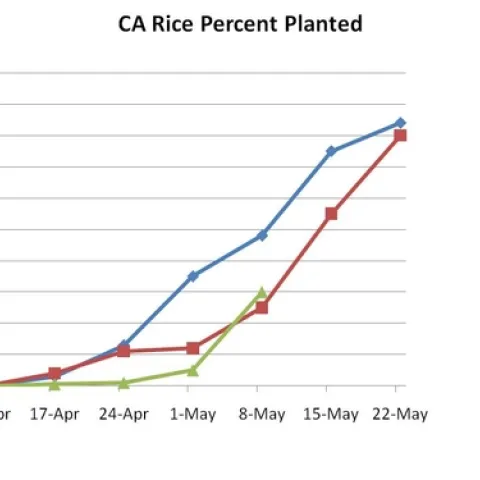
Rice planted
UC Rice Blog: Article

Crop Progress

May 17, 2011
By Luis Espino
Released May 16, 2011, by the National Agricultural Statistics Service, Agricultural Statistics Board, United States Department of Agriculture...
View Article
Primary Image
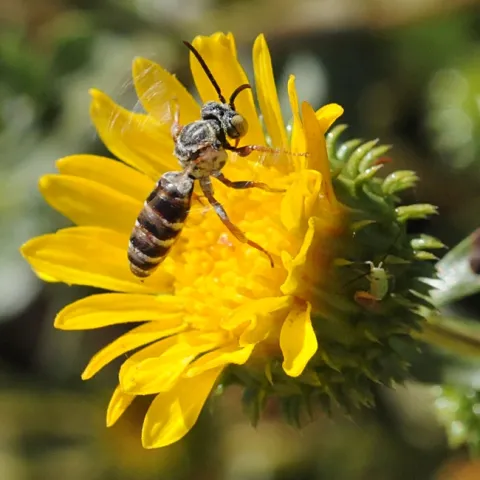
Cuckoo bee on gum plant in Yolo County hedgerow. (Photo by Kathy Keatley Garvey)
Bug Squad: Article

Researching the Hedgerows

May 16, 2011
By Kathy Keatley Garvey
Let's hear it for the hedgerows. Picture native plants, shrub and ground cover bordering agricultural fields and providing habitat for native bees and other pollinators. Not just bed and breakfast, but bed, breakfast, lunch and dinner. And snacks in between.
View Article
Primary Image
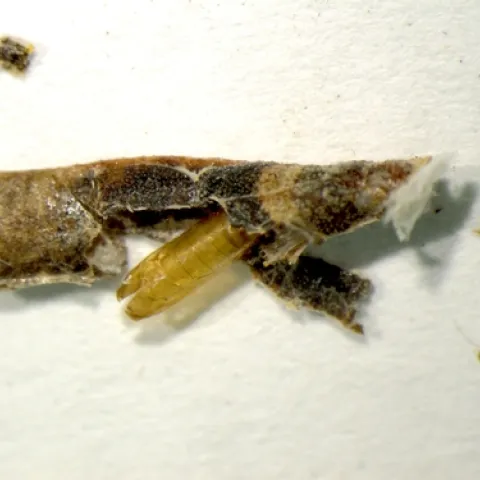
Coleophorid on Arctostaphylos
Pest News: Article

Casebearer moth infestation on manzanita

May 16, 2011
Manzanita leaves showing blotch mines and cases made by Coleophora sp. (Photo by: Surendra Dara) Manzanita (Arctostaphylos sp.) leaf samples that were recently brought from the San Luis Obispo area appear to have casebearer infestation.
View Article
UC Weed Science (weed control, management, ecology, and minutia): Article

cutleaf eveningprimrose (Oenothera laciniata)

May 16, 2011
By Brad Hanson
Today I thought I'd share a few photos of a weed that is becoming more common in orchards in some areas of the Central Valley. I've gotten a few calls and ran across a few infestations of cutleaf eveningprimrose (Oenothera laciniata).
View Article
Bug Squad: Article

Petal Pushers

May 13, 2011
By Kathy Keatley Garvey
Honey bees and daisies are made for each other. The white petals and the golden centers seem incomplete without the presence of buzzing bees. Today we watched a pollen-packin' honey bee, with a pollen load the color of autumn pumpkins, work a daisy.
View Article
Primary Image
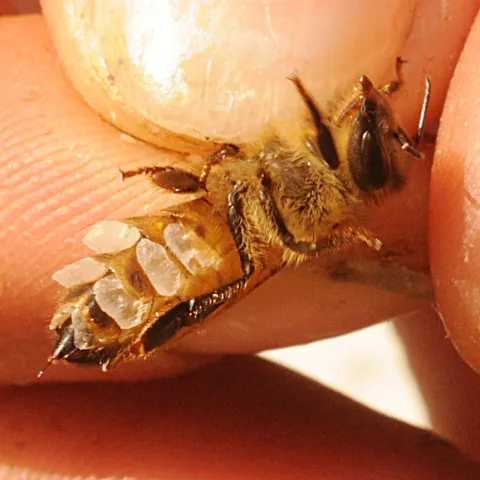
Flakes of wax on a wax builder. (Photo by Kathy Keatley Garvey)
Bug Squad: Article

Not Waxing Poetic

May 12, 2011
By Kathy Keatley Garvey
Ever seen a wax builder? A "real" wax builder? Bee breeder-geneticist Susan Cobey and beekeeper-research associate Elizabeth Frost of the Harry H. Laidlaw Jr. Honey Bee Research Facility at the University of California, Davis, showed us a wax builder last week. No, two wax builders.
View Article
Primary Image
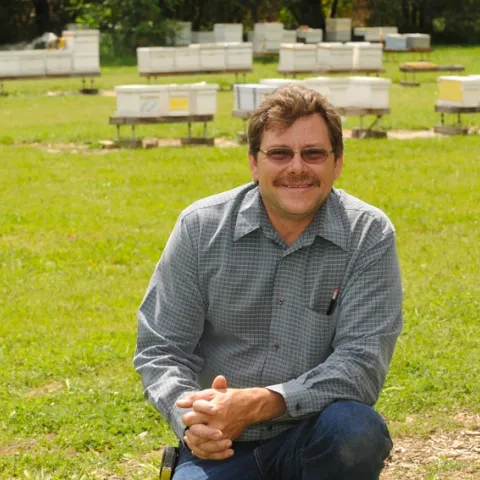
Brian Fishback at the Harry H.Laidlaw Jr. Honey Bee Research Facility. (Photo by Kathy Keatley Garvey)
Bug Squad: Article

Bee-Lieving in the Bees

May 11, 2011
By Kathy Keatley Garvey
Beekeeping comes naturally for Brian Fishback of Wilton, a past president of the Sacramento Area Beekeepers Association and a volunteer at the Harry H. Laidlaw Jr. Honey Bee Research Facility at the University of California, Davis.
View Article
Primary Image
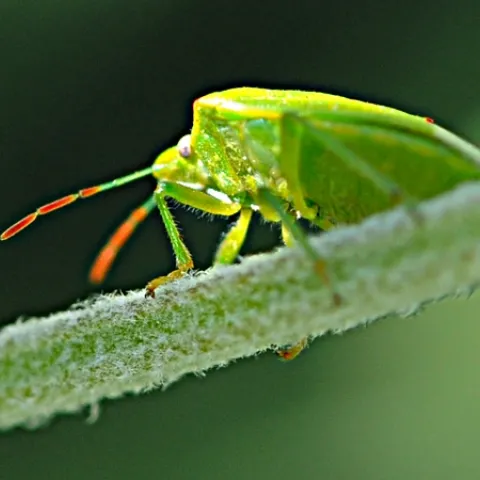
Redshouldered stink bug on a lavender stem. (Photo by Kathy Keatley Garvey)
Bug Squad: Article

Behind the Shield

May 10, 2011
By Kathy Keatley Garvey
If you've ever been shoulder to shoulder with a redshouldered stink bug--or nose to antennae--you know this is a bug to boot out of your garden. It's a pest. Behind that shield-shaped body is a pest.
View Article
Primary Image
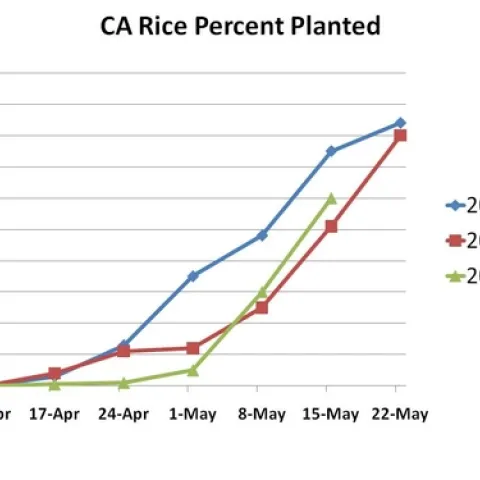
Rice planted
UC Rice Blog: Article

Crop Progress

May 10, 2011
By Luis Espino
Released May 9, 2011, by the National Agricultural Statistics Service, Agricultural Statistics Board, United States Department of Agriculture...
View Article
Primary Image
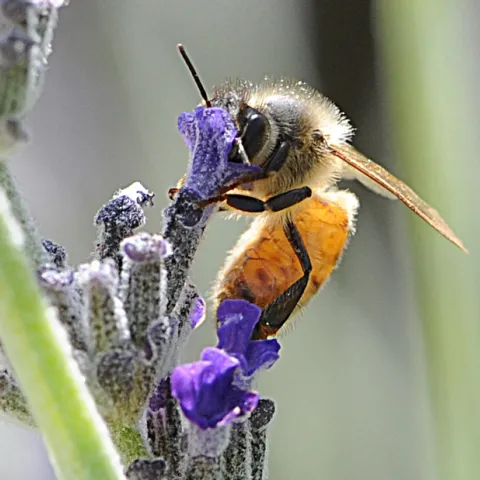
Italian honey bee foraging on lavender. (Photo by Kathy Keatley Garvey)
Bug Squad: Article

Mother's Day Delight

May 9, 2011
By Kathy Keatley Garvey
Mother's Day, insect-style, dawned like any other day. In our back yard, golden honey bees foraged in the lavender and those ever-so-tiny sweat bees visited the rock purslane. The honey bees? Those gorgeous Italians.
View Article