A Natural Solution for California's Herds: African Catfish Peptides

California's cattle producers and agricultural communities are all too familiar with the rising challenge of antibiotic resistance, making common bacterial infections harder to treat in livestock. But imagine a future where we could tackle these infections with a natural, powerful alternative. Our research points to just that: antimicrobial peptides (AMPs) found in African catfish.

We're really excited about these peptides because African catfish thrive in pathogen-rich freshwater, naturally producing these robust immune compounds in their skin mucus as a defense. This natural origin makes them highly appealing alternatives to synthetic drugs.

Predicted Safety and Potent Action

One of the most compelling aspects of these AMPs is their predicted safety for mammals. Our initial computer analyses suggest that various catfish AMPs are generally recognized as safe (GRAS). We predict they'll be absorbed in the human intestine without causing liver, brain, or heart toxicity. Furthermore, lab tests on a promising peptide, NACAP-II, confirmed it was non-hemolytic, meaning it didn't damage rabbit red blood cells—a strong indicator of its potential safety for mammalian cells.

Beyond safety, these peptides demonstrate effectiveness against problematic bacteria. One study revealed NACAP-II's strong activity against Extended-Spectrum Beta-Lactamase (ESBL)-producing Escherichia coli—a critical concern for both animal and human health due to its resistance to many common antibiotics. Another peptide, ACAP-IV, also showed antibacterial activity against E. coli and Staphylococcus aureus. We believe these AMPs work by directly disrupting bacterial cell membranes, a mechanism that makes it harder for bacteria to develop resistance compared to how they resist traditional antibiotics.
UC Weed Science (weed control, management, ecology, and minutia): Article

Development of a More Accurate Weed Risk Assessment Model for Potential Third Party Certification of Non-Invasive Horticultural Plants

August 9, 2011
By Joseph DiTomaso
The nursery industry has introduced thousands of ornamental plants, but only a small percentage (~1%) has escaped to become invasive and cause economic or ecological damage. Thus, the removal of these known invasives should not present a major economic hardship on the industry.
View Article
Primary Image
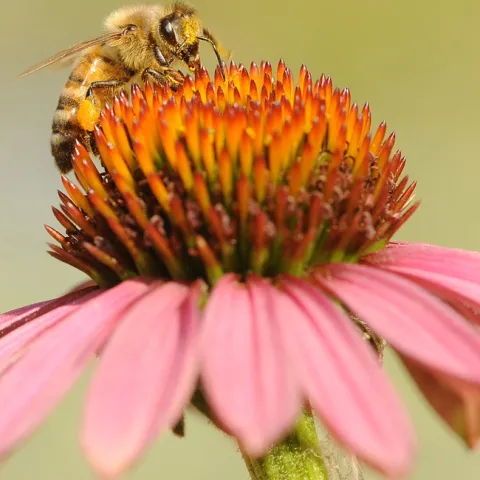
Honey bee on purple coneflower. (Photo by Kathy Keatley Garvey)

Nothin' Like a Cone

August 8, 2011
By Kathy Keatley Garvey
There's nothing quite like a cone--no, not an ice cream cone. A purple coneflower. The purple coneflower (Echinacea purpurea, family Asteraceae), looks like royalty in the Hagen-Dazs Honey Bee Haven at the University of California, Davis.
View Article
Primary Image
Rice headed
UC Rice Blog: Article

Crop Progress

August 8, 2011
By Luis Espino
Released August 8, 2011, by the National Agricultural Statistics Service (NASS), Agricultural Statistics Board, United States Department of Agriculture (USDA).
View Article
Primary Image
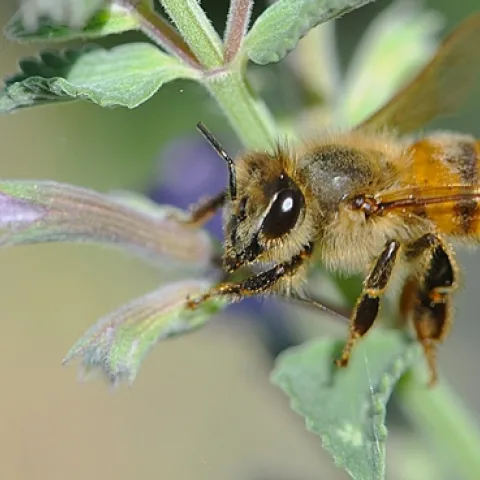
Honey bee working the catmint (Nepeta). (Photo by Kathy Keatley Garvey)

Cooperative Bee

August 5, 2011
By Kathy Keatley Garvey
If you want to attract honey bees in your garden, you can't go wrong by planting catmint (genus Nepeta). Honey bees like the mints. So do cabbage white butterflies, wool carder bees, carpenter bees and hover flies, among other insects. Nepeta is easy to grow.
View Article
UC Rice Blog: Article

Degree Day Accumulation

August 5, 2011
By Luis Espino
Lower limit 55 F, upper limit 100 F May 1 to August 1 Nicolaus 2009 1513 2010 1335 2011 1278 Durham 2009 1469 2010 1350 2011 1236 Colusa 2009 1600 2010 1413 2011 1344 To date 2011 is about 4-6 days behind 2010 and about 10-12 days behind 2009, depending the average number of degree units accumulated...
View Article
Primary Image
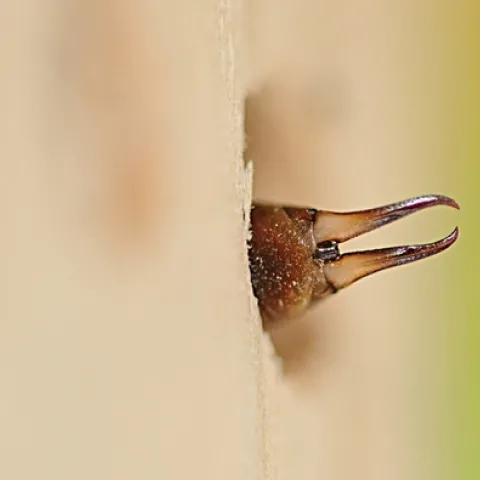
Earwig inside a blue orchard bee condo, which has larger holes than one for leafcutting bees. (Photo by Kathy Keatley Garvey)

Home Invasion!

August 4, 2011
By Kathy Keatley Garvey
When you install bee condos--those wooden blocks with holes drilled in them to attract nesting native bees--sometimes you get the unexpected. Like earwigs! Home invasion! Home invasion! We installed two bee condos, each about the size of a brick, in our yard.
View Article
UC Weed Science (weed control, management, ecology, and minutia): Article

Field Bindweed

August 4, 2011
By John A Roncoroni
Field Bindweed (Convolvulus arvensis) The late spring rains that fell in Northern California seemed to benefit some plants more than others. One weed that appears to be doing very well this year is Field bindweed.
View Article
Primary Image
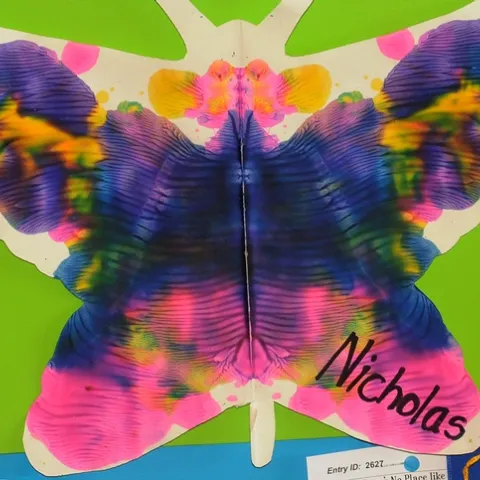
This colorful butterfly is the work of 3-year-old Nicholas Razo of Dixon. (Photo by Kathy Keatley Garvey)
Bug Squad: Article

What's a Fair Without Bugs?

August 3, 2011
By Kathy Keatley Garvey
What's a picnic without bugs? What's a county fair without bugs? If you meander through McCormack Hall at the Solano County Fair, Vallejo, you'll see plenty of insects.
View Article