A Natural Solution for California's Herds: African Catfish Peptides

California's cattle producers and agricultural communities are all too familiar with the rising challenge of antibiotic resistance, making common bacterial infections harder to treat in livestock. But imagine a future where we could tackle these infections with a natural, powerful alternative. Our research points to just that: antimicrobial peptides (AMPs) found in African catfish.

We're really excited about these peptides because African catfish thrive in pathogen-rich freshwater, naturally producing these robust immune compounds in their skin mucus as a defense. This natural origin makes them highly appealing alternatives to synthetic drugs.

Predicted Safety and Potent Action

One of the most compelling aspects of these AMPs is their predicted safety for mammals. Our initial computer analyses suggest that various catfish AMPs are generally recognized as safe (GRAS). We predict they'll be absorbed in the human intestine without causing liver, brain, or heart toxicity. Furthermore, lab tests on a promising peptide, NACAP-II, confirmed it was non-hemolytic, meaning it didn't damage rabbit red blood cells—a strong indicator of its potential safety for mammalian cells.

Beyond safety, these peptides demonstrate effectiveness against problematic bacteria. One study revealed NACAP-II's strong activity against Extended-Spectrum Beta-Lactamase (ESBL)-producing Escherichia coli—a critical concern for both animal and human health due to its resistance to many common antibiotics. Another peptide, ACAP-IV, also showed antibacterial activity against E. coli and Staphylococcus aureus. We believe these AMPs work by directly disrupting bacterial cell membranes, a mechanism that makes it harder for bacteria to develop resistance compared to how they resist traditional antibiotics.
Primary Image
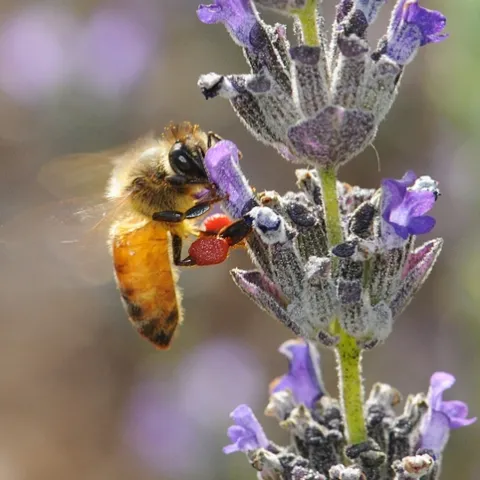
FEET FIRST--A male carpenter bee glides in for a landing on lavender. (Photo by Kathy Keatley Garvey)

Touchdown!

May 19, 2009
Insects love the lavender. Think honey bees, syrphids, and carpenter bees. The noisiest are the male carpenter bees. They buzz the lavender looking for females and then touch down for the nectar. They're quick, territorial, aggressive and noisy.
View Article
Primary Image
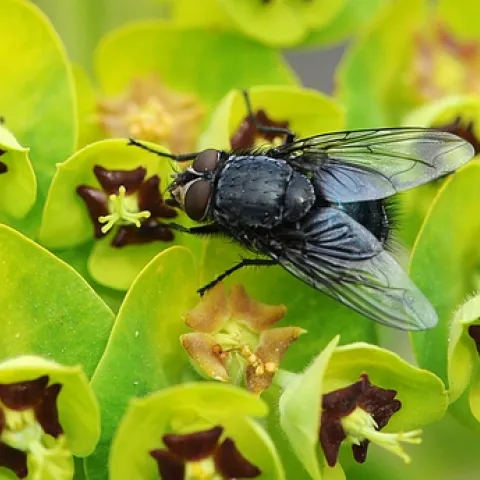
TACHINID FLY is covered with thick, dark bristles on its abdomen. In its larval stage, this insect parasitizes caterpillars, especially Lepidoptera. (Photo by Kathy Keatley Garvey)

A Fly -- Oh, My!

May 18, 2009
It's a curious-looking insect, the tachinid fly. The first thing you notice are the thick, dark bristles covering its abdomen. By human standards, this insect, about the size of a house fly, is not pretty. No way, no how.
View Article
Primary Image
SYRPHID or flower fly aims for a cactus blossom. A high shutter speed slows the wing action. (Photo by Kathy Keatley Garvey)
Bug Squad: Article

Patience in the Garden

May 15, 2009
Patience. That's what it takes to capture images of syrphids, aka flower or hover flies. They are oh, so tiny and they move oh, so quickly. As the morning dawns, you wait, camera poised, near their preferred blossoms.
View Article
Primary Image
FLYING IN--A syrphid or flower fly heads for a newly opened cactus blossom. (Photo by Kathy Keatley Garvey)
Bug Squad: Article

If It Looks Like a Duck....

May 14, 2009
If it looks like a duck, quacks like a duck, and walks like a duck, it's probably a duck. If it looks like a bee, buzzes like a bee, and visits flowers like a bee, it might not be a bee. It could be a fly, or more specifically, a syrphid or flower fly.
View Article
Primary Image
A male carpenter bee (Xylocopa tabaniformis) nectars on lavender. (Photo by Kathy Keatley Garvey)
Bug Squad: Article

On Gossamer Wings

May 12, 2009
"Gossamer" means something sheer, light and delicate, as in gossamer fabric. You can also apply it to the wings of a carpenter bee. We captured this image of a male carpenter bee (Xylocopa tabaniformis) nectaring on lavender. The wings look sheer, fragile and airy.
View Article
Primary Image
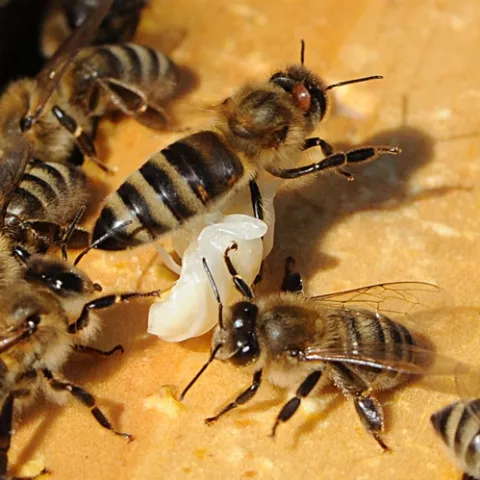
NEWBORN BEE: What's in store for this newborn bee and her family? (Photo by Kathy Keatley Garvey)
Bug Squad: Article

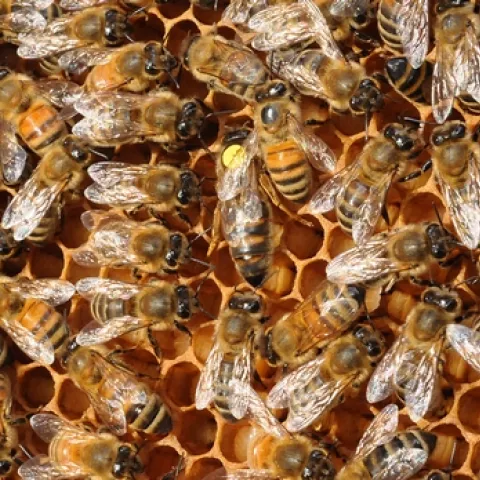
Honey Bees: 'Are Things Really That Bad?

May 11, 2009
You wont want to miss the seminar on Bee Problems and Colony Losses on Wednesday, May 13 in 122 Briggs Hall, UC Davis. If you cant make it in person, you can listen to it live via Webinar.
View Article
Primary Image
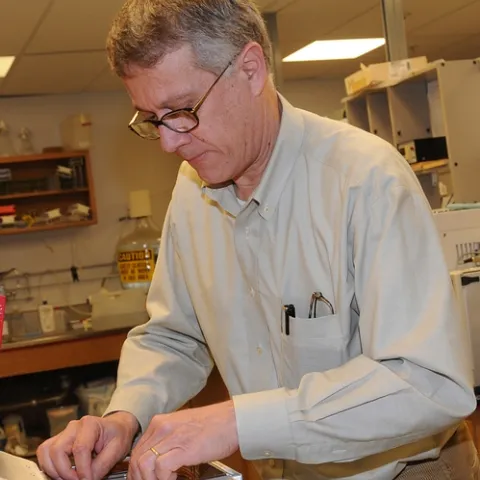
HONEY BEES--Checking the health of the honey bees at a hive at the Harry H. Laidlaw Jr. Honey Bee Research Facility at UC Davis is Elizabeth Frost (right), junior specialist. (Photo by Kathy Keatley Garvey)
Bug Squad: Article

Smoking Gun

May 8, 2009
A honey bee newsletter, "From the UC Apiaries" newsletter, written by Cooperative Extension Apiculturist Eric Mussen of the UC Davis Department of Entomology Faculty, provides linformative and educational information for beekeepers and those interested in the plight of the honey bee.
View Article
Primary Image
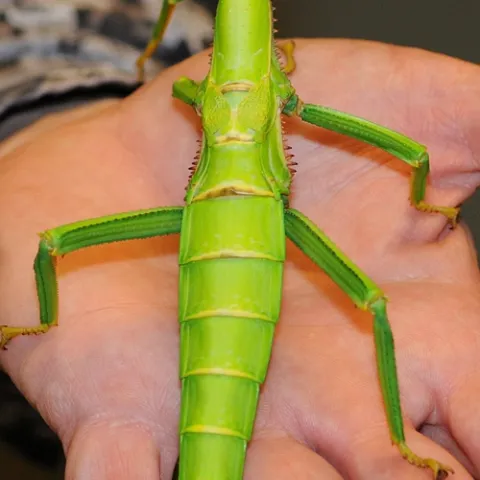
Brian Turner, outreach coordinator at the Bohart Museum of Entomology, shows a male Giant New Guinea Walking Stick. Six species of insects from the Bohart are housed at the Dixon May Fair, May 7-10. (Photo by Kathy Keatley Garvey)
Bug Squad: Article

These Walking Sticks Are Insects

May 7, 2009
Brian Turner, outreach coordinator at the Bohart Museum of Entomology, UC Davis campus, is used to walking around with a walking stick. Not just any walking stick. The Giant New Guinea Walking Stick and the Vietnamese Walking Stick.
View Article
Primary Image
A HONEY BEE decorates a quilt at the 134th annual Dixon May Fair. Here Interior Living Showcase superintendent Debee Lamont gets ready to hang the quilt. It's the work of Shirley Geertson of Vacaville. (Photo by Kathy Keatley Garvey)
Bug Squad: Article

Insects Are Nearly Everywhere

May 6, 2009
"Insects are the most successful animals that have ever existed on Earth and have been around for just over 400 million years," writes George Gavin in Insects, an American Nature Guide published by Smithmark Publishers, N.Y.
View Article