A Natural Solution for California's Herds: African Catfish Peptides

California's cattle producers and agricultural communities are all too familiar with the rising challenge of antibiotic resistance, making common bacterial infections harder to treat in livestock. But imagine a future where we could tackle these infections with a natural, powerful alternative. Our research points to just that: antimicrobial peptides (AMPs) found in African catfish.

We're really excited about these peptides because African catfish thrive in pathogen-rich freshwater, naturally producing these robust immune compounds in their skin mucus as a defense. This natural origin makes them highly appealing alternatives to synthetic drugs.

Predicted Safety and Potent Action

One of the most compelling aspects of these AMPs is their predicted safety for mammals. Our initial computer analyses suggest that various catfish AMPs are generally recognized as safe (GRAS). We predict they'll be absorbed in the human intestine without causing liver, brain, or heart toxicity. Furthermore, lab tests on a promising peptide, NACAP-II, confirmed it was non-hemolytic, meaning it didn't damage rabbit red blood cells—a strong indicator of its potential safety for mammalian cells.

Beyond safety, these peptides demonstrate effectiveness against problematic bacteria. One study revealed NACAP-II's strong activity against Extended-Spectrum Beta-Lactamase (ESBL)-producing Escherichia coli—a critical concern for both animal and human health due to its resistance to many common antibiotics. Another peptide, ACAP-IV, also showed antibacterial activity against E. coli and Staphylococcus aureus. We believe these AMPs work by directly disrupting bacterial cell membranes, a mechanism that makes it harder for bacteria to develop resistance compared to how they resist traditional antibiotics.
Primary Image
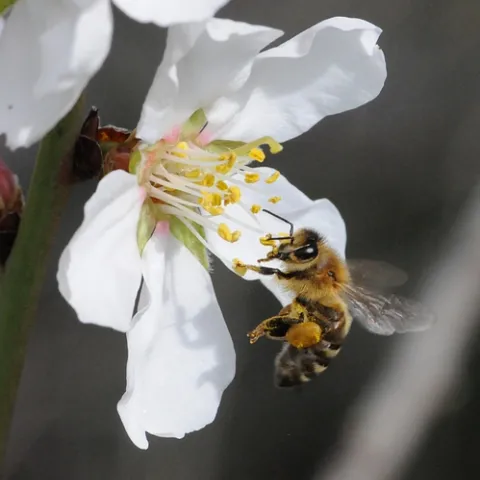
HONEY BEE in flight at the Harry H. Laidlaw Jr. Honey Bee Research Facility at the University of California, Davis. Scientists say the bee is more fuel efficient than even the most fuel-efficient car; the bee can get nearly 5 million miles to the gallon. (Photo by Kathy Keatley Garvey)
Bug Squad: Article

Fuels Rush In

February 25, 2010
By Kathy Keatley Garvey
How fuelish is the honey bee? Is it as fuel-efficient as say, the new Volkswagen that gets an estimated 170 miles per gallon, more MPG than any other vehicle? National Public Radio recently posted an interesting article on its Web site comparing the VW with the HB (the honey bee, Apis mellifera).
View Article
Primary Image
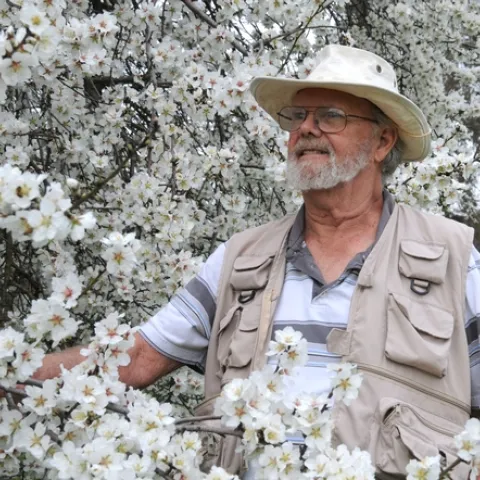
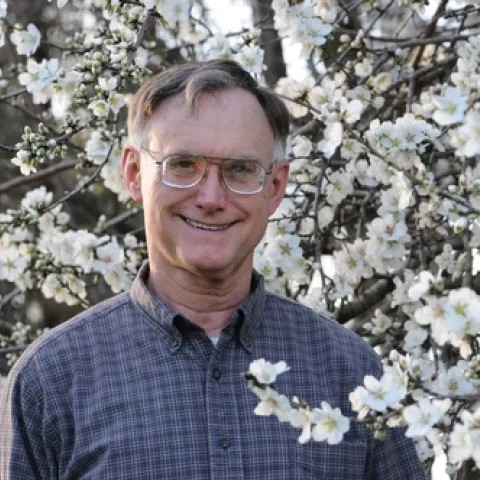
APICULTURIST ERIC MUSSEN stands amid the almond blossoms at the Harry H. Laidlaw Jr. Honey Bee Research Facility at UC Davis. He is the 2010 winner of the statewide Pedro Ilic Outstanding Agriculture Educator. (Photo by Kathy Keatley Garvey)
Bug Squad: Article

An A-Plus for "The B Guy"

February 24, 2010
By Kathy Keatley Garvey
Eric Mussen is used to fielding questions about honey bees--how and why they gather nectar, honey, propolis and water; how many eggs a queen bee can lay in a day; and why beekeeper use smokers.
View Article
Primary Image
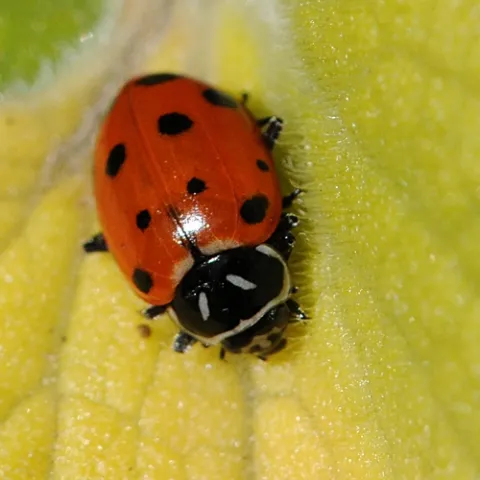
LADYBUG searching for aphids on a leaf. (Photo by Kathy Keatley Garvey)
Bug Squad: Article

Polka-Dotted Insects: Here They Come

February 23, 2010
By Kathy Keatley Garvey
Ladybugs are easy to "spot." As soon as the weather warms and those dratted plant-sucking aphids emerge, here come the polka-dotted ladybugs. The prey and the predator. The pest and the beneficial insect. The bad and the good. Actually, many folks have already reported ladybug sightings.
View Article
Primary Image
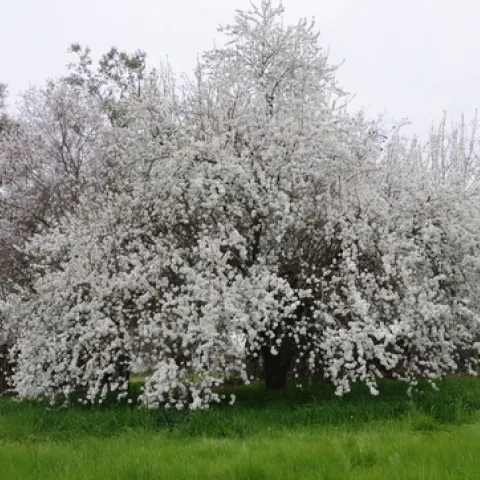
ALMOND TREES throughout California, including this one at the Harry H. Laidlaw Jr. Honey Bee Research Facility at UC Davis, are in full bloom. (Photo by Kathy Keatley Garvey)
Bug Squad: Article

Protecting Our Pollinators

February 22, 2010
By Kathy Keatley Garvey
It's not too early to start thinking about NPW. NPW? National Pollinator Week. The fourth annual National Pollinator Week, set June 21-27, is a time not only to remember the pollinators, but to celebrate them.
View Article
Primary Image
ROSEMARY GILLESPIE, director of the Essig Museum of Entomology, University of California, Berkeley, and chair of the Berkeley Natural History Museums, will be UC Davis on Feb. 24 to speak on "Community Assembly through Adaptive Radiation: Spiders on Islands.”
Bug Squad: Article

From UC Berkeley to UC Davis

February 19, 2010
By Kathy Keatley Garvey
The arthropod community at UC Davis--and beyond--has circled the date, Wednesday, Feb. 24. It's not just the last Wednesday of the month.
View Article
Primary Image
NATIVE BEE SPECIALIST Robbin Thorp looks for native bees in an almond tree on the grounds of the Harry H. Laidlaw Jr. Honey Bee Research Facility at UC Davis. He'll be a keynote speaker at the 2010 Bee Symposium, set March 7 in Sebastopol. (Photo by Kathy Keatley Garvey)
Bug Squad: Article

A Symposium to Help the Bees

February 18, 2010
By Kathy Keatley Garvey
Robbin Thorp's many areas of expertise include the amazing diversity of native bees. He'll discuss their diversity, nesting habits and nest site requirements when he addresses the 2010 Bee Symposium, sponsored by the Santa Rosa-based Partners for Sustainable Pollination (PFSP).
View Article
Primary Image
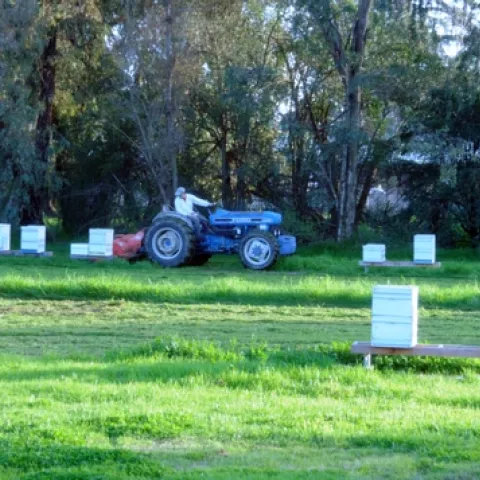
BEE BREEDER-GENETICIST Kim Fondrk mows the lush grass at the Harry H. Laidlaw Jr. Honey Bee Research Facility. (Photo by Kathy Keatley Garvey)
Bug Squad: Article

Springing Into Action at the Laidlaw Facility

February 17, 2010
By Kathy Keatley Garvey
It's not spring, but don't tell that to the folks at the Harry H. Laidlaw Jr. Honey Bee Research Facility at the University of California, Davis. Today bee breeder-geneticist Michael "Kim" Fondrk mowed the lush green grass around the apiary.
View Article
Primary Image
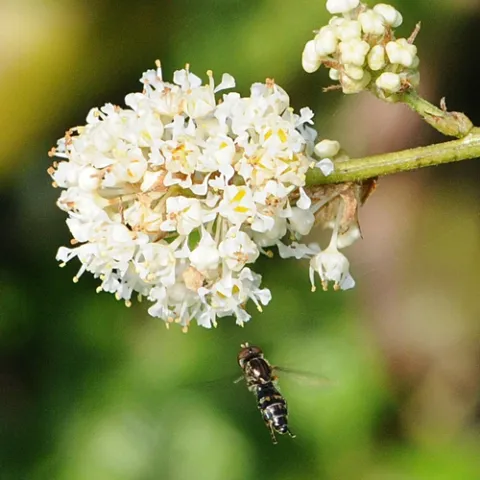
A SYRPHID FLY (problably from the Genus Toxomerus) heads toward a white ceanothus blossom near Tomales Bay. (Photo by Kathy Keatley Garvey)
Bug Squad: Article

Syrphids Back Again

February 16, 2010
By Kathy Keatley Garvey
Have you seen the little syrphid flies, aka flower flies and hover flies, hovering around the early spring blossoms? We saw half a dozen of them Monday, Feb. 15 nectaring a white ceanothus at the Marshall Post Office in Marin County. The ceanothus is a shrub from the buckhorn family, Rhamnaceae.
View Article
Primary Image
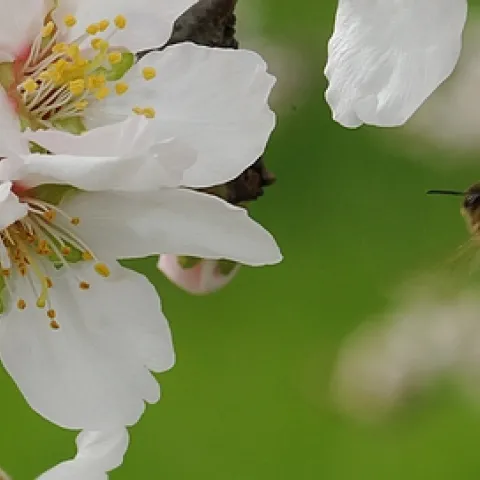
HONEY BEE visiting an almond blossom. (Photo by Kathy Keatley Garvey)
Bug Squad: Article

No Day Off

February 15, 2010
By Kathy Keatley Garvey
It's Presidents' Day today, a holiday for most of us but not for the honey bees. The bees are buzzing in and around the almond blossoms, collecting nectar and pollen for their hives. Nectar provides the carbohydrates for the hive, and pollen provides the proteins.
View Article