A Natural Solution for California's Herds: African Catfish Peptides

California's cattle producers and agricultural communities are all too familiar with the rising challenge of antibiotic resistance, making common bacterial infections harder to treat in livestock. But imagine a future where we could tackle these infections with a natural, powerful alternative. Our research points to just that: antimicrobial peptides (AMPs) found in African catfish.

We're really excited about these peptides because African catfish thrive in pathogen-rich freshwater, naturally producing these robust immune compounds in their skin mucus as a defense. This natural origin makes them highly appealing alternatives to synthetic drugs.

Predicted Safety and Potent Action

One of the most compelling aspects of these AMPs is their predicted safety for mammals. Our initial computer analyses suggest that various catfish AMPs are generally recognized as safe (GRAS). We predict they'll be absorbed in the human intestine without causing liver, brain, or heart toxicity. Furthermore, lab tests on a promising peptide, NACAP-II, confirmed it was non-hemolytic, meaning it didn't damage rabbit red blood cells—a strong indicator of its potential safety for mammalian cells.

Beyond safety, these peptides demonstrate effectiveness against problematic bacteria. One study revealed NACAP-II's strong activity against Extended-Spectrum Beta-Lactamase (ESBL)-producing Escherichia coli—a critical concern for both animal and human health due to its resistance to many common antibiotics. Another peptide, ACAP-IV, also showed antibacterial activity against E. coli and Staphylococcus aureus. We believe these AMPs work by directly disrupting bacterial cell membranes, a mechanism that makes it harder for bacteria to develop resistance compared to how they resist traditional antibiotics.

Primary Image
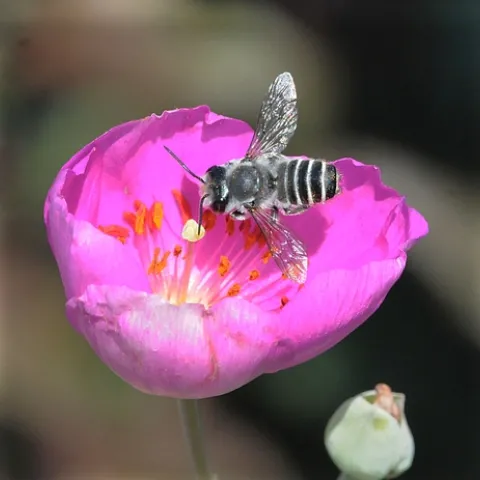
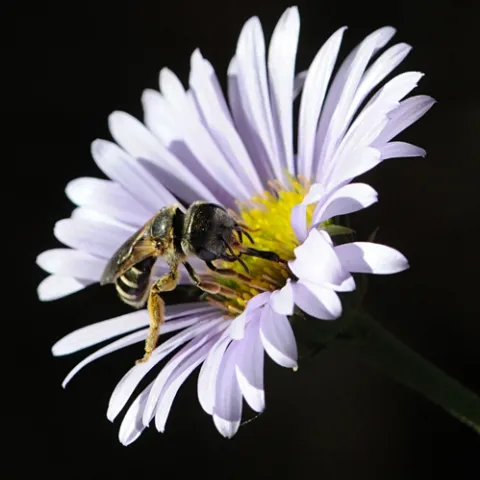
NO SWEAT--This is a female sweat bee, Halictus ligatus, in the Storer Garden, UC Davis Arboretum. (Photo by Kathy Keatley Garvey)
Bug Squad: Article

Great Pollinator Site

December 16, 2009
By Kathy Keatley Garvey
What a treasure! Have you seen the Xerces Society's new online Pollinator Conservation Resource Center? This is something that's long been needed. It's a wealth of information--that's why it's a treasure. As Matthew Shepherd of the Xerces Society for Invertebrate Conservation says: "...
View Article
Primary Image
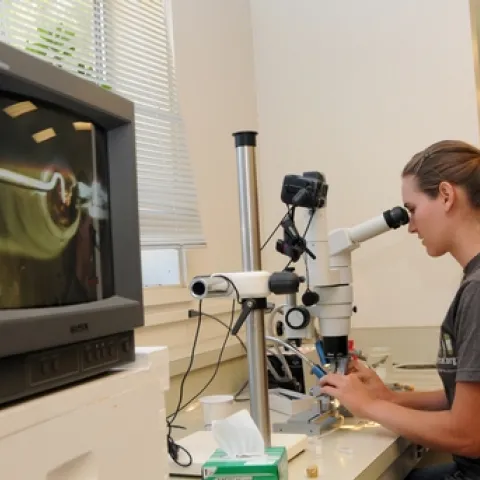
KELLY LIEBMAN is researching dengue in Peru.
Bug Squad: Article

Battling Dengue and Malaria

December 15, 2009
By Kathy Keatley Garvey
Meet Kelly Liebman and Wei Xu. They're graduate students and mosquito researchers in the Department of Entomology, University of California, Davis, who just received the 2009 William Hazeltine Memorial Research Fellowship Awards.
View Article
Primary Image
THIS is a male leafcutting bee, Megachile sp., as identified by native pollinator specialist Robbin Thorp, emeritus professor of entomology at UC Davis. It is nectaring rock purslane, which has a poppylike blossom. (Photo by Kathy Keatley Garvey)
Bug Squad: Article

Making the Cut

December 14, 2009
By Kathy Keatley Garvey
The cold, blustery storm that swept over Northern California over the last two weeks wiped out the rock purslane (Calandrinia grandiflora) and with it the "meeting place" of assorted insects: honey bees, leafcutter bees, ladybugs, bumble bees, potter wasps, et al.
View Article
Primary Image
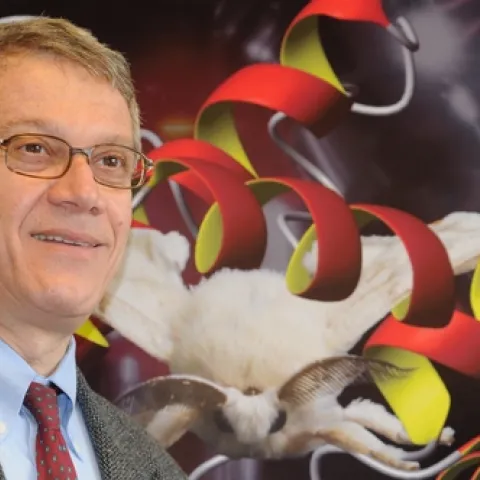
NEWEST ESA FELLOW from UC Davis is chemical ecologist Walter Leal, professor and former chair of the Department of Entomology. (Photo by Kathy Keatley Garvey)
Bug Squad: Article

The Good Fellows

December 11, 2009
By Kathy Keatley Garvey
The Mafia has its Good Fellas. The Entomological Society of America (ESA) has its Fellows, too. And they're not just "good"--they're excellent.
View Article
Primary Image
QUEEN BEE INSEMINATION is intricate work. Here college student Joy Pendell of Pendell Apiaries, Stonybrook, gets it right the first time. She was enrolled in Susan Cobey's August 2009 class. (Photo by Kathy Keatley Garvey)
Bug Squad: Article

Improving Stock

December 10, 2009
By Kathy Keatley Garvey
Want to learn how to rear high-quality queen bees? Want to learn instrumental insemination of queen bees? Specialized classes, taught by bee breeder-geneticist Susan Cobey, are scheduled next spring at the Harry H. Laidlaw Jr. Honey Bee Research Facility at UC Davis. Registration is now under way.
View Article
Primary Image
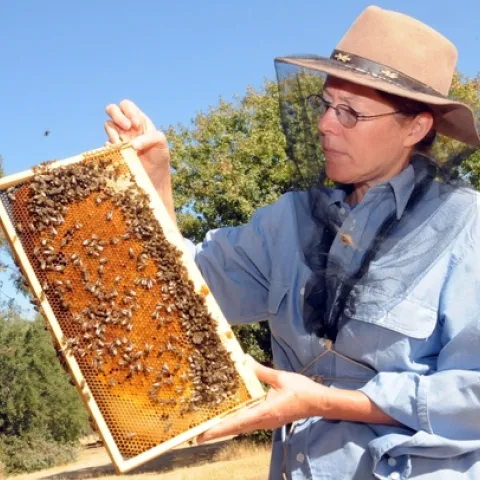
BEE BREEDER-GENETICIST Susan Cobey, manager of the Harry H. Laidlaw Jr. Honey Bee Research Facility, holds a frame of bees. (Photo by Kathy Keatley Garvey)
Bug Squad: Article

Co-Bee

December 9, 2009
By Kathy Keatley Garvey
You won't find anyone more passionate about honey bees than Susan Cobey. Cobey, a bee breeder-geneticist and manager of the Harry H. Laidlaw Jr. Honey Bee Research Facility at UC Davis, has just received the California State Beekeepers' Association's 2009 Distinguished Service Award.
View Article
Primary Image
BEEKEEPER Elizabeth Frost shows a miniature beehive candle she made from beeswax and a little paraffin. (Photo by Kathy Keatley Garvey)
Bug Squad: Article

At Wick's End

December 8, 2009
By Kathy Keatley Garvey
Elizabeth Frost is at wick's end. When she's not tending the bees at the Harry H. Laidlaw Jr. Honey Bee Research Facility at UC Davis or tending her own bees at home, she loves to make candles.
View Article
Primary Image
A CREW recently planted the Campus Buzzway, a quarter-acre field of golden poppies, lupine and coreoposis, on Bee Biology Road, next the the Harry H. Laidlaw Jr. Honey Bee Research Facility, UC Davis. (Photo by Kathy Keatley Garvey)
Bug Squad: Article

Burst of Buds, Blooms and Bees

December 7, 2009
By Kathy Keatley Garvey
Next spring the Campus Buzzway at UC Davis will burst with buds, blooms and bees. The Campus Buzzway, a quarter-acre field of wildflowers, took root the third week of November when a crew planted golden poppies, lupine and coreopsis (tickseed).
View Article
Primary Image
HONEY BEE nectaring a mutton bird sedge (Carex trifeda) at the UC Berkeley Botanical Garden. (Photo by Kathy Keatley Garvey)
Bug Squad: Article

Brush With a Bee and a Hummer

December 4, 2009
By Kathy Keatley Garvey
A brush with a honey bee... A brush with a hummingbird... When we visited the UC Berkeley Botanical Garden recently, honey bees were nectaring the mutton bird sedge (Carex trifeda), a New Zealand native known for its upright floral spikes that resemble golden bottle brushes.
View Article
Primary Image
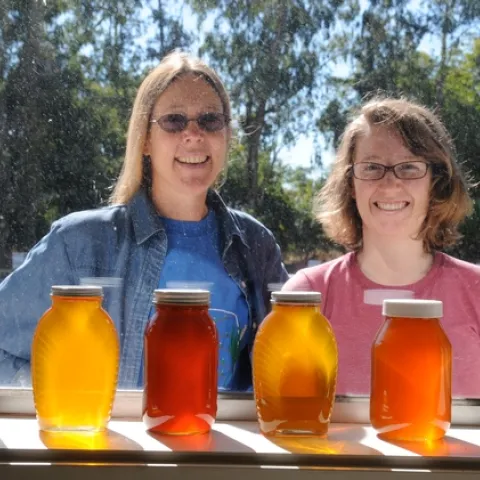
BEEKEEPERS outside the window of the Harry H. Laidlaw Jr. Honey Bee Research Facility at UC Davis. At left is bee breeder-geneticist Susan Cobey, manager of the Laidlaw Facility and a veteran beekeeper. With her is junior specialist Elizabeth Frost. (Photo by Kathy Keatley Garvey)

Honey, I'm Home!

December 3, 2009
By Kathy Keatley Garvey
Youngsters like to joke about what a honey bee says when she returns to the hive: "Honey, I'm home!" Honey...what is it? The National Honey Board defines honey as "the substance made when the nectar and sweet deposits from plants are gathered, modified and stored in the honeycomb by honey bees.
View Article