A Natural Solution for California's Herds: African Catfish Peptides

California's cattle producers and agricultural communities are all too familiar with the rising challenge of antibiotic resistance, making common bacterial infections harder to treat in livestock. But imagine a future where we could tackle these infections with a natural, powerful alternative. Our research points to just that: antimicrobial peptides (AMPs) found in African catfish.

We're really excited about these peptides because African catfish thrive in pathogen-rich freshwater, naturally producing these robust immune compounds in their skin mucus as a defense. This natural origin makes them highly appealing alternatives to synthetic drugs.

Predicted Safety and Potent Action

One of the most compelling aspects of these AMPs is their predicted safety for mammals. Our initial computer analyses suggest that various catfish AMPs are generally recognized as safe (GRAS). We predict they'll be absorbed in the human intestine without causing liver, brain, or heart toxicity. Furthermore, lab tests on a promising peptide, NACAP-II, confirmed it was non-hemolytic, meaning it didn't damage rabbit red blood cells—a strong indicator of its potential safety for mammalian cells.

Beyond safety, these peptides demonstrate effectiveness against problematic bacteria. One study revealed NACAP-II's strong activity against Extended-Spectrum Beta-Lactamase (ESBL)-producing Escherichia coli—a critical concern for both animal and human health due to its resistance to many common antibiotics. Another peptide, ACAP-IV, also showed antibacterial activity against E. coli and Staphylococcus aureus. We believe these AMPs work by directly disrupting bacterial cell membranes, a mechanism that makes it harder for bacteria to develop resistance compared to how they resist traditional antibiotics.
Primary Image
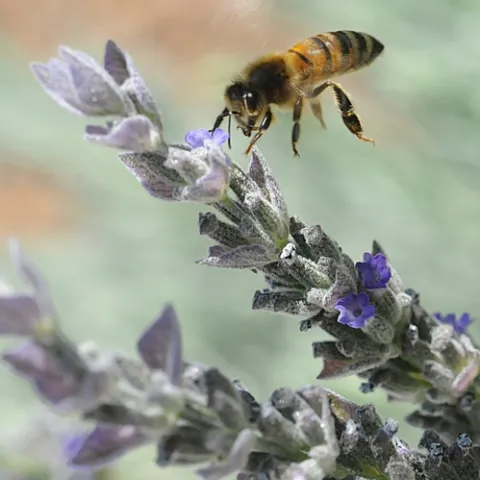
ITALIAN HONEY BEE forages for nectar on lavender. (Photo by Kathy Keatley Garvey)

Golden Moments

September 7, 2009
By Kathy Keatley Garvey
Don't know if silence is GOLDEN, but Italian honey bees definitely are. Early morning Saturday, I watched a bee the color of liquid gold nectaring the lavender in our yard. A golden opportunity to capture her brilliance. She won't live long.
View Article
Primary Image
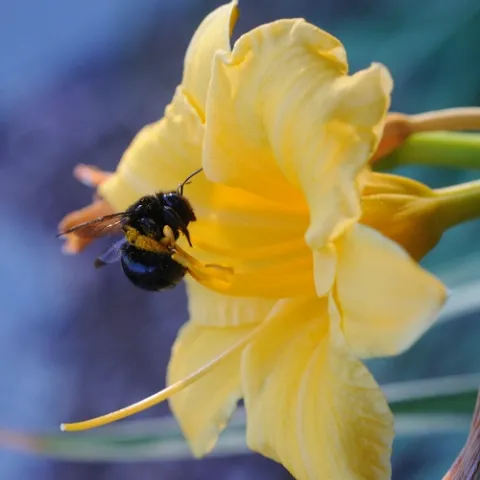
FEMALE carpenter bee (Xylocopata tabaniformis orpifex) visits a day lily. (Pkoto by Kathy Keatley Garvey)
Bug Squad: Article

Day Visitor

September 4, 2009
By Kathy Keatley Garvey
Carpenter bees (Xylocopata tabaniformis orpifex) can't get enough of the day lilies in our yard. In the early morning, they buzz into the patch of day lilies to forage for nectar and pollen. When they're finished, it's easy to tell where they've been: they're covered with telltale yellow pollen.
View Article
Primary Image
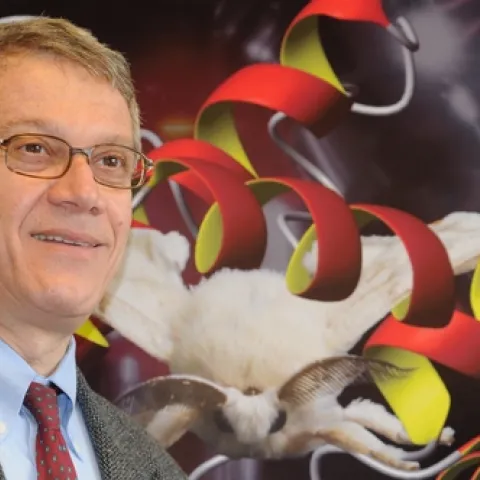
WALTER LEAL is a newly selected Fellow of the Entomological Society of America, a prestigious award granted to only 10 or fewer members of the 6000-member organization each year. (Photo by Kathy Keatley Garvey)

From DEET to Sweet

September 3, 2009
By Kathy Keatley Garvey
Congratulations are in order. Chemical ecologist Walter Leal, professor and former chair of the UC Davis Department of Entomology, has just been selected a Fellow of the Entomological Society of America, a prestigious honor granted to only 10 or few members of the 6000-member organization each year.
View Article
Primary Image
THE HONEY PEOPLE--Honey bee specialist Eric Mussen, the 2008-09 president of the Western Apicultural Society (WAS), chats with Liz Applegate, a nationally renowned nutritionist and fitness expert who praised the virtues of honey at the WAS meeting. (Photo by Kathy Keatley Garvey)

Show Me the Honey

September 2, 2009
By Kathy Keatley Garvey
It was delightful hearing UC Davis nutritionist and fitness expert Liz Applegate extol the virtues of honey at the 31st annual Western Apicultural Society (WAS) conference, held recently in Healdsburg. Like many of you, we've always loved honey.
View Article
Primary Image
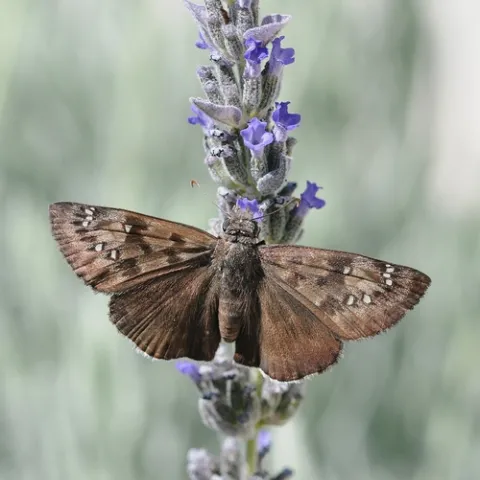
MOURNFUL DUSKY-WING butterfly nectaring lavender. (Photo by Kathy Keatley Garvey)

E. T., Where Are You?

September 1, 2009
By Kathy Keatley Garvey
Call it the "Mournful Dusky-Wing" or the "Sad Dusky-Wing." Call it what you will, but the Erynnis tristis, a member of the skipper butterfly family (Hesperiidae), is neither mournful nor sad when it's nectaring lavender.
View Article
Primary Image
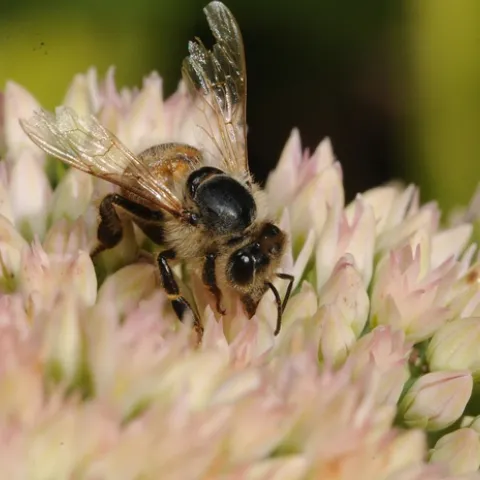
HONEY BEE pokes around in Autumn Joy sedum, currently a tight cluster of broccoli-like buds. (Photo by Kathy Keatley Garvey)

See 'em on the Sedum

August 31, 2009
By Kathy Keatley Garvey
It's no secret that bees like sedum. The Autumn Joy sedum (family Crassulaceae) growing in our garden is still a tight cluster of broccoli-like buds--not ready for prime time. But don't tell the honey bees that.
View Article
Primary Image
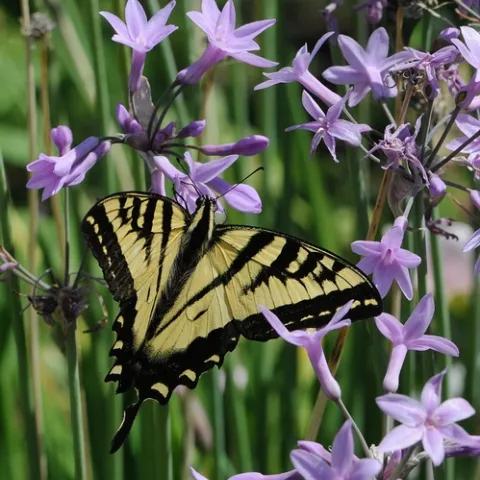
A MALE Western Tiger Swallowtail (Papilio rutullus) glides into a patch of ookow or wild hyacinth. (Photo by Kathy Keatley Garvey)

Tiger on the Ookow

August 28, 2009
By Kathy Keatley Garvey
Oo-laa! Ookow! What a treat to see the Western Tiger Swallowtail (Papilio rutullus) gliding into a patch of ookow (Dichelostemma congestum), also known as wild hyacinth. A recent outing to Healdsburg, Sonoma County, found the tiger on the ookow.
View Article
Primary Image
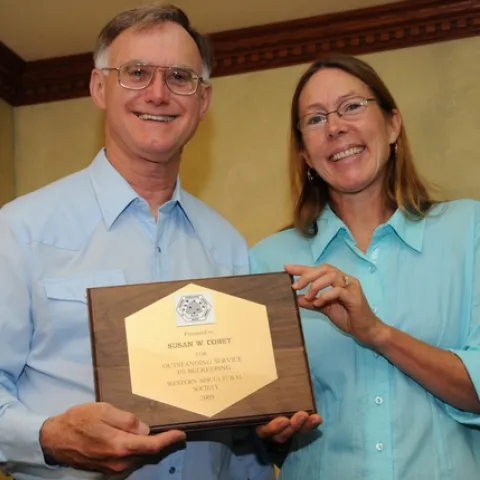
HIGH HONOR--UC Davis bee breeder-geneticist Susan Cobey receives the "Outstanding Service to Beekeeping" award at the Western Apicultural Society conference from president Eric Mussen, Extension apiculturist. (Photo by Kathy Keatley Garvey)
Bug Squad: Article

A Tip of the Veil

August 27, 2009
By Kathy Keatley Garvey
A tip of the bee veil to Susan Cobey. Cobey, bee breeder-geneticist and manager of the Harry H. Laidlaw Jr. Honey Bee Research Facility at the University of California, Davis, has won the 2009 Outstanding Service to Beekeeping award from the Western Apicultural Society (WAS).
View Article
Primary Image
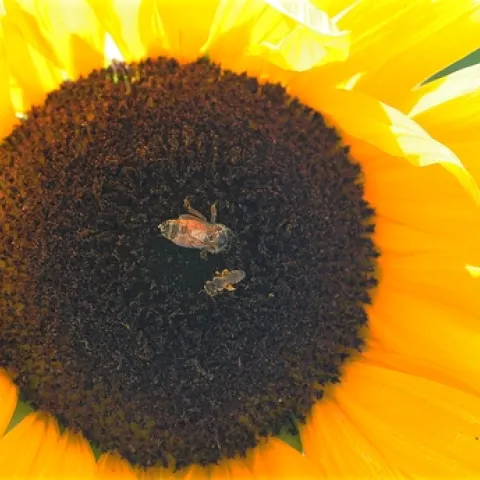
TWO ON A SUNFLOWER--A honey bee (Apis mellifera) and a female sweat bee (Halictus ligatus) share a sunflower. (Photo by Kathy Keatley Garvey)

Sharing a Sunflower

August 26, 2009
By Kathy Keatley Garvey
If you're in the right spot at the same time, you may get a double bonus: a non-native bee and a native bee on a native plant.
View Article
Primary Image
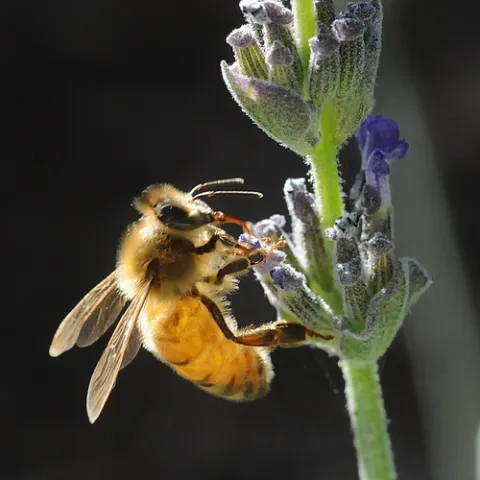
HONEY BEE heads for lavender. "It's especially important to provide nectar and pollens at the end of the season-- late summer and fall," says Extension Apiculturist Eric Mussen of UC Davis. "That's when resources tend to become scarce." (Photo by Kathy Keatley Garvey)
Bug Squad: Article

Bee Well

August 25, 2009
By Kathy Keatley Garvey
What's causing colony collapse disorder (CCD)? Are we any closer to determining the cause? CCD, the mysterious malady characterized by bees abandoning the hive, leaving behind the brood and food storage, continues to be of great concern--and rightfully so.
View Article