A Natural Solution for California's Herds: African Catfish Peptides

California's cattle producers and agricultural communities are all too familiar with the rising challenge of antibiotic resistance, making common bacterial infections harder to treat in livestock. But imagine a future where we could tackle these infections with a natural, powerful alternative. Our research points to just that: antimicrobial peptides (AMPs) found in African catfish.

We're really excited about these peptides because African catfish thrive in pathogen-rich freshwater, naturally producing these robust immune compounds in their skin mucus as a defense. This natural origin makes them highly appealing alternatives to synthetic drugs.

Predicted Safety and Potent Action

One of the most compelling aspects of these AMPs is their predicted safety for mammals. Our initial computer analyses suggest that various catfish AMPs are generally recognized as safe (GRAS). We predict they'll be absorbed in the human intestine without causing liver, brain, or heart toxicity. Furthermore, lab tests on a promising peptide, NACAP-II, confirmed it was non-hemolytic, meaning it didn't damage rabbit red blood cells—a strong indicator of its potential safety for mammalian cells.

Beyond safety, these peptides demonstrate effectiveness against problematic bacteria. One study revealed NACAP-II's strong activity against Extended-Spectrum Beta-Lactamase (ESBL)-producing Escherichia coli—a critical concern for both animal and human health due to its resistance to many common antibiotics. Another peptide, ACAP-IV, also showed antibacterial activity against E. coli and Staphylococcus aureus. We believe these AMPs work by directly disrupting bacterial cell membranes, a mechanism that makes it harder for bacteria to develop resistance compared to how they resist traditional antibiotics.
Primary Image
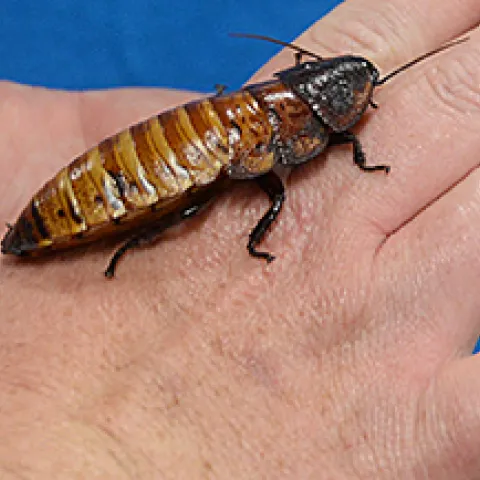
A Madagascar hissing cockroach, part of the Bohart Museum of Entomology's display at the 2025 UC Davis Picnic Day.
Bug Squad: Article

Bohart Bugs at Briggs

April 15, 2026
By Kathy Keatley Garvey
 Remember the alliteration: Bohart Bugs at Briggs.That means that the Bohart Museum of Entomology "bugs" will be moved to the grounds of Briggs Hall during the campuswide UC Davis Picnic Day on Saturday, April 18. The Bohart headquarters in Room 1124 of the Academic Surge Building at 455 Crocker Lane…
View Article
Thrips/TSWV Kings: Article

2026 First report, April 15

April 15, 2026
By Neil McRoberts
April 15, 2026 updateGeneral background: Just like last year, we are a little slow getting off the mark with our updates this year.  The UC ANR web platform is still giving us issues and we’ll be reporting thrips development here, at least for the start of this season . Thrips development…
View Article
Thrips/TSWV Fresno: Article

2026 First report, April 15

April 15, 2026
By Neil McRoberts
April 15, 2026 updateGeneral background: Just like last year, we are a little slow getting off the mark with our updates this year.  The UC ANR web platform is still giving us issues and we’ll be reporting thrips development here, at least for the start of this season . Thrips development…
View Article
Thrips/TSWV Merced: Article

2026 First report, April 15

April 15, 2026
By Neil McRoberts
April 15, 2026 updateGeneral background: Just like last year, we are a little slow getting off the mark with our updates this year.  The UC ANR web platform is still giving us issues and we’ll be reporting thrips development here, at least for the start of this season . Thrips development…
View Article
Thrips/TSWV Stanislaus county: Article

2026 First report, April 15

April 15, 2026
By Neil McRoberts
April 15, 2026 updateGeneral background: Just like last year, we are a little slow getting off the mark with our updates this year.  The UC ANR web platform is still giving us issues and we’ll be reporting thrips development here, at least for the start of this season . Thrips development…
View Article
Thrips/TSWV Eastern San Joaquin Co.: Article

2026 First report, April 15

April 15, 2026
By Neil McRoberts
April 15, 2026 updateGeneral background: Just like last year, we are a little slow getting off the mark with our updates this year.  The UC ANR web platform is still giving us issues and we’ll be reporting thrips development heNre, at least for the start of this season . Thrips…
View Article