
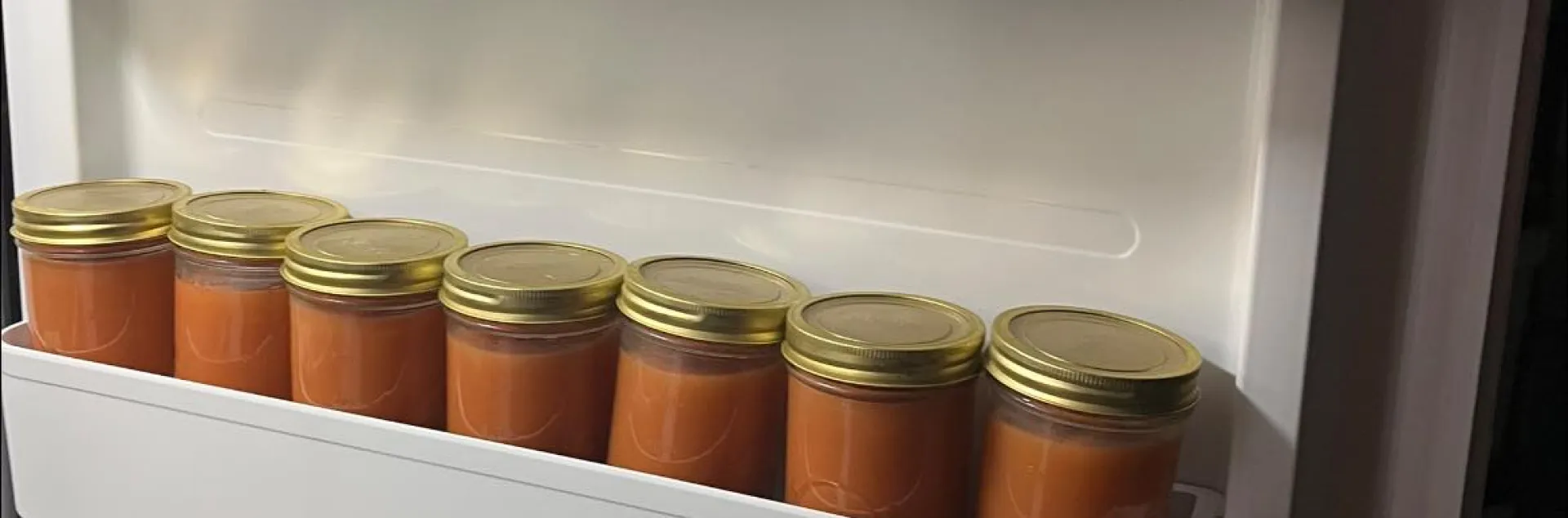
Choose the correct shape, and don't forget the headspace!
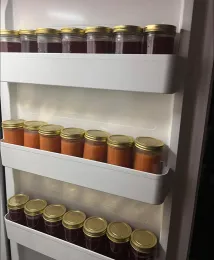
Canning jars are a great choice when it comes to packaging foods for the freezer. They’re durable, reusable, leakproof, and they keep food from absorbing odors and off flavors from other foods in the freezer. However, it’s important to choose the correct type and shape of jar, and to make sure you leave the appropriate headspace to ensure that the jar doesn’t overflow or break as the contents expand.
- Choose wide-mouth, straight-sided canning jars. The straight sides provide better protection against breakage as the contents in the jar freeze and expand. And, the straight sides allow you to remove the contents easily, even if they haven’t completely thawed.
- While it’s possible to use regular-mouth jars with “shoulders,” you will need to leave extra headspace, which means having more air in the jars, and you still run the risk of breakage. Shouldered jars are not recommended for freezer use.
- Regular glass jars, including commercial product jars, are not recommended for freezing. Regular glass is not tempered for freezer temperatures and will break very easily. Save regular glass jars for the fridge or for dry storage.
- Headspace is the empty space in the jar between the top of the food and the bottom of the lid. Allow ½” headspace in wide-mouth pint jars, and 1” in wide-mouth quart jars (or ½” for dry pack (i.e., packed without added sugar or liquid). Some jars will have a freezer “fill line” embedded right in the glass.
For further information, visit the National Center for Home Food Preservation (NCHFP) website.
Brought to you by the UC Master Food Preservers of El Dorado County
Last updated July 2025