

How Do Wildfires Affect Drinking Water Quality?
Wildfires can introduce harmful chemical and microbial contaminants into drinking water sources, damage water infrastructure, and alter the chemical properties of delivered water supply. One major concern is the contamination from hazardous chemicals, specifically, volatile organic compounds (VOCs), semi-volatile organic compounds (SVOCs) and carcinogenic substances. For wildfires in the wildland-urban interface (WUI), not only is contamination from burned infrastructure a concern, but also debris from natural vegetation as well. When wildfires burn the WUI, the combination of burnt and damaged natural vegetation and built structures can introduce suspended solids, heavy metals, and other contaminants into water resources through runoff.
Damage at or near the point of use can result in increased risk of contamination, which poses health risks to humans and affects the aesthetic qualities (e.g., taste, odor, and clarity) of water. Wildfires can directly damage critical water infrastructure, including pumps, storage tanks, pipes, and treatment plants. Destruction of these components can disrupt water delivery to residents and create prolonged periods without reliable access to clean drinking water.
What Are the Signs and Risks of Contamination?
Common indicators of contamination include changes in the physical properties of drinking water such as unusual taste, odor, or appearance. Cloudy or frothy water or water showing discoloration may indicate the presence of suspended particulates, detergents, or elevated concentrations of metals. Additionally, distinctive odors such as a sulfuric- or turpentine-like smell may suggest contamination by organic chemical compounds. It should be noted that many harmful contaminants cannot be detected through sensory methods alone and additional testing is recommended. Exposure to common drinking water contaminants post-wildfire can cause immediate health symptoms including dizziness, vomiting, convulsions, and unconsciousness, in addition to long-term health risks such as increased risk of cancer.
What Steps Can You Take to Address Potential Contamination?
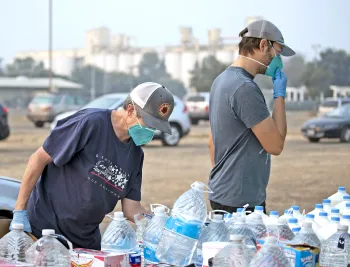
Post-fire, appropriate next steps to access safe drinking water depends on whether your water comes from a public or private water system. To find out who your water provider is, visit the California Institute for Water Resources’ website (https://ciwr.ucanr.edu/Tools/Drinking_Water/fs2_e/index.cfm).
For California residents whose water is supplied by a local water utility, the water provider is responsible for implementing testing and treatment procedures after a wildfire. Residents can also take several proactive measures post-fire to enhance their safety including:
- Immediately check local water quality notices upon returning home before assuming tap water is safe.
- Follow all advisories from your local water provider. Advisories and instructions for safe water use can be found on their local website or social media platforms.
- Check with your local water company about potential locations for clean or bottled water distribution if you are under a water quality advisory.
- Flush all household fixtures (e.g., pipes, faucets, toilets) to remove residual contaminants from plumbing systems.
For those who rely on private, domestic wells, ensuring water safety after wildfires is the responsibility of the individual well-owner. Private well users should independently test and remediate any contamination. The most common issue affecting wells post-fire is loss of water pressure caused by inoperative pumps due to outages in power supply. If pressure loss occurs, do not drink the water until it has been tested, at minimum, for bacterial contamination. If there is visible damage to your well equipment, indoor or outdoor pipes, or well’s electrical components, contact a licensed well contractor for repairs and conduct appropriate testing. If equipment is damaged, disinfecting and flushing your well is essential.
Additional Resources
Check out these drinking water safety-related resources from the UC ANR Fire Network and our colleagues!
- After the Fire: Drinking Water Contamination and Safety factsheet from the UC ANR Fire Network (2025) - English
- After the Fire: Drinking Water Contamination and Safety factsheet from the UC ANR Fire Network (2025) - Spanish
- Learn more about drinking water safety from the California Institute for Water Resources
- Watch our After the Fire: Water Resource Contamination Webinar to learn more about some of the latest research in water resource contamination and safety post-wildfire.