
PalmArbor, an electronic journal published periodically, includes articles on the identification, taxonomy, nomenclature, selection, propagation, and landscape management, including pests, diseases, disorders, nutrition, irrigation, pruning, and other aspects of landscape management, of palms, trees, and other woody plants. Content will be of interest to botanists, horticulturists, arborists, nurserymen, and landscape managers, designers, and architects.
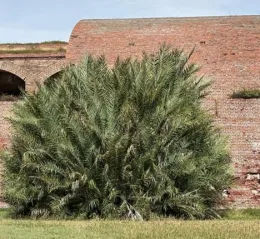
Naturalized coconut (Cocos nucifera) and date (Phoenix dactylifera) palms, Dry Tortugas, Florida. Dennis V. Johnson and Jane C. MacKnight. PalmArbor 2026-01: 1–10. DOI: https://doi.org/10.21414/B1VS3G
A review of historical records, documents, photographs, and a 2025 field visit to Garden Key in the Dry Tortugas Archipelago, Florida, U. S. A. document that Cocos nucifera (coconut palm) and Phoenix dactylifera (date palm) have long histories on some of the islands of this archipelago. The history of introduction of the two palm species and their past, present, and projected future status are discussed and illustrated, adding to our knowledge of the naturalized range of both species.
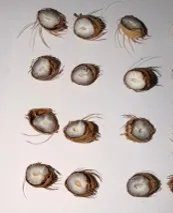
Effect of age and mesocarp removal on germination success of Chrysalidocarpus lutescens (Arecaceae). Linton L. Arneaud, Fradian Murray, and Donald R. Hodel. PalmArbor 2026-02: 1–17. DOI: https://doi.org/10.21414/B1R30H
The areca palm (Chrysalidocarpus lutescens H. Wendl.) is widely cultivated in tropical landscapes, yet we observed that volunteer seedlings are rarely seen beneath mature trees in Barbados, West Indies, despite apparently favorable environmental conditions. Thus, we conducted a study investigating the effect of age or freshness (zero, one, and over three months old) and presence or absence of mesocarp on germination of seeds of C. lutescens. Our findings support those in the literature that fresh seeds from fully mature, soft-ripe fruits planted immediately provided the best germination. The literature also reported that the benefits of mesocarp removal for seed germination of C. lutescens are mixed, and we found in our study that this practice did not significantly affect germination. While our results tend to suggest why old, fallen seeds below the mature palms rarely if ever germinate (old age and desiccation), it does not explain why even our best germination percentage was low, about 10 percent, when our extensive past experience shows it should be from 75 to 90 percent. Numerous factors could cause this discrepancy in germination percentage and rates between our present study and our past experiences, including unknown pathogens, seed medium moisture levels, light levels, temperature, and/or the possibility that an underlying issue unrelated to cultivation and environmental factors presented or discussed in this paper might be present. For example, a genetic aberration leading to poor embryo development and/or poor germination success, which proper seed handling, planting, and favorable germination environment would only be able to partially overcome, might be present.

×Wodyetchia bifurcina (Arecaceae), a new hybrid genus and species from cultivation of Wodyetia bifurcata and Veitchia arecina. Donald R. Hodel, Justen B. Dobbs, and Robert H. Burtscher. PalmArbor 2026-03: 1–52. DOI: https://doi.org/10.21414/B1M881
×Wodyetchia bifurcina, a hybrid palm between the pistillate parent Wodyetia bifurcata and the likely staminate parent Veitchia arecina, is described, named, typified, and illustrated. Its history, description, and cultivation are provided and discussed.
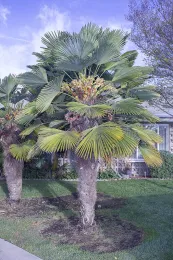
A Tale of Two Palms: An assessment of Trachycarpus fortunei and T. wagnerianus (Arecaceae). Donald R. Hodel, James Komen, Max F. Rothschild, and Josue Chinchilla-Vargas. PalmArbor 2026-04: 1–118. DOI: https://doi.org/10.21414/B1GK5R
The taxonomic status of Trachycarpus fortunei and T. wagnerianus varies considerably. These small to moderate, solitary, highly esteemed, cold-tolerant fan palms are likely from China and perhaps Japan but are unknown in a truly wild, natural, original state. Their taxonomic status varies: they have been considered separate species, the latter has been placed in synonymy with the former, or the latter has been listed as an infraspecific taxon of the former. Here, we amply illustrate, discuss, and review their histories, nomenclature and typification, distribution and ecology, conservation, ethnobotanical uses, and cultivation. We also provide detailed de-scriptions and a morphometric character comparison to develop reliable character tools for distinguishing both taxa. The results indicate that these taxa are highly variable because of long histories spanning thousands of years of selection, breeding, and hybridization, intentional or not, mostly for enhancement of the numerous products derived from them. In many respects, they are artificial, domesticated species. While these results suggest but do not confirm their separate taxonomic status, they provide reliable character tools for distinguishing both taxa. A rigorous and robust molecular phylogenetic analysis is needed to sort out these two taxa and the entire genus.
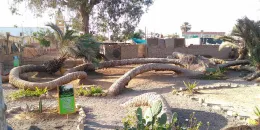
The bewitched seven-headed date palm, Cachiche, Ica, Peru. Dennis V. Johnson, Ahmed Othmani, and Jane C. MacKnight. PalmArbor 2026-05: 1–10. DOI: https://doi.org/10.21414/B1BS3T
This paper describes the unusual procumbent stem morphology of a bewitched, mystical seven-headed date palm at Cachiche, Ica, Peru, and discusses its natural causes and the association with witchcraft-related actions to prevent growth of a seventh stem.
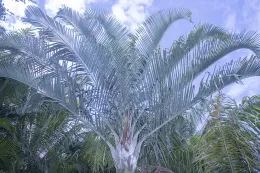
New artificial hybrids in Chrysalidocarpus (Arecaceae). Part 2. The tri-bana palm: Chrysalidocarpus x pembacaryi. Donald R. Hodel, Justen B. Dobbs, and Robert H. Burtscher. PalmArbor2026-06: 1–42. DOI: https://doi.org/10.21414/B1730V
This article, the second in an occasional series about the hybrid palms in Chrysalidocarpus (Arecaceae) that co-author Justen B. Dobbs is developing in Florida, U. S. A., addresses the tri-bana palm, Chrysalidocarpus × pembacaryi, another handsome hybrid entering tropical and subtropical private collections and botanical gardens and is likely to become more popular in the trade. Thus, this new hybrid palm is formally named, described, and illustrated, compared to its parents, and its cultivation and landscape use discussed.
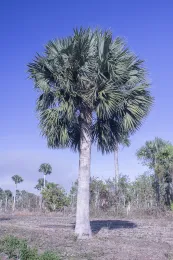
Update of Sabal (Arecaceae) in Cuba. Celio E. Moya López and Donald R. Hodel. PalmArbor 2026-07: 1–85.
Four species of Sabal (Arecaceae)—S. domingensis, S. maritima, S. palmetto, and S. yapa—occur naturally in Cuba and their distribution variously shared with adjacent countries in the Caribbean basin. In this lavishly illustrated account, we update and discuss their nomenclature and taxonomy—not only for specimens collected on the Island, but also for type specimens from other countries associated with the four Cuban species—and describe their distribution in Cuba.
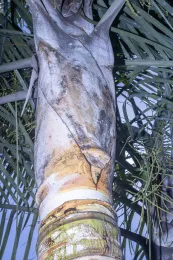
New artificial hybrids in Chrysalidocarpus (Arecaceae). Part 3. The golden-triangle palm: Chrysalidocarpus × lutecaryi. Donald R. Hodel, Justen B. Dobbs, and Robert H. Burtscher. PalmArbor 2026-08: 1–37.
This article, the third in an occasional series about hybrid palms in Chrysalidocarpus (Arecaceae) that co-author Justen B. Dobbs is developing in Florida, U. S. A., addresses the golden-triangle palm, Chrysalidocarpus × lutecaryi (C. lutescens × C. decaryi), another handsome hybrid entering tropical and subtropical private collections and botanical gardens that is likely to become more popular in the trade. Thus, this new hybrid palm is formally named, described, and illustrated, compared to its parents, and its cultivation and landscape use discussed.