
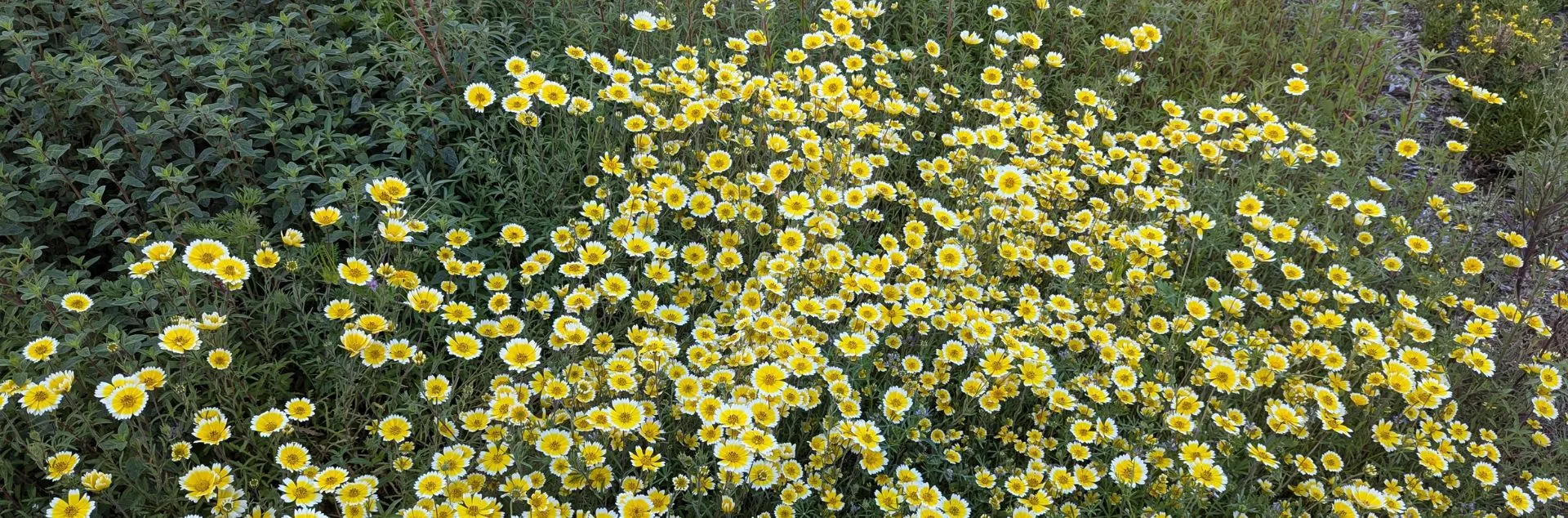
Blooming California wildflowers are an amazing sight! If you are thinking about sowing native wildflower seeds, late October to late November is the perfect time, as it closely mimics nature and takes advantage of the cool weather and the rainy season. As spring and summer flowers fade, their seed is distributed throughout the landscape where it waits for cooler winter weather and rain to germinate. Planting in fall allows the winter weather to do that. Sow them directly on soil and allow the winter weather to do the rest.
Description
Choose seeds that will grow on your site. California natives are a good bet as they have evolved in our climate and soil. To extend your flower season, select seeds that bloom in spring, summer and fall. You can also continue to sow seeds into winter to have similar plants that bloom later, extending the bloom. Choose a mix of annual and perennial seeds. Annuals grow fast, producing a beautiful pop of color. They self-seed and then die. Herbaceous perennials typically grow slower, bloom later, reseed, often die back to the ground and return the following year. Mixing the two provides a long, interesting and beautiful bloom.
Individual plant information: California native annuals, easy-to-grow California native annuals and perennial herbs (from Calscape.org)
Growing Conditions
Light: Choose seeds that grow well in your sun exposure: full sun, afternoon shade, or shade. Keep in mind that “coastal plants” typically like afternoon shade inland, and some “full sun” plants will not do as well on the coast.
Water: Water to keep the soil moist during dry spells. Use a fine mist to not displace the seed.
In general, it’s better to underwater a native than to overwater it.
Soil: Natives prefer well-drained soil, typically without fertilizer. Soil amendments are not necessary; however, organic green compost can be added and watered into the soil. Clear the area of weeds. Take a photo of the germinating weeds so you know what to remove once the seeds start to germinate. Warning, they can look very similar! Mulch can be about an inch thick. Remove thicker mulch to improve germination. If no mulch lightly rake (no more than 1/4”) to prepare the surface.
Site: Easiest to start with smaller areas, such as between existing plants or in a small section. Choose a site with uniform sun exposure. If your site has mixed sun exposure, break it up into sun exposure sections that match the seed requirements.
Sowing: Combine 1 part seed to 3 parts coarse sand or loose soil (helps to evenly distribute the seed) and broadcast the mixture over the soil/mulch. Cover VERY lightly (less than ¼” or germination is impaired) with soil and lightly tamp down to help protect the seeds from winds and birds. Spray lightly with water to moisten the soil.
Tips for Optimal Germination
Choose plants that are native to Northern California (suited to our weather and pollinators) and from a reputable source. Select seeds that match your site’s sun exposure. Cover seeds with no more than ¼” of soil and mist to keep the soil moist, not wet. Sow seeds every few weeks into winter to replace any that are lost and to ensure germination and a prolonged bloom season.