Project Board Help

Test PB Collection: FTE

Test dynamic

Primary Image
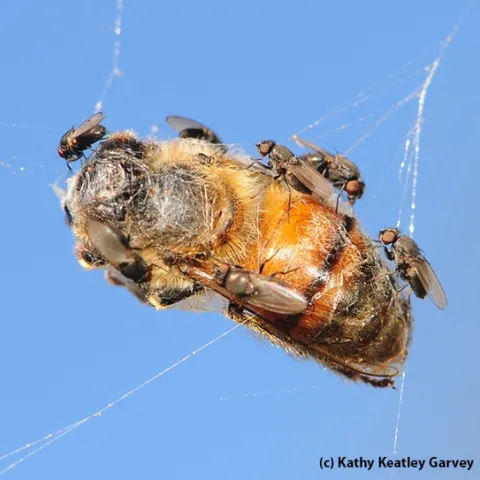
Honey bee caught in the storm attempts to dry off. (Photo by Kathy Keatley Garvey)
Bug Squad: Article

That Wet Stuff!

October 20, 2015
By Kathy Keatley Garvey
The rain that pounded Northern California on Oct. 18--complete with thunder and lightening--also drenched a few honey bees that waited out the storm.
View Article
Primary Image
A common gray hairstreak, Strymon melinus, nectarine on a Mexican sunflower (Tithonia). Photo by Kathy Keatley Garvey)
Bug Squad: Article

A Winning Streak

October 19, 2015
By Kathy Keatley Garvey
It's delightful to see the gray hairstreak. We're not talking about the gray streaks in our hair as we age (to perfection, of course!). We're talking about the gray hairstreak, a common gray butterfly found throughout the United States, coast to coast, as well as parts of Canada and Mexico.
View Article
Primary Image
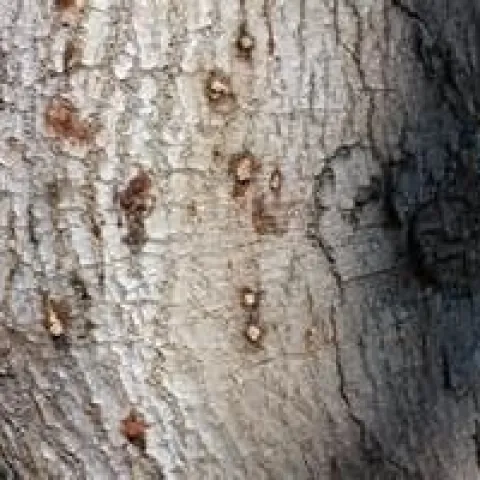
PSHB damage
Topics in Subtropics: Article

Polyphagous and Kuroshio Shot Hole Borers

October 19, 2015
By Ben A Faber
FUSARIUM DIEBACK AND POLYPHAGOUS SHOT HOLE BORER ON AVOCADO Akif Eskalen1, Richard Stouthamer2 1Department of Plant Pathology and Microbiology, UC Riverside 2Department of Entomology, UC Riverside BACKROUND Polyphagous shot hole borer (PSHB), Euwallacea sp. (#1) (Fig.
View Article
UC Weed Science (weed control, management, ecology, and minutia): Article

The efficacy of homeowner herbicides for field bindweed control

October 17, 2015
In a recent blog post, Dr. Clyde Elmore discussed weed species changes in urban environments in response to the ongoing drought. One weed that can thrive under dry conditions is field bindweed, a significant weedy pest for homeowners, land managers, and farmers, alike.
View Article
Primary Image
Female monarch has just eclosed. Next to her is a gold-studded jade-green chrysalis. (Photo by Kathy Keatley Garvey)
Bug Squad: Article

Joy to the (Monarch) World

October 16, 2015
By Kathy Keatley Garvey
Oh, the joys of rearing monarch butterflies. Not for commercial purposes. For conservation purposes. For a couple of months now, we've been watching the monarch caterpillars slowly disappearing from our milkweed plants. We'd see fifth instar 'cats one day, and the next day, they'd be gone.
View Article
Primary Image
A queen bee circled by her retinue. (Photo by Kathy Keatley Garvey)
Bug Squad: Article

Neonics Severely Affecting Queen Bees

October 15, 2015
By Kathy Keatley Garvey
Everyone from scientists to environmentalists to beekeepers are clamoring for more research on the effects of neonicotinoids on honey bees.
View Article
UC Weed Science (weed control, management, ecology, and minutia): Article

ASDoing the weeds

October 15, 2015
By Oleg Daugovish
You may have heard about ASD (anaerobic soil disinfestation) as biological alternative to soil fumigation'. This is the practice of adding easily degradable carbon sources to soil and developing anaerobic conditions under plastic mulch in moist soils for 3-5 weeks.
View Article