UC ANR is committed to providing an accessible and inclusive web experience for all users. If you encounter an accessibility barrier or need content in an alternative or remediated accessible format, please contact anraccessibility@ucanr.edu.
The bees. What about the bees? How are they doing? Better, says retired Extension apiculturist Eric Mussen of the UC Davis Department of Entomology and Nematology, who today published the last edition of his newsletter, from the UC Apiaries.
By way of the San Francisco Chronicle Hopes of an almighty El Nio bringing rain to a drought-stricken California - with its fallow fields, depleted streams and parched lawns - were further dashed Thursday.
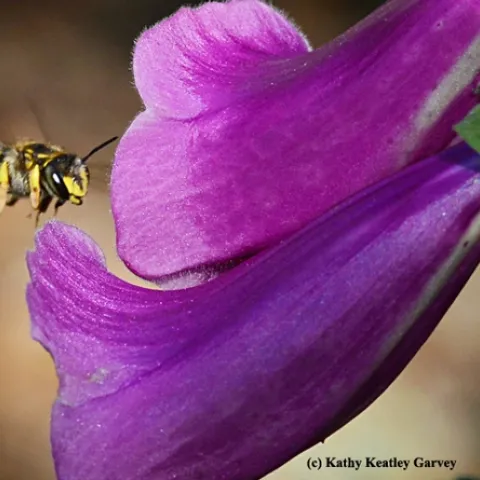
Foxgloves, meet the European wool carder bee. European wool carder bee, meet the foxgloves. It's like "old home week" when these two get together. The plant (Digitalis purpurea) and the bee (Anthidium manicatum) are both native to Europe.
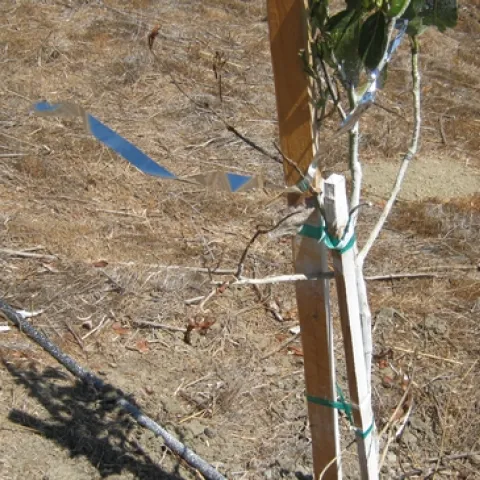
Just when you thought we knew all the devastating pests of avocado, along comes another one, this showing up in the Piru area of Ventura County - bagrada bug. The infestation is in huge numbers covering the stems and leaves of the tree, leaving fecal droppings on the backsides of leaves.
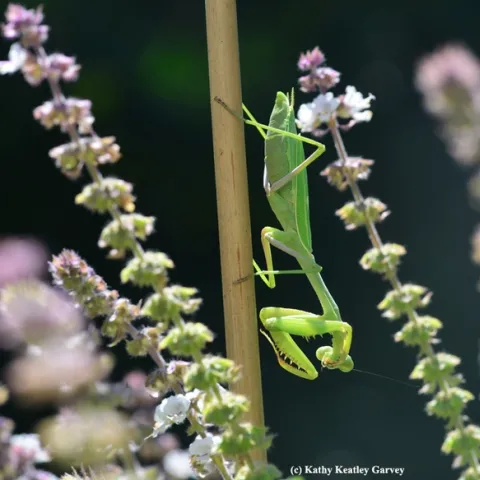
We've trained puppies to "come," "sit" and "heel." We've trained an African grey parrot to say "Here, kitty, kitty, kitty! Meow!" We've trained the kitty to ignore the parrot. But how do you train a praying mantis? You don't.
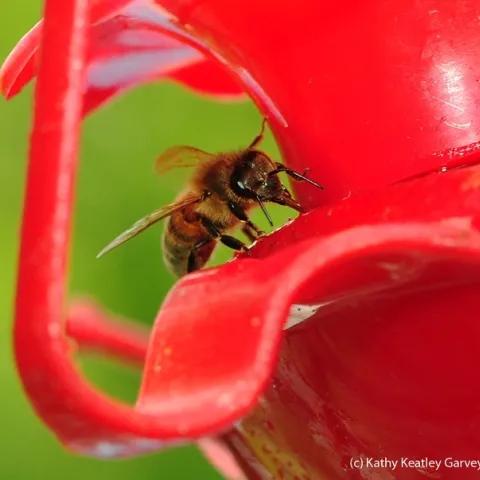
It's no secret that honey bees like the sugar/water mixture in hummingbird feeders. If there's no bee guard on the feeder or if the feeder isn't bee-proofed, bees will sip the mixture. They also will lick the spills. A sudden gust that sways or upends the feeder is "bee happy time.
Joe DiTomaso & Josh Davy (UCCE) and Kirk Davies & Brenda Smith (Eastern Oregon Agricultural Research Center) are also authors on this masterpiece. It's available through the Weed-RIC website, or go directly to it at http://wric.ucdavis.edu/publications/MedusaheadManagementGuide_pub_2014.
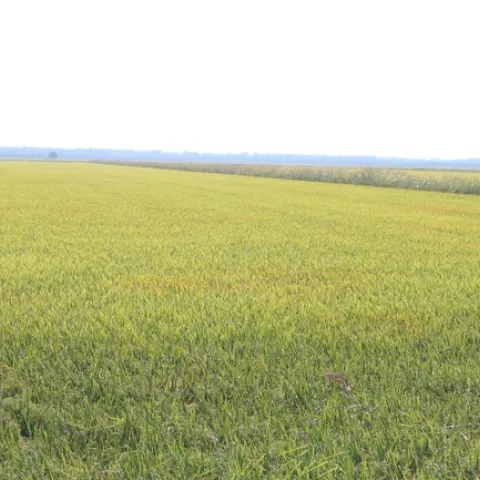
Last week I got two calls regarding unusual symptoms starting to appear on ripening rice plants. In both cases, the symptoms were described as medium sized round patches turning reddish or orange. Close inspection of plants showed typical symptoms of K deficiency.