UC ANR is committed to providing an accessible and inclusive web experience for all users. If you encounter an accessibility barrier or need content in an alternative or remediated accessible format, please contact anraccessibility@ucanr.edu.
I don't mulch much but this caught my eye: using those big round straw bales that unroll behind the tractor as an easy way to put out a mulch. John Wilhoit & Timothy Coolong (2013).
Training At planting (preferably in spring), if trees have an unbranched trunk greater than 2 feet tall, the tree should be headed back. This procedure should induce other buds along the trunk to shoot. Always remove leaves at positions where new shoots are required.
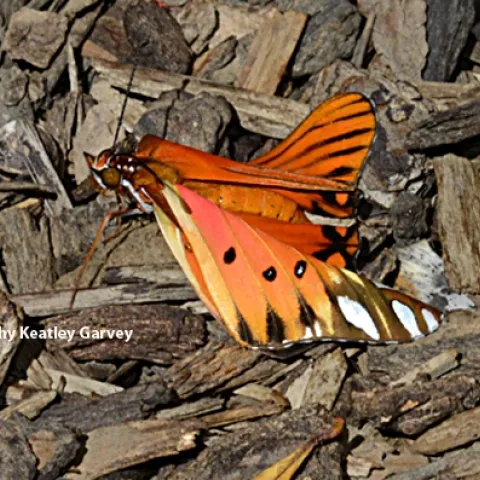
Call it serendipity. Call it a prize from the sky. Frankly, it's not every day that a newly emerged Gulf Fritillary butterfly, Agraulis vanillae, lands at your feet.
As summer nears its end, the honey bees are hungry. That's why Extension apiculturist Eric Mussen of the UC Davis Department of Entomology and Nematology advocates that we plant flowers for late summer and fall to help the bees.
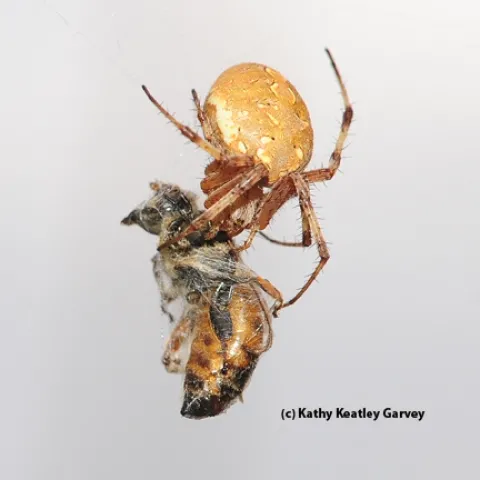
Today (Labor Day) began just like any other day. And it ended just like any other day, except for the Labor Day celebrations that we humans plan. For Nature's predators and prey that frequent our garden, however, it was an intertwining of life and death.
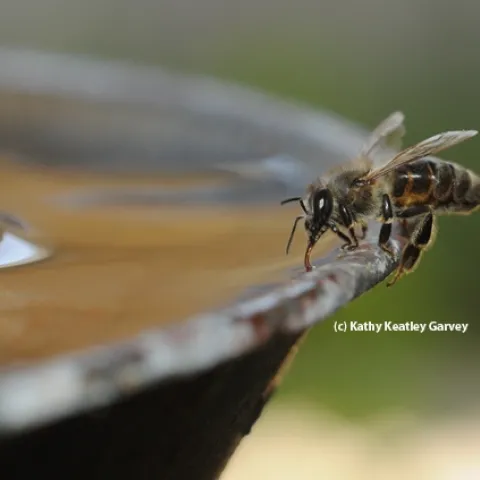
Ever seen honey bees foraging for water on your outdoor clothesline? When Extension apiculturist Eric Mussen of the University of California, Davis, addresses beekeeping associations, he tells them to "always provide water for your bees on your property.
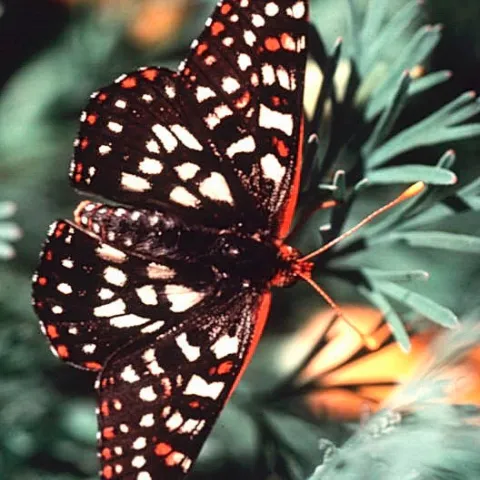
If you're not around the University of California, Davis, on Sunday morning, Sept. 29, you should be. You'll want to join the Butterfly Ecology Talk and Tour presented by naturalist Steve Daubert.