UC ANR is committed to providing an accessible and inclusive web experience for all users. If you encounter an accessibility barrier or need content in an alternative or remediated accessible format, please contact anraccessibility@ucanr.edu.
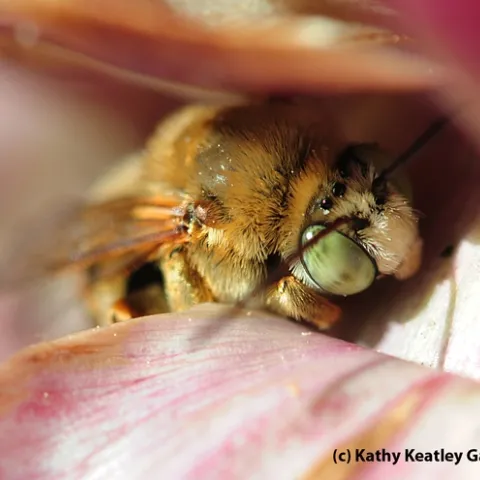
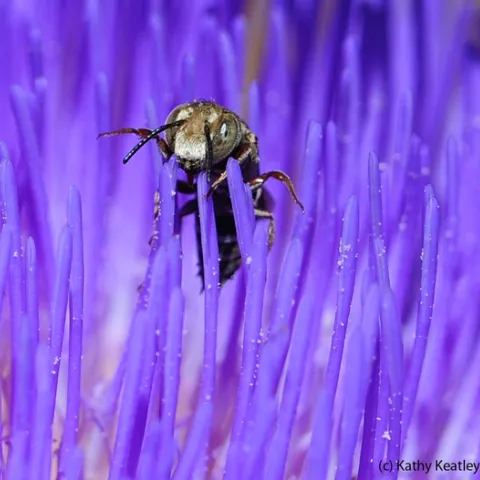
So you're poking around in your garden and you see a bee on a flowering artichoke that you've never seen foraging there before. On sunflowers, yes. On artichokes, no. A closer look--and huge green eyes stare back at you. Definitely not a honey bee (Apis mellifera), although its size is comparable.
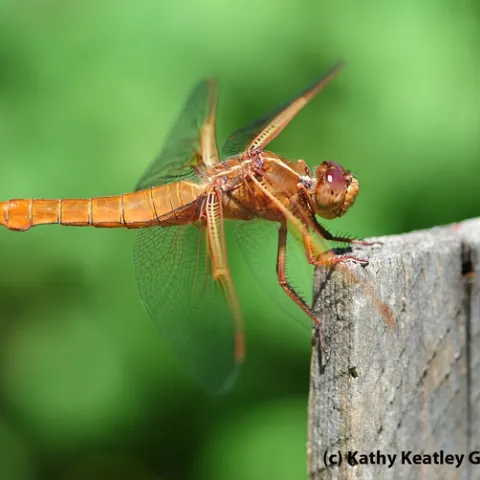
Gotta love those flame skimmers. It's a joy to watch these firecracker-red dragonflies (Libellula saturata) make their presence known. They dart over our fish pond, snatch an insect, and then perch on a tomato-plant stake to eat it. Last year another generation did the same thing.
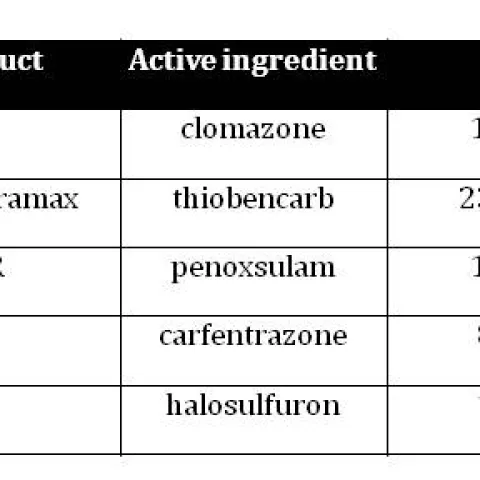
Some data from over 15 years ago may help people better asses the damage from phenoxy herbicide drift in the San Joaquin Valley this year. This data is only for one trial in one year, but shows the range of damage which can occur in cotton.
If you want to attract insects to your garden, plant an artichoke and let it flower. You'll get honey bees, syrphid flies, butterflies, carpenter bees and leafcutter bees. (And well, a few predators, such as spiders and wasps.) Today we saw leafcutter bees (Megachile spp.
Summary Winged primrose willow is an invasive weed that was identified in Butte County rice fields in 2011. Most infestations were along borders of fields and canals; however, this weed can thrive in the flooded environment within rice fields.
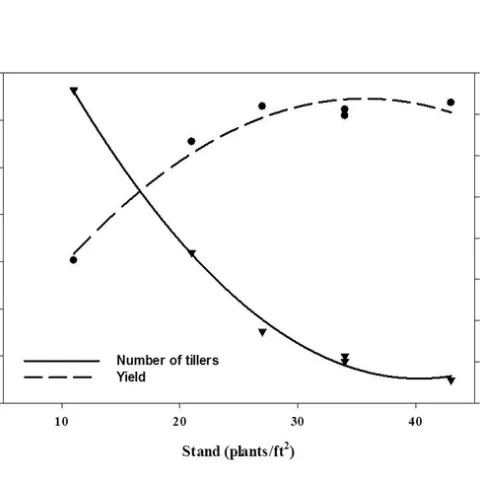
The season is advancing and fields are starting to go into tillering. I have always been amazed at the capacity of rice plants to adapt to the conditions of the field, producing more tillers in thin stands and less tillers in dense stands.
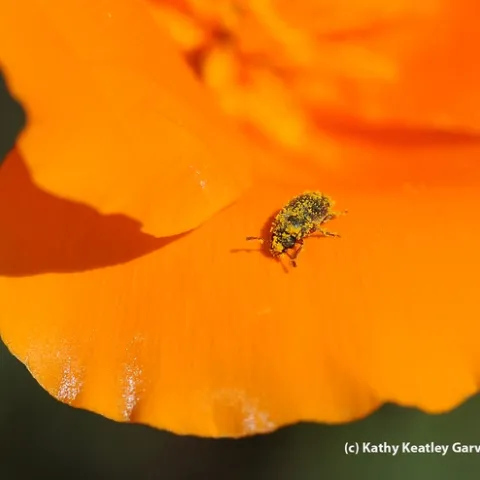
Since this is National Pollinator Week, you're probably out celebrating the bees--maybe doing hand stands, cartwheels and pirouettes. But have you ever thought about beetles as pollinators? They are. We spotted this little critter on a California golden poppy at the Sonoma Mission in Sonoma, Calif.
Check out the June 2012 issue of the Retail Nursery and Garden Center IPM News FEATURES: Tools for Removing Dandelions and Other Weeds Invasive Plants Sold in California User-friendly Weed Identification Tool...
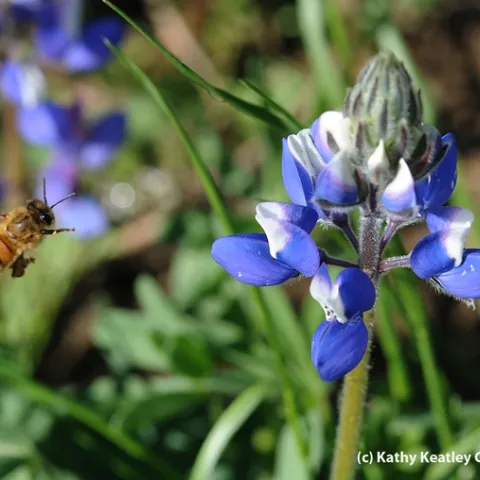
Sometimes you see honey bees "making a beeline." Such was the case when this honey bee (below) encountered a native wildflower, blue lupine (Lupinus). Lupines are known more as pollen plants than nectar plants, according to Frank Pellett's book, American Honey Plants, a Dadant publication.