UC ANR is committed to providing an accessible and inclusive web experience for all users. If you encounter an accessibility barrier or need content in an alternative or remediated accessible format, please contact anraccessibility@ucanr.edu.
This newsletter is being re-posted so our newly enrolled approved members receive current club meeting information and more..... >>This is only a re-post! No changes or corrections have been made to this September 2011 newsletter.
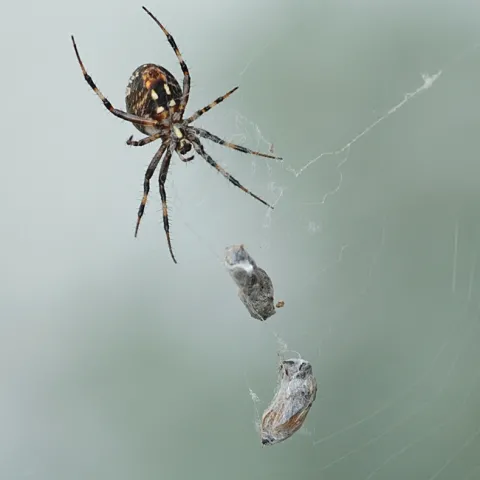
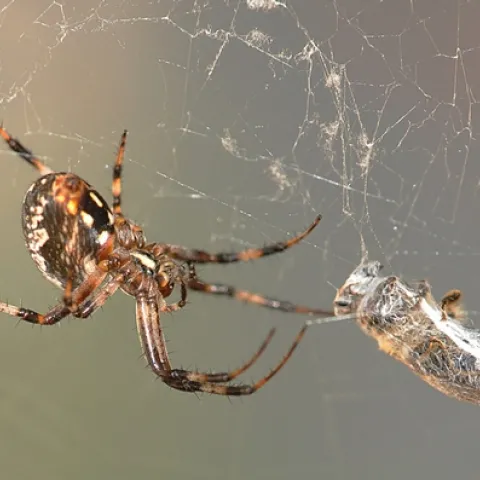
Mama said there'd be days like this, There'd be days like this, Mama said... When Van Morrison wrote the lyrics to "Days Like This," a song popularized by The Shirelles, he probably wasn't thinking of a mama garden spider or her prey.
The 2007 recipient of the Conservation Tillage Innovator of the Year Award, Tony Turkovich, was featured in a recent research video by the UC Office of the President.
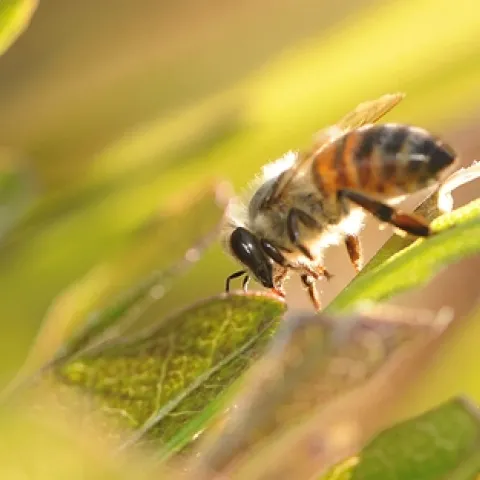
Sometimes the beauty of a bee simply takes your breath away. Especially when the late afternoon sun backlights it. Yes! All's right with the world. For just a moment in time, there are no pests, parasites or pesticides. There are no viruses, diseases, malnutrition and stress.
Last entry I talked about the problems with artichoke thistle (Cynara cardunculus L.) in the Sacramento Delta and other coastal regions. Again, this thistle was introduced to California as the cultivated artichoke, but escaped to become a serious rangeland weed.
Part of my job as the Director/Farm Advisor at the Intermountain Research and Extension Center involves overseeing weed management programs for a variety of crops and non-cropland at the Center. Over the last month, Ive observed the outcome of these programs as many of the crops are nearing harvest.
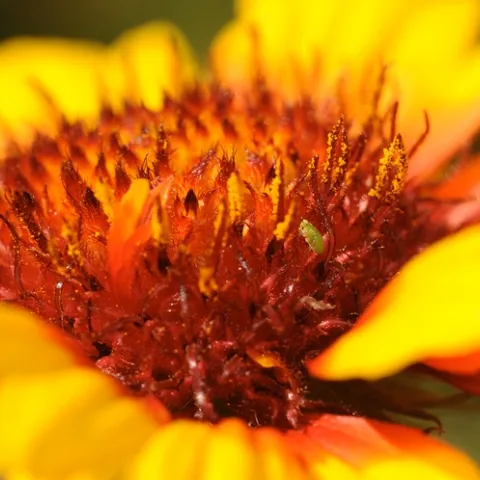
What's that little green bug on the head of the Gaillardia? It's soft-bodied. It's miniscule. It's sucking plant juices. An aphid! We captured an image of this little green bugger shortly after we purchased several plants from an area nursery.
Over the weekend, the Sacramento Bee published an article discussing the invasiveness and spread of yellow starthiste (Centaurea solstitialis) in California. http://www.sacbee.com/2011/08/21/3847369/invasive-yellow-star-thistle-aims.
It was not a good day to be a honey bee. But it was a good day to be a spider. For days we watched honey bees, sweat bees and syrphid flies visit a patch of alyssum and African daisies in our yard. Their floral visits did not go unnoticed.
That's one gigantic wasp! The new species that Lynn Kimsey, director of the Bohart Museum of Entomology and professor of entomology at UC Davis, discovered on the Indonesian island of Sulawesi measures a whopping two and a half inches long. That's the male "warrior wasp.