A Natural Solution for California's Herds: African Catfish Peptides

California's cattle producers and agricultural communities are all too familiar with the rising challenge of antibiotic resistance, making common bacterial infections harder to treat in livestock. But imagine a future where we could tackle these infections with a natural, powerful alternative. Our research points to just that: antimicrobial peptides (AMPs) found in African catfish.

We're really excited about these peptides because African catfish thrive in pathogen-rich freshwater, naturally producing these robust immune compounds in their skin mucus as a defense. This natural origin makes them highly appealing alternatives to synthetic drugs.

Predicted Safety and Potent Action

One of the most compelling aspects of these AMPs is their predicted safety for mammals. Our initial computer analyses suggest that various catfish AMPs are generally recognized as safe (GRAS). We predict they'll be absorbed in the human intestine without causing liver, brain, or heart toxicity. Furthermore, lab tests on a promising peptide, NACAP-II, confirmed it was non-hemolytic, meaning it didn't damage rabbit red blood cells—a strong indicator of its potential safety for mammalian cells.

Beyond safety, these peptides demonstrate effectiveness against problematic bacteria. One study revealed NACAP-II's strong activity against Extended-Spectrum Beta-Lactamase (ESBL)-producing Escherichia coli—a critical concern for both animal and human health due to its resistance to many common antibiotics. Another peptide, ACAP-IV, also showed antibacterial activity against E. coli and Staphylococcus aureus. We believe these AMPs work by directly disrupting bacterial cell membranes, a mechanism that makes it harder for bacteria to develop resistance compared to how they resist traditional antibiotics.
Primary Image
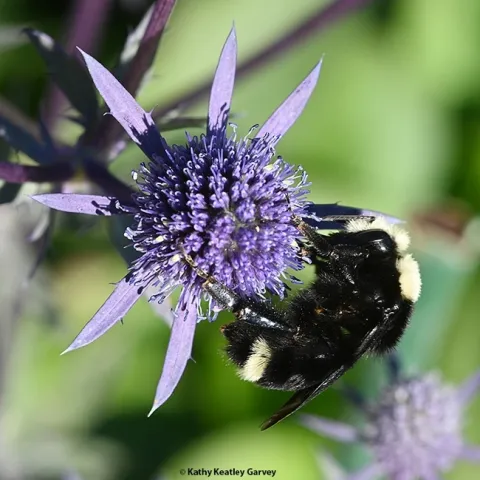
A yellow-faced bumble bee, Bombus vosnesenskii, forages on Eryngium amethystinum, a genus that belongs to the carrot family, Apiaceae. (Photo by Kathy Keatley Garvey)
Bug Squad: Article

UC Davis Arboretum Is the Magical Place to Find the First-of-the-Year Bumble Bee

December 26, 2023
By Kathy Keatley Garvey
If history repeats itself, the person who finds and photographs the first bumble bee of the year in the two-county area of Yolo and Solano will do so in the 100-acre UC Davis Arboretum and Public Garden--or will find it foraging on a plant purchased from one of the Arboretum's popular plant sales.
View Article
Primary Image
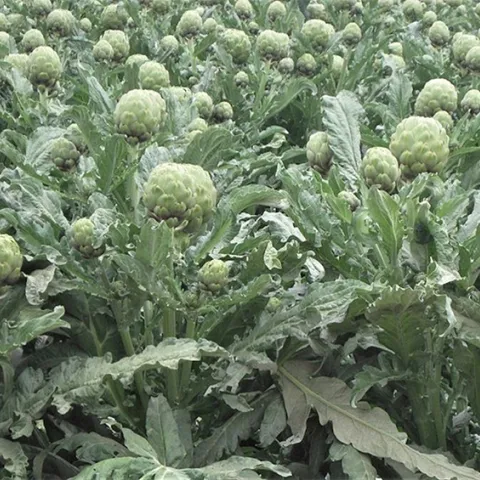
Almost all artichokes sold commercially in the US are grown in California Credit: rawpixel
UC Marin Master Gardeners: Article

January 2024: Planting Time for Artichokes

December 26, 2023
While artichokes may not be on every gardeners cool season vegetable list, they are fun to grow, and December is the right time to plant them for an early spring crop.
View Article
Stanislaus County: Article

Special Edition (English/Spanish) - December 2023

December 26, 2023
In this issue: Horn removal options.2 Opciones de descorne3 Calves scour5 Diarrea en terneros...7 Udder Prep Towels ...9 Toallas de pao para preparacin...9 Calf Pneumonia10 Neumona en terneros ....
View Article
Primary Image
A feral honey bee colony (now gone) from a backyard in Vacavile, Calif. (Photo by Kathy Keatley Garvey)
Bug Squad: Article

It's Bee-ginning to Look a Lot Like...

December 25, 2023
By Kathy Keatley Garvey
It's bee-ginning to look a lot like Christmas... All hail our littlest agricultural worker. European colonists brought the honey bee (Apis mellifera) to what is now the United States in 1622. Specifically, the bees arrived at the Jamestown colony (Virginia).
View Article
Primary Image
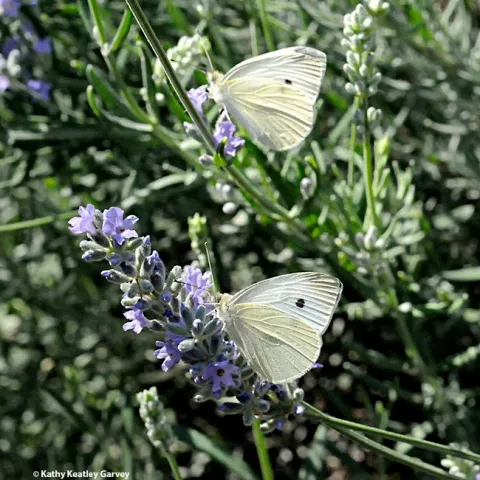
Art Shapiro spotted two cabbage white butterflies on Feb. 8, 2023 in West Sacramento. He spotted the first one, a female, at 11:22 a.m. At 11:38, he saw a male. He recorded them but did not collect them. Note: These images aren't them. (Photo by Kathy Keatley Garvey)
Entomology & Nematology News: Article

Bohart Museum Collaborating with Art Shapiro's 'Beer-for-a-Butterfly' Contest

December 23, 2023
By Kathy Keatley Garvey
Butterfly guru Art Shapiro, UC Davis distinguished professor emeritus, Department of Evolution and Ecology, is retired, but not from his research and not from sponsoring the annual Beer-for-a-Butterfly contest, in which the person who collects the first live cabbage white butterfly of the year in th...
View Article
Primary Image
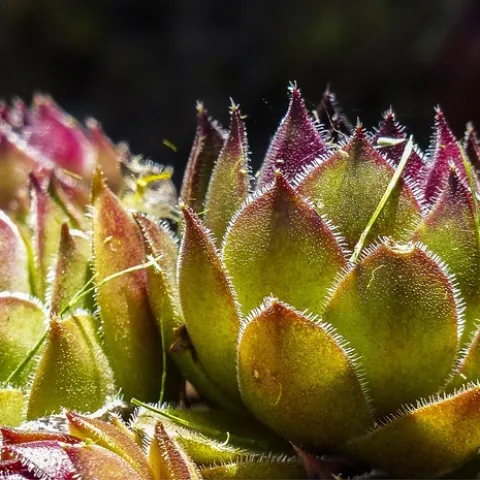
hens-and-chicks-359273 1280 Pixabay
Napa Master Gardener Column: Article

Not all succulents are cacti!

December 23, 2023
When I was still living at home with my parents, I remember my mother loving the succulent known as hens and chicks (Sempervivum spp.). They were often planted along highways. To be honest, I was not impressed with them. But today, I am very impressed.
View Article
Primary Image
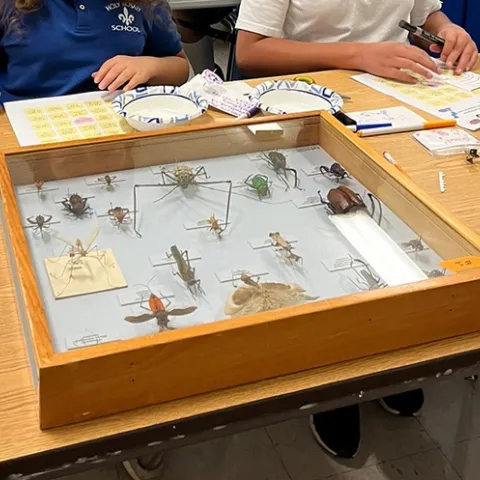
Students answer "Bug Bingo" questions. Specimens from the Bohart Museum of Entomology are in the foreground.
Entomology & Nematology News: Article

UC Davis Doctoral Students Share Insect Science with Middle School Students

December 22, 2023
By Kathy Keatley Garvey
Doctoral students Carla-Cristina "CC" Edwards and Mia Lippey of the UC Davis Department of Entomology and Nematology recently introduced students in the Holy Rosary Catholic School, Woodland, and Winters Middle School to insect science as part of the STEM Squad project.
View Article
Article

Delta Dental data breach

December 22, 2023
By Pamela S Kan-Rice
Letter to the UC community regarding the Delta Dental/MOVEit data breach Friday, December 22, 2023 UC recently learned that between May 27 and May 30, 2023, our dental insurance carrier, Delta Dental, experienced a data breach in their MOVEit file-transfer software program.
View Article