A Natural Solution for California's Herds: African Catfish Peptides

California's cattle producers and agricultural communities are all too familiar with the rising challenge of antibiotic resistance, making common bacterial infections harder to treat in livestock. But imagine a future where we could tackle these infections with a natural, powerful alternative. Our research points to just that: antimicrobial peptides (AMPs) found in African catfish.

We're really excited about these peptides because African catfish thrive in pathogen-rich freshwater, naturally producing these robust immune compounds in their skin mucus as a defense. This natural origin makes them highly appealing alternatives to synthetic drugs.

Predicted Safety and Potent Action

One of the most compelling aspects of these AMPs is their predicted safety for mammals. Our initial computer analyses suggest that various catfish AMPs are generally recognized as safe (GRAS). We predict they'll be absorbed in the human intestine without causing liver, brain, or heart toxicity. Furthermore, lab tests on a promising peptide, NACAP-II, confirmed it was non-hemolytic, meaning it didn't damage rabbit red blood cells—a strong indicator of its potential safety for mammalian cells.

Beyond safety, these peptides demonstrate effectiveness against problematic bacteria. One study revealed NACAP-II's strong activity against Extended-Spectrum Beta-Lactamase (ESBL)-producing Escherichia coli—a critical concern for both animal and human health due to its resistance to many common antibiotics. Another peptide, ACAP-IV, also showed antibacterial activity against E. coli and Staphylococcus aureus. We believe these AMPs work by directly disrupting bacterial cell membranes, a mechanism that makes it harder for bacteria to develop resistance compared to how they resist traditional antibiotics.
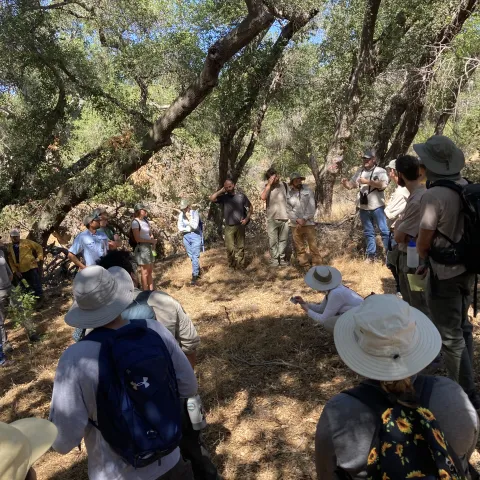
Participants at field training in oak woodlands.
Site

Goldspotted Oak Borer

Goldspotted Oak Borer (GSOB) Agrilus auroguttatus is an invasive pest contributing to the on-going oak tree mortality occurring on federal, state, private, and local Native American lands in many areas of San Diego County.
View Site
Site

UCCE Quagga and Zebra Mussel Research and Extension

Two invasive mussel species pose a threat to the environment and water supply in California. The quagga mussel, Driessena bugensis, and zebra mussel, Driessena polymorpha, were detected in California water bodies in 2007 and 2008. Together, the are also known as invasive Eurasian mussels.
View Site
Site - County Office

Cooperative Extension, Sutter-Yuba Counties

UCCE Sutter‑Yuba Counties provides a robust suite of research-based outreach and services—including agriculture support for rice and field crops, youth development through 4‑H, community gardening help, food preservation guidance, and climate smart agriculture programs. They operate a well-connected local…
View Site
Site - County Office

UC Cooperative Extension Sonoma County

Thank you for your patience during this new website transition. Cooperative Extension was started in 1914, to help farmers, homemakers, and youth use the latest university research to improve their lives.
View Site
MGAC Great Plant Sale 2025
Site - County Office

Alameda County Cooperative Extension

University of California Cooperative Extension UCCE Offices are local problem-solving centers, part of a statewide network of UC research and educators who bridge UC research with the communities we serve.
View Site
Site

UC Master Gardener Program of Alameda County

The UC Master Gardener Program of Alameda County is a group of volunteers committed to extending research-based knowledge and information on home horticulture, pest management, and sustainable landscape practices to the residents of Alameda County, California.
View Site
Site

Fresno County Viticulture

2026 San Joaquin Valley Grape Symposium Wednesday January 7, 2025 UC Kearney REC 9240 S Riverbend Ave, Parlier, CA 93648 Grape Symposium Agenda On-line registration is currently open to the public. Click HERE to Register Continuing Education: 2.0 PCA and 3.5 CCA hours have been requested.
View Site
Event Primary Image
Arboretum All Stars logo of six petal lavender flower on a yellow-orange background
UC Master Gardener Program of Yolo County: Event

The New Arboretum Allstars and Climate Ready Plants

Event Date
Jul 9, 2026

Join Katherine Bolte, GATEways Horticulturist for UCD Arboretum as she provides an overview of the UC Davis Arboretum's Climate Ready Gardening Program and All-Stars 2.0 plant list.For 30 years, the UC Davis Arboretum and Public Garden has provided guidance to the region's gardeners through the All-stars…
UC Master Gardener Program of Yolo County
View Event
Primary Image
looking up at the capitol building
Get Involved: Page

Advocate

UC ANR researchers, academics, and staff work at the intersection of science and public policy. When you advocate for UC ANR, you help protect the funding and partnerships that bring our work to communities across California. Take ActionScience and public higher education are under pressure. Here are…
View Page
Primary Image
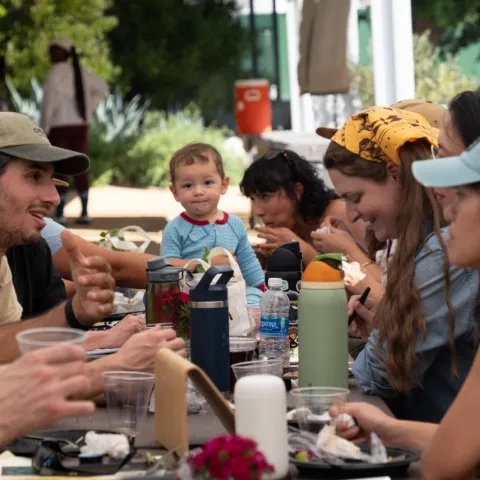
group of people sitting at a picnic table engaging with each other
Get Involved: Page

Volunteer

UC ANR volunteer programs put trained community members at the center of research, conservation, and education. Find a program below and discover how your time and skills can make a difference.  California Naturalist Certification ProgramThe UC California Naturalist Certification Program introduces…
View Page
ANR Contracts & Grants Updates: Article

Crop Protection and Pest Management and CA Strawberry Commission

May 21, 2026
By Kendra T Rose
Crop Protection and Pest Management (CPPM) Program FY 2026USDA NIFA has released the FY 2026 funding opportunity for the Crop Protection and Pest Management (CPPM) Program. This program supports integrated, multifunctional research, Extension, and education activities focused on addressing high-priority pest…
View Article
Thrips/TSWV status in Yolo & Colusa: Article

2026 4th Report-- May 21

May 21, 2026
By Patricia A Lazicki, Neil McRoberts
Tomato planting is wrapping up, and some early-planted fields are approaching canopy closure. Mid-to late-May has been on the warm side of normal, and the estimates for upcoming thrips generations have been moved slightly forward. Generation Predicted date Gen 3 peak adults 5/24 Gen 4 egg hatch 6/1 Gen…
View Article
Primary Image
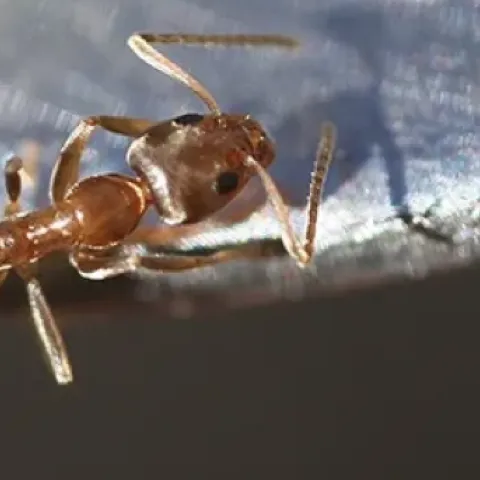
Argentine ant crawling on honey-coated spoon. (Photo by Kathy Keatley Garvey)
Bug Squad: Article

What He Discovered After Large-Scale Argentine Ant Removals

May 21, 2026
By Kathy Keatley Garvey
 The invasive Argentine ant (Linepithema humile), a significant pest in both agricultural and urban settings, is known for its supercolonies that render substantial harm to flora and fauna, including native arthropods, vertebrates and plants.Enter Professor David Holway of the UC San Diego Department of…
View Article
Event Primary Image
Vince Trotter headshot for water and food growing webinar banner
Grown in Marin: Event

Food Safety: Water for Irrigation and Produce Washing

Event Date
Jun 4, 2026

In this webinar, Vince Trotter (Sustainable Ag Coordinator and Ag Ombuds for UCCE Marin) will discuss the two main kinds of water on a produce farm and explore systems for maintaining food safety in both. The presentation will be followed by an opportunity for Q&A, and live Spanish interpretation will be…
Grown in Marin
View Event
Primary Image
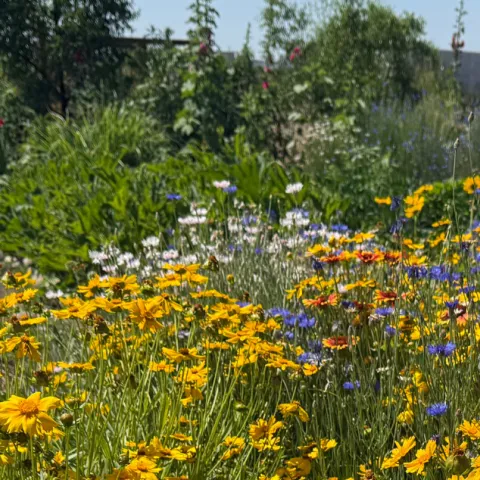
Colorful flowers in an area designed to attract pollinators
Fresno Gardening Green: Article

Yo’Ville Community Garden champions healthy food and local resiliency

May 21, 2026
Next to a tidy neighborhood in Southwest Fresno, the non-profit organization Fresno Metro Ministry, alongside a team of dedicated volunteers, has nurtured a 7.5-acre garden and farm into a productive community hub.The Yo’Ville Community Garden and Farm boosts neighbors’ food security, guides novice gardeners…
View Article