A Natural Solution for California's Herds: African Catfish Peptides

California's cattle producers and agricultural communities are all too familiar with the rising challenge of antibiotic resistance, making common bacterial infections harder to treat in livestock. But imagine a future where we could tackle these infections with a natural, powerful alternative. Our research points to just that: antimicrobial peptides (AMPs) found in African catfish.

We're really excited about these peptides because African catfish thrive in pathogen-rich freshwater, naturally producing these robust immune compounds in their skin mucus as a defense. This natural origin makes them highly appealing alternatives to synthetic drugs.

Predicted Safety and Potent Action

One of the most compelling aspects of these AMPs is their predicted safety for mammals. Our initial computer analyses suggest that various catfish AMPs are generally recognized as safe (GRAS). We predict they'll be absorbed in the human intestine without causing liver, brain, or heart toxicity. Furthermore, lab tests on a promising peptide, NACAP-II, confirmed it was non-hemolytic, meaning it didn't damage rabbit red blood cells—a strong indicator of its potential safety for mammalian cells.

Beyond safety, these peptides demonstrate effectiveness against problematic bacteria. One study revealed NACAP-II's strong activity against Extended-Spectrum Beta-Lactamase (ESBL)-producing Escherichia coli—a critical concern for both animal and human health due to its resistance to many common antibiotics. Another peptide, ACAP-IV, also showed antibacterial activity against E. coli and Staphylococcus aureus. We believe these AMPs work by directly disrupting bacterial cell membranes, a mechanism that makes it harder for bacteria to develop resistance compared to how they resist traditional antibiotics.
Primary Image
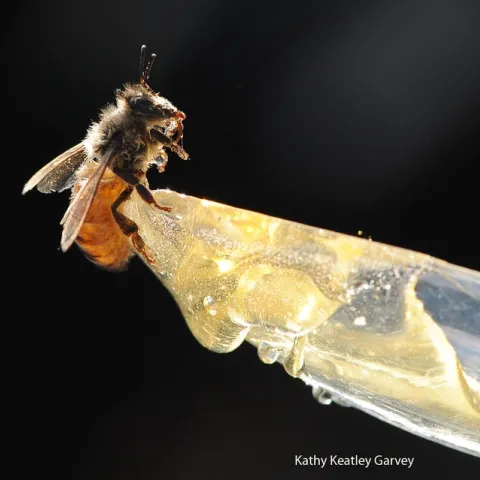
Drenched honey bee gets ready to sip honey from a plastic spoon. (Photo by Kathy Keatley Garvey
Bug Squad: Article

Rescue 911

April 6, 2012
By Kathy Keatley Garvey
Okay, Ill admit it. I have a soft spot for honey bees. Today I fished out some thoroughly drenched honey bees from our swimming pool. Indeed, the pool looked like an Olympic meet for Apis mellifera.
View Article
Primary Image
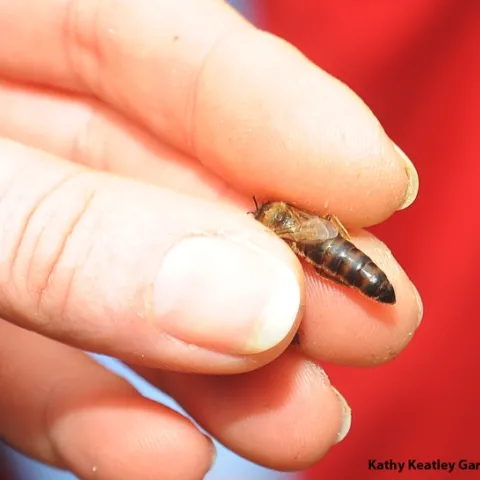
Bee breeder-geneticist Susan Cobey of UC Davis and Washington State University shows how to hold a queen--by the thorax. (Photo by Kathy Keatley Garvey)
Bug Squad: Article

Don't Impale the Queen!

April 5, 2012
By Kathy Keatley Garvey
A would-be beekeeper "inherited" an empty bee box, a reconditioned bee box, in his backyard. "How do I become a beekeeper?" he asked. A very good question, and one that the UC Davis Department of Entomology answers a lot.
View Article
Primary Image
The winning Davis Linnaean Team is comprised of (from left) Kelly Hamby, Matan Shelomi, Kelly Liebman and Jenny Carlson. With them is mascot, Max. (Photo by Kathy Keatley Garvey)
Bug Squad: Article

They Know Their Insects

April 4, 2012
By Kathy Keatley Garvey
They know their insects. They know what a "land lobster" is. They know diseases caused by trypanosomes. They can name the six orders of arthropods represented in the circus troupe from the movie, "A Bug's Life.
View Article
Primary Image
A red-shouldered stink bug peers at the camera.(Photo by Kathy Keatley Garvey)
Bug Squad: Article

Kill It Or Let It Live?

April 3, 2012
By Kathy Keatley Garvey
So, you've just stepped on a bug. Do you kill it and put it out of its "misery" or do you let it live? That was basically the question that UC Davis entomologist/doctoral candidate Matan Shelomi answered on Quora.
View Article
Primary Image
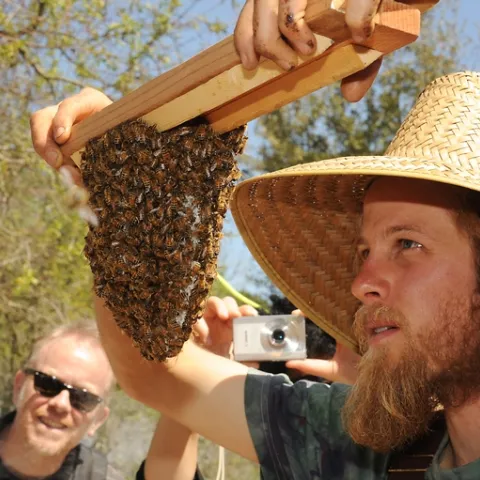
Derek Downey checks the cluster on a newly hived colony. (Photo by Kathy Keatley Garvey)
Bug Squad: Article

Charmed

April 2, 2012
By Kathy Keatley Garvey
The third time was definitely the charm. After rain postponed the grand opening of the Davis Bee Collective's Bee Sanctuary not once, but twice--the third time, Sunday, April 1--proved to be the charm.
View Article
Cooperative Extension Ventura County: Article

April 2012 Clover Lines

April 2, 2012
In this issue... Volunteer Week, Ormond Pointe Walking Path Grand Opening, Super Field Day, Council Corner, All-Star Applicants Wanted, and much more.
View Article
Primary Image
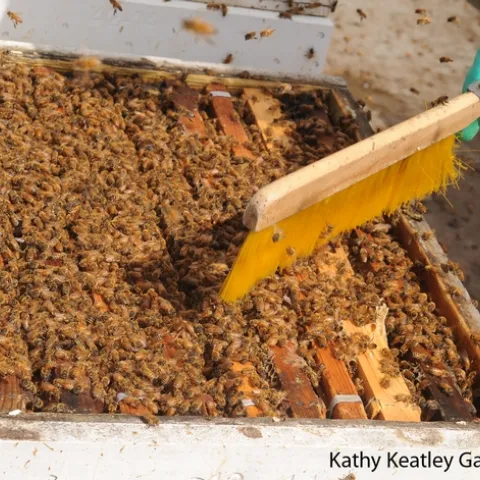
A thriving honey bee colony. (Photo by Kathy Keatley Garvey)
Bug Squad: Article

Neonics Creating Quite a Buzz

March 30, 2012
By Kathy Keatley Garvey
The neonicotinoid pesticides are creating quite a buzz in the bee world. Research published this week in the Science journal zeroed in on the effects of the neonics on honey bees and bumble bees.
View Article