A Natural Solution for California's Herds: African Catfish Peptides

California's cattle producers and agricultural communities are all too familiar with the rising challenge of antibiotic resistance, making common bacterial infections harder to treat in livestock. But imagine a future where we could tackle these infections with a natural, powerful alternative. Our research points to just that: antimicrobial peptides (AMPs) found in African catfish.

We're really excited about these peptides because African catfish thrive in pathogen-rich freshwater, naturally producing these robust immune compounds in their skin mucus as a defense. This natural origin makes them highly appealing alternatives to synthetic drugs.

Predicted Safety and Potent Action

One of the most compelling aspects of these AMPs is their predicted safety for mammals. Our initial computer analyses suggest that various catfish AMPs are generally recognized as safe (GRAS). We predict they'll be absorbed in the human intestine without causing liver, brain, or heart toxicity. Furthermore, lab tests on a promising peptide, NACAP-II, confirmed it was non-hemolytic, meaning it didn't damage rabbit red blood cells—a strong indicator of its potential safety for mammalian cells.

Beyond safety, these peptides demonstrate effectiveness against problematic bacteria. One study revealed NACAP-II's strong activity against Extended-Spectrum Beta-Lactamase (ESBL)-producing Escherichia coli—a critical concern for both animal and human health due to its resistance to many common antibiotics. Another peptide, ACAP-IV, also showed antibacterial activity against E. coli and Staphylococcus aureus. We believe these AMPs work by directly disrupting bacterial cell membranes, a mechanism that makes it harder for bacteria to develop resistance compared to how they resist traditional antibiotics.
Primary Image
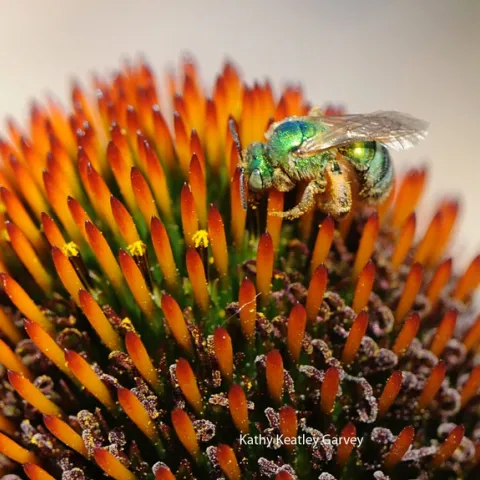
A green sweat bee (Agapostemon texanus), on a cone flower at the Haagen-Dazs Honey Bee Haven. (Photo by Kathy Keatley Garvey)
Bug Squad: Article

Pollinator Gardening!

March 8, 2012
By Kathy Keatley Garvey
If you want to learn about what bees do, and how gardeners can support healthy pollinator populations through simple gardening practice, then this is for you: Your Sustainable Backyard: Pollinator Gardening.
View Article
Primary Image
Pamela Marrone is an international expert in agricultural biotechnology and bioscience
Bug Squad: Article

How Pamela Marrone Does It

March 7, 2012
By Kathy Keatley Garvey
With the global population growing from 7 to 10 billion by 2050, there is an intense debate about how to best feed the world.
View Article
UC Weed Science (weed control, management, ecology, and minutia): Article

2012 CWSS scholarship deadline extended to April 1

March 7, 2012
By Oleg Daugovish
The California Weed Science Society (CWSS) is offering scholarships to support undergraduate and graduate students with an interest in weed or invasive plant management.
View Article
UC Weed Science (weed control, management, ecology, and minutia): Article

physical damage to vegetables from nettle

March 7, 2012
By Steven A Fennimore
I have a question from a PCA regarding physical damage from burning nettle on vegetables. I have never heard of this.
View Article
UC Weed Science (weed control, management, ecology, and minutia): Article

New website: CalWeedMapper

March 7, 2012
By Gale Perez
CalWeedMapper is a new website for mapping invasive plant spread and planning regional management strategies (calweedmapper.calflora.org). Users generate a report for their region that synthesizes information into three types of strategic opportunities: surveillance, eradication and containment.
View Article
Primary Image
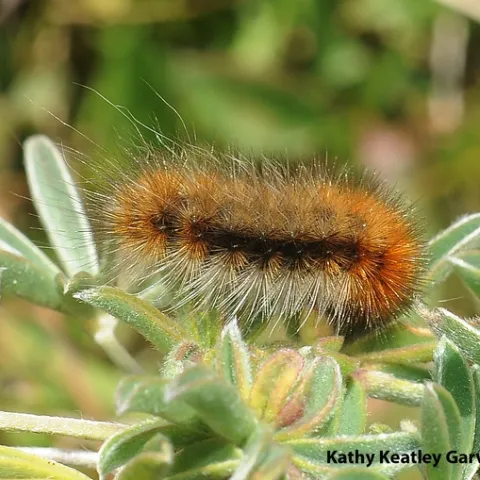
Close-up of woolly bear caterpillar on Bodega Head, Sonoma County. (Photo by Kathy Keatley Garvey)
Bug Squad: Article

Feeding Frenzy on Bodega Head

March 6, 2012
By Kathy Keatley Garvey
If you're planning to hike the hills around Bodega Head in Sonoma County, watch out for the bears. The woolly bear caterpillars, that is. Last Sunday, with the temperature hovering around 70 degrees, the woolly bears were everywhere.
View Article
Primary Image
Monte Bottoms at a recent workgroup planning meeting in Five Points.
Conservation Agriculture: Article

Local conservation ag expert featured in No-Till Farmer magazine

March 6, 2012
By Jeannette Warnert
A longstanding member of the UC Conservation Agriculture Systems Initiative, Monte Bottens, is featured with his father in the March 2012 issue of No-Till Farmer magazine. Monte and Bob Bottens are a father-son no-till team in Cambridge, Ill.
View Article
Primary Image
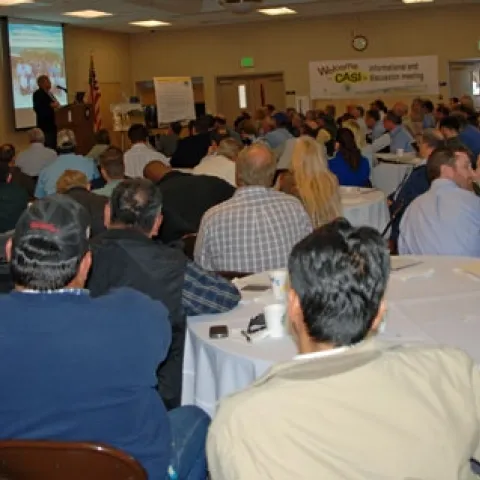
A capacity crowd took part in the official launch of the UC Conservation Agriculture Systems Institute.
Conservation Agriculture: Article

Looking ahead to conservation agriculture success

March 6, 2012
By Jeannette Warnert
The UC Conservation Agriculture Systems Initiative challenges Californians to look 100 years, or even 500 years, into the future and imagine how todays common agricultural practices will have impacted the environment and society.
View Article