A Natural Solution for California's Herds: African Catfish Peptides

California's cattle producers and agricultural communities are all too familiar with the rising challenge of antibiotic resistance, making common bacterial infections harder to treat in livestock. But imagine a future where we could tackle these infections with a natural, powerful alternative. Our research points to just that: antimicrobial peptides (AMPs) found in African catfish.

We're really excited about these peptides because African catfish thrive in pathogen-rich freshwater, naturally producing these robust immune compounds in their skin mucus as a defense. This natural origin makes them highly appealing alternatives to synthetic drugs.

Predicted Safety and Potent Action

One of the most compelling aspects of these AMPs is their predicted safety for mammals. Our initial computer analyses suggest that various catfish AMPs are generally recognized as safe (GRAS). We predict they'll be absorbed in the human intestine without causing liver, brain, or heart toxicity. Furthermore, lab tests on a promising peptide, NACAP-II, confirmed it was non-hemolytic, meaning it didn't damage rabbit red blood cells—a strong indicator of its potential safety for mammalian cells.

Beyond safety, these peptides demonstrate effectiveness against problematic bacteria. One study revealed NACAP-II's strong activity against Extended-Spectrum Beta-Lactamase (ESBL)-producing Escherichia coli—a critical concern for both animal and human health due to its resistance to many common antibiotics. Another peptide, ACAP-IV, also showed antibacterial activity against E. coli and Staphylococcus aureus. We believe these AMPs work by directly disrupting bacterial cell membranes, a mechanism that makes it harder for bacteria to develop resistance compared to how they resist traditional antibiotics.
UC Weed Science (weed control, management, ecology, and minutia): Article

What is the cheapest weed to kill?

October 10, 2011
By Chris J McDonald
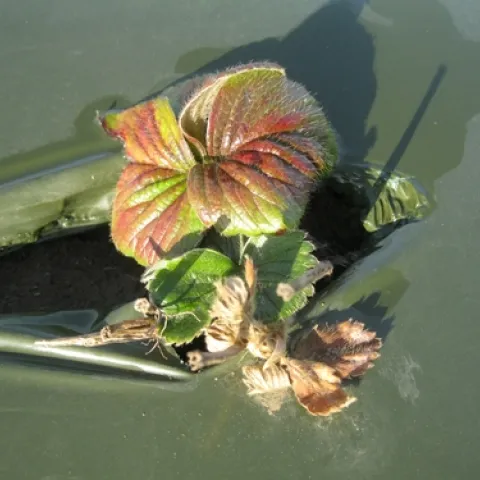
How many times do we see some plant that looks unusual, we let it sit for a while, pondering its existence (maybe that's just me), and then realize its some plant we have never seen before?
View Article
Primary Image
Predator and the prey: Assassin bug (left) corners a pest, a spotted cucumber beetle. (Photo by Kathy Keatley Garvey)

Gotcha!

October 7, 2011
By Kathy Keatley Garvey
It wasn't much of a fight. The assassin bug scored a TKO. Here's what happened: an assassin bug ambushed a spotted cucumber beetle in the Hagen-Dazs Honey Bee Haven at the Harry H. Laidlaw Jr. Honey Bee Research Faciility on Bee Biology Road, UC Davis. It was "good guy vs. bad guy.
View Article
Primary Image
IPM specialist Frank Zalom. (Photo by Kathy Keatley Garvey)

It's Off to Berlin

October 6, 2011
By Kathy Keatley Garvey
It's off to Berlin for integrated pest management (IPM) specialist Frank Zalom, professor and former vice chair of the UC Davis Department of Entomology and soon-to-be-president of the 6000-member Entomological Society of America (ESA) Zalom is one of three Americans invited to speak at an internati...
View Article
UC Weed Science (weed control, management, ecology, and minutia): Article

Bioassays for residual herbicides

October 6, 2011
By Brad Hanson
Residual or soil applied (ie. preemergent or PRE) herbicides can provide many benefits to weed managers.
View Article
Primary Image
Honey bee, packing red pollen from a nearby rock purslane, nectaring lavender. (Photo by Kathy Keatley Garvey)

A Honey of an Event

October 5, 2011
By Kathy Keatley Garvey
Did you know that honey bees visit more than two million flowers just to make a pound of honey? Two million visits for one pound? That's just one of the tidbits about honey that will be mentioned Friday, Oct. 21 at the all-day Honey! event at the UC Davis Conference Center, 550 Alumni Center.
View Article
Primary Image
Honey bee foraging on a Mexican sunflower. (Photo by Kathy Keatley Garvey)

In Between the Rains

October 4, 2011
By Kathy Keatley Garvey
Mexican sunflowers. Gaillardia. The Hagen-Dazs Honey Bee Haven at the Harry H. Laidlaw Jr. Honey Bee Research Facility on Bee Biology Road at the University of California, Davis, is awash with autumn colors, despite the persistent rains.
View Article
Cooperative Extension Ventura County: Article

October 2011 Clover Lines

October 3, 2011
In this issue: National 4-H Week, Online Record Book, Trick or Treat So Others Can Eat, and much more...
View Article
Primary Image
Pollen-laden honey bee foraging on a pink African daisy. (Photo by Kathy Keatley Garvey)

In the Pink: A Backyard Safari

October 3, 2011
By Kathy Keatley Garvey
You don't have to travel to Africa to go on safari. You can go on a "bug" safari in your own backyard. And you can stay as little or as long as you like without incurring such costs as air travel, hotel stays, and food expenses.
View Article
Primary Image
This grasshopper, aka locust, is a banded-winged grasshopper, family Acrididae. (Photo by Kathy Keatley Garvey)

The Locusts Are Coming!

September 30, 2011
By Kathy Keatley Garvey
The locusts are coming! The locusts are coming! No, not the one below, a banded-winged grasshopper (family Acrididae and subfamily Oedipodinae) that we spotted west of the UC Davis campus--and identified by Steve Heydon, senior museum scientist at the Bohart Museum of Entomology.
View Article