A Natural Solution for California's Herds: African Catfish Peptides

California's cattle producers and agricultural communities are all too familiar with the rising challenge of antibiotic resistance, making common bacterial infections harder to treat in livestock. But imagine a future where we could tackle these infections with a natural, powerful alternative. Our research points to just that: antimicrobial peptides (AMPs) found in African catfish.

We're really excited about these peptides because African catfish thrive in pathogen-rich freshwater, naturally producing these robust immune compounds in their skin mucus as a defense. This natural origin makes them highly appealing alternatives to synthetic drugs.

Predicted Safety and Potent Action

One of the most compelling aspects of these AMPs is their predicted safety for mammals. Our initial computer analyses suggest that various catfish AMPs are generally recognized as safe (GRAS). We predict they'll be absorbed in the human intestine without causing liver, brain, or heart toxicity. Furthermore, lab tests on a promising peptide, NACAP-II, confirmed it was non-hemolytic, meaning it didn't damage rabbit red blood cells—a strong indicator of its potential safety for mammalian cells.

Beyond safety, these peptides demonstrate effectiveness against problematic bacteria. One study revealed NACAP-II's strong activity against Extended-Spectrum Beta-Lactamase (ESBL)-producing Escherichia coli—a critical concern for both animal and human health due to its resistance to many common antibiotics. Another peptide, ACAP-IV, also showed antibacterial activity against E. coli and Staphylococcus aureus. We believe these AMPs work by directly disrupting bacterial cell membranes, a mechanism that makes it harder for bacteria to develop resistance compared to how they resist traditional antibiotics.
UC Weed Science (weed control, management, ecology, and minutia): Article

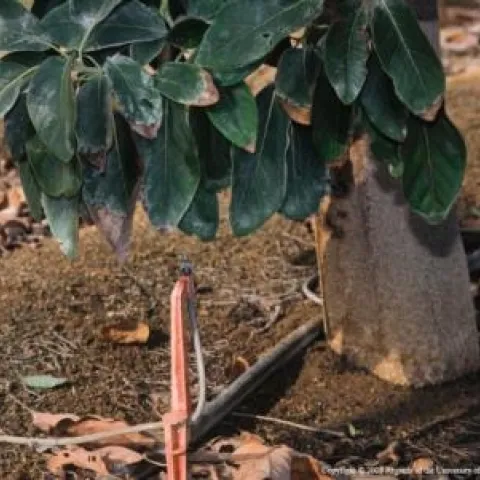
New film traps fumigants and increases strawberry yields

October 28, 2011
By Gale Perez
Producing 85 percent of the nations strawberries, California growers urgently need alternatives to methyl bromide fumigation if they are to maintain yields. Methyl bromide has been phased out for all but critical uses because it depletes ozone in the upper atmosphere.
View Article
Primary Image
UC Davis graduate student Emily Bzdyk came dressed as a butterfly. She creates insect jewelry sold at the Bohart. (Photo by Kathy Keatley Garvey)
Bug Squad: Article

Bugs at the Bohart

October 27, 2011
By Kathy Keatley Garvey
When the Bohart Museum Society throws a Halloween party, you can bet bugs will be there. In costume.
View Article
Primary Image
The cover of Bee Basics: An Introduction to Our Native Bees.
Bug Squad: Article

Your Basic Bee Book

October 26, 2011
By Kathy Keatley Garvey
Not all bees are honey bees. Not all floral visitors are bees. That's why we're glad to see the publication of Bee Basics: An Introduction to Our Native Bees. It will introduce folks to such native bees as leafcutter bees, sweat bees and bumble bees.
View Article
Primary Image
Norm Gary is both a professional bee wrangler and a musician. (Photo by Kathy Keatley Garvey)
Bug Squad: Article

One Last Time

October 25, 2011
By Kathy Keatley Garvey
The bees have it, The Beez Kneez, that is. The Beez Kneez, a Sacramento-based band led by Norm Gary, emeritus professor of entomology at UC Davis, will reunite for one last performance on Wednesday, Oct. 26 at the Straw Hat Pizza, 2929 Mather Field Road, Rancho Cordova.
View Article
Primary Image
Equine Control Officer Laurie Christison of the Center for Equine Health captured this cell-phone image of a female velvet ant.
Bug Squad: Article

'A Strange Little Bug'

October 24, 2011
By Kathy Keatley Garvey
Picture this. Staff at the UC Davis School of Veterinary Medicine's Center for Equine Health encountered "a strange little bug" that they'd never seen before outside their office Friday on Old Davis Road.
View Article
UC Weed Science (weed control, management, ecology, and minutia): Article

Weed seed transport on vehicles

October 23, 2011
By Brad Hanson
Weeds can be introduced to new areas from a variety of natural and human-influenced sources. Seed transport on vehicles or equipment can be a very important mechanism of spread.
View Article
Primary Image
Ladybug, aka lady beetle, searching for aphids. (Photo by Kathy Keatley Garvey)
Bug Squad: Article

Luck Be a Lady

October 21, 2011
By Kathy Keatley Garvey
Photographers never tire of capturing images of ladybugs, aka lady beetles. First of all, they're beneficial insects. You know when you photograph them that they're about to scoot, crawl or fly off to grab a tasty lunch--an all-you-can-eat aphid buffet. Second, they're colorful.
View Article
Colusa County: Article

November 2011

October 21, 2011
Craft Expo, Goat Education Day, Final New Leader Orientation, 2012 Citizenship Focus, New Release - Online Record Book Guide, and much more...
View Article
Primary Image
Noted insect photographer Alex Wild captured this spectacular image of sweat bees on sideoats grama. (Photo by Alex Wild and used with permission.)
Bug Squad: Article

Call of the (Alex) Wild

October 20, 2011
By Kathy Keatley Garvey
There are insect photographers and there are insect photographers. There are those who point and shoot, those who shoot and point, and those who see the world through a viewfinder. And then there's Illinois-based Alex Wild, who is in a class by himself.
View Article
Primary Image
Spotted cucumber beetles crawls along a tangerine leaf. (Photo by Kathy Keatley Garvey)

A Flying Cucumber (Beetle)

October 19, 2011
By Kathy Keatley Garvey
You usually see them crawling around, but never about to fly. The Western spotted cucumber beetles (Diabrotica undecimpunctata) is one of California's most common insects. And though quite attractive in coloring, it's a major agricultural pest.
View Article