A Natural Solution for California's Herds: African Catfish Peptides

California's cattle producers and agricultural communities are all too familiar with the rising challenge of antibiotic resistance, making common bacterial infections harder to treat in livestock. But imagine a future where we could tackle these infections with a natural, powerful alternative. Our research points to just that: antimicrobial peptides (AMPs) found in African catfish.

We're really excited about these peptides because African catfish thrive in pathogen-rich freshwater, naturally producing these robust immune compounds in their skin mucus as a defense. This natural origin makes them highly appealing alternatives to synthetic drugs.

Predicted Safety and Potent Action

One of the most compelling aspects of these AMPs is their predicted safety for mammals. Our initial computer analyses suggest that various catfish AMPs are generally recognized as safe (GRAS). We predict they'll be absorbed in the human intestine without causing liver, brain, or heart toxicity. Furthermore, lab tests on a promising peptide, NACAP-II, confirmed it was non-hemolytic, meaning it didn't damage rabbit red blood cells—a strong indicator of its potential safety for mammalian cells.

Beyond safety, these peptides demonstrate effectiveness against problematic bacteria. One study revealed NACAP-II's strong activity against Extended-Spectrum Beta-Lactamase (ESBL)-producing Escherichia coli—a critical concern for both animal and human health due to its resistance to many common antibiotics. Another peptide, ACAP-IV, also showed antibacterial activity against E. coli and Staphylococcus aureus. We believe these AMPs work by directly disrupting bacterial cell membranes, a mechanism that makes it harder for bacteria to develop resistance compared to how they resist traditional antibiotics.
UC Master Gardener Program of Sonoma County: Page

Los Guilicos Demonstration and Teaching Garden

The Los Guilicos Demonstration and Teaching Garden includes an outdoor teaching classroom that is located in the valley below the Mayacamas Mountains in east Santa Rosa. Fieldtrips are available for schools and many educational events are held here for both children and adults.
View Page
UC Master Gardener Program of Sonoma County: Page

The Children’s Garden - Los Guilicos

Vegetables harvested by Master Gardener volunteers are provided to the Valley of the Moon Childrens Center (VMCC) to feed children at VMCC. Photos by Sonoma County Master Gardeners.
View Page
Primary Image
California native plants in Sebastopol Center for the Arts Demo Garden
UC Master Gardener Program of Sonoma County: Page

Sebastopol Center for the Arts Demonstration Garden

In Sebastopol, the UC Master Gardeners of Sonoma County have refurbished an area near the front of the Sebastopol Center for the Arts on High Street. The Demonstration Garden provides beautiful planting ideas for home gardeners using hardy, native, and water-wise plants arranged in a simple and fire-smart…
View Page
UC Master Gardener Program of Sonoma County: Page

Lobelia laxiflora (Mexican Lobelia)

Mexican lobelia, Lobelia laxiflora, is not seen often in Sonoma County gardens; nonetheless, it is a good candidate for both groomed borders and informal areas where it withstands some neglect and little water.
View Page
UC Master Gardener Program of Sonoma County: Page

Essential Garden Tools

Adapted from Press Democrat Master Gardener Advice to Grow by Column 12/16/23 Whether a seasoned or novice gardener, having a good set of gardening tools is essential to successful gardening. As a new gardener, you dont need fancy or expensive tools.
View Page
UC Master Gardener Program of Sonoma County: Page

Drip irrigation vs other irrigation methods

Hand watering: Although hand watering helps, it is not the most efficient method. There is a good chance plants will either be over-watered or under-watered. Hand watering photo from pixabay.
View Page
UC Master Gardener Program of Sonoma County: Page

How to get started

Couple getting started with their project. Photo from pixabay.com. Assess your landscape for the number of different watering zones you will need. Plants may have to be relocated to create new zones. One plant may require more water than another or call for more or less frequent irrigation.
View Page
UC Master Gardener Program of Sonoma County: Page

Key considerations when implementing a drip system

Topography: This refers to land surfaceshills, slopes, north/south orientation, valleys, rivers, lakes, (natural or artificial features)or buildings. All of these affect air and water flow and can create microclimates in your own yard.
View Page
Primary Image
drip irrigation basics for the home gardener
UC Master Gardener Program of Sonoma County: Page

Drip Irrigation Basics

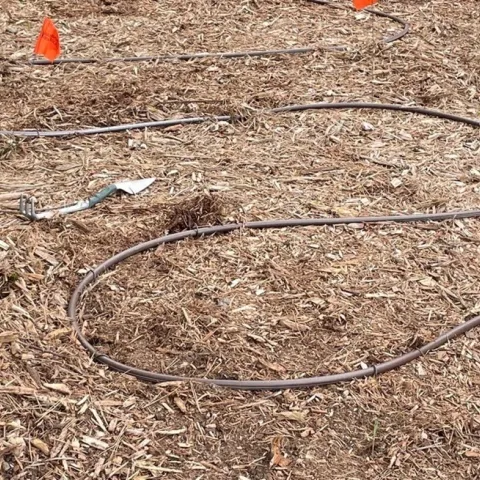
Installing drip irrigation involves using specialized equipment.
View Page