A Natural Solution for California's Herds: African Catfish Peptides

California's cattle producers and agricultural communities are all too familiar with the rising challenge of antibiotic resistance, making common bacterial infections harder to treat in livestock. But imagine a future where we could tackle these infections with a natural, powerful alternative. Our research points to just that: antimicrobial peptides (AMPs) found in African catfish.

We're really excited about these peptides because African catfish thrive in pathogen-rich freshwater, naturally producing these robust immune compounds in their skin mucus as a defense. This natural origin makes them highly appealing alternatives to synthetic drugs.

Predicted Safety and Potent Action

One of the most compelling aspects of these AMPs is their predicted safety for mammals. Our initial computer analyses suggest that various catfish AMPs are generally recognized as safe (GRAS). We predict they'll be absorbed in the human intestine without causing liver, brain, or heart toxicity. Furthermore, lab tests on a promising peptide, NACAP-II, confirmed it was non-hemolytic, meaning it didn't damage rabbit red blood cells—a strong indicator of its potential safety for mammalian cells.

Beyond safety, these peptides demonstrate effectiveness against problematic bacteria. One study revealed NACAP-II's strong activity against Extended-Spectrum Beta-Lactamase (ESBL)-producing Escherichia coli—a critical concern for both animal and human health due to its resistance to many common antibiotics. Another peptide, ACAP-IV, also showed antibacterial activity against E. coli and Staphylococcus aureus. We believe these AMPs work by directly disrupting bacterial cell membranes, a mechanism that makes it harder for bacteria to develop resistance compared to how they resist traditional antibiotics.
Cooperative Extension Ventura County: Page

Ten Principles of Plant Pathology

By John A. Menge and Elinor Pond Department of Plant Pathology University of California, Riverside Plant Pathology is the study of plant diseases including:1) causes, 2) mechanisms by which diseases occur, 3) interactions between plants and disease-causing agents, and 4) controlling diseases.
View Page
Cooperative Extension Ventura County: Page

Pruning Small Trees and Shrubs

Pruning is considered by some horticulturists to be both a science and an art. The science is involved in the understanding of plant responses to pruning. The art of pruning ensures that when the work is done, the results are visually pleasing or fulfill some predetermined goals.
View Page
Primary Image
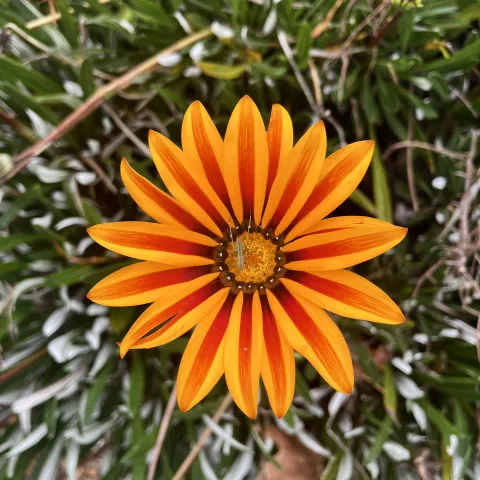
Orange Flower
Cooperative Extension Ventura County: Page

Floriculture & Nursery

The mission of the floriculture and nursery program is to address critical and locally relevant challenges facing the nursery and floriculture industries through research and extension efforts.
View Page
Cooperative Extension Ventura County: Page

Gardening Information for Food and Landscape

Vegetables Some of the information listed here is from the University of California Division of Agriculture online catalog. The catalog contains both free and priced publications on many subjects that you may find useful. Visit anrcatalog.ucdavis.
View Page
Cooperative Extension Ventura County: Page

Integrated Pest Management (IPM)

Phil A. Phillips is an integrated pest management (IPM) advisor emeritus for the University of California Cooperative Extension and the U.C. IPM Project.
View Page
Cooperative Extension Ventura County: Page

UC IPM Online Training

The University of California (UC) Statewide Integrated Pest Management (IPM) Program has has created online pesticide training for retail employees at http://ucanr.org/retail.
View Page
Cooperative Extension Ventura County: Page

GWSS - A Partial Host List

Most common herbaceous hosts Other hosts observed in Ventura County Sunflower Eucalyptus Hollyhock Fruitless mulberry Okra Grape Lambsquarter Avocado Malva Apricot Cotton Peach Corn Privet Cowpeas Birch Chinese elm Most common woody hosts Philodendron Crepemyrtle Hibiscus Peach Citrus Some other hos...
View Page
Cooperative Extension Ventura County: Page

GWSS Photos

These pictures (except where otherwise noted) are by Phil A. Phillips, Area IPM Specialist Emeritus Ventura County and may be downloaded for your own use. Adult Glassy-winged Sharpshooter, Homalodisca coagulata, and Egg Mass (left). Photo by Jack Kelly Clark*.
View Page
Cooperative Extension Ventura County: Page

Publications

The Glassy-winged Sharpshooter - a new threat for California citrus as a potential vector of CVC Coastal California Row Crop IPM - A Review Insect Monitoring Techniques for Row Crops The GWSS - A serious new PD vector for California Vineyards Protecting Vineyards from Pierce's Disease Vectored by th...
View Page