A Natural Solution for California's Herds: African Catfish Peptides

California's cattle producers and agricultural communities are all too familiar with the rising challenge of antibiotic resistance, making common bacterial infections harder to treat in livestock. But imagine a future where we could tackle these infections with a natural, powerful alternative. Our research points to just that: antimicrobial peptides (AMPs) found in African catfish.

We're really excited about these peptides because African catfish thrive in pathogen-rich freshwater, naturally producing these robust immune compounds in their skin mucus as a defense. This natural origin makes them highly appealing alternatives to synthetic drugs.

Predicted Safety and Potent Action

One of the most compelling aspects of these AMPs is their predicted safety for mammals. Our initial computer analyses suggest that various catfish AMPs are generally recognized as safe (GRAS). We predict they'll be absorbed in the human intestine without causing liver, brain, or heart toxicity. Furthermore, lab tests on a promising peptide, NACAP-II, confirmed it was non-hemolytic, meaning it didn't damage rabbit red blood cells—a strong indicator of its potential safety for mammalian cells.

Beyond safety, these peptides demonstrate effectiveness against problematic bacteria. One study revealed NACAP-II's strong activity against Extended-Spectrum Beta-Lactamase (ESBL)-producing Escherichia coli—a critical concern for both animal and human health due to its resistance to many common antibiotics. Another peptide, ACAP-IV, also showed antibacterial activity against E. coli and Staphylococcus aureus. We believe these AMPs work by directly disrupting bacterial cell membranes, a mechanism that makes it harder for bacteria to develop resistance compared to how they resist traditional antibiotics.
UCCE in Santa Barbara County: Page

Meeting Handouts

Here you can view or print handouts by Surendra Dara that supplement strawberry meeting presentations.
View Page
Vegetable Crops in San Joaquin County: Page

UC Weed Science Blog

UC Weed Science Blog Weed control, management, ecology, and minutia...
View Page
Vegetable Crops in San Joaquin County: Page

Nutrient and Irrigation Management Resources

Drip Irrigation and Fertigation Management of Processing Tomato (Hartz and Hanson) California Fertilization Guidelines (CDFA website) UC Nutrient Management for Vegetable, Fruit and Nut Crops (UC website) UC Research on nutrient and fertilizer management (UC website)...
View Page
Vegetable Crops in San Joaquin County: Page

Meeting Presentations

Presentation Slides from Extension Meetings. Please note that these presentations are not intended to stand alone and may be difficult to follow without the context provided by the presenter. If you have questions, please reach out to Brenna Aegerter or the presenter.
View Page
Vegetable Crops in San Joaquin County: Page

Water Quality

Management Practices to Reduce Impacts on Water Quality Controlling Offsite Movement of Agricultural Chemical Residues: Tomato pdf Pesticide Selection to Reduce Impacts on Water Quality pdf Nutrient Management Goals and Management Practices for Vegetables pdf Protecting Surface Water from Sediment-A...
View Page
Vegetable Crops in San Joaquin County: Page

About Us

about Brenna J. Aegerter Title: Farm Advisor Specialty: Vegetable Crops, Plant Pathology 2101 East Earhart Ave, Suite 200 Stockton, CA, 95206-3924 Email: bjaegerter@ucanr.
View Page
Primary Image
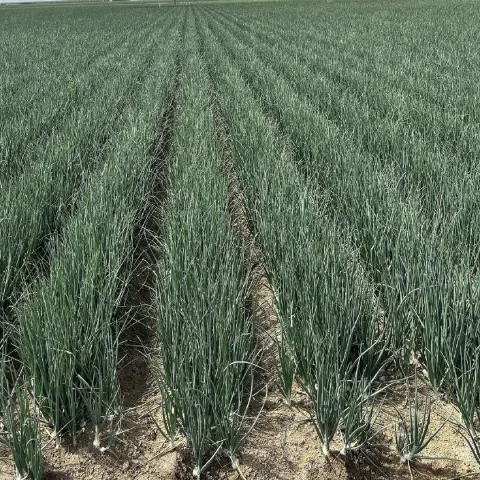
onion field
Fresno County Vegetable Crops: Page

Onions and Garlic

Please choose topics on the left to find material related to onions and garlic.
View Page
Primary Image
tomatofield_21759[1]
Fresno County Vegetable Crops: Page

Tomato

Please choose topics on the left to find material related to tomatoes. Topics addressed in this presentation include Beet curly top virus, Tomato spotted wilt virus, powdery mildew, and stink bug.
View Page
Fresno County Vegetable Crops: Page

Research Reports

Garlic and Onion White Rot - 2011 Activity of Fungicides and Biological Control Agents against Garlic White Rot Garlic white rot management studies, 2007-2008.
View Page