A Natural Solution for California's Herds: African Catfish Peptides

California's cattle producers and agricultural communities are all too familiar with the rising challenge of antibiotic resistance, making common bacterial infections harder to treat in livestock. But imagine a future where we could tackle these infections with a natural, powerful alternative. Our research points to just that: antimicrobial peptides (AMPs) found in African catfish.

We're really excited about these peptides because African catfish thrive in pathogen-rich freshwater, naturally producing these robust immune compounds in their skin mucus as a defense. This natural origin makes them highly appealing alternatives to synthetic drugs.

Predicted Safety and Potent Action

One of the most compelling aspects of these AMPs is their predicted safety for mammals. Our initial computer analyses suggest that various catfish AMPs are generally recognized as safe (GRAS). We predict they'll be absorbed in the human intestine without causing liver, brain, or heart toxicity. Furthermore, lab tests on a promising peptide, NACAP-II, confirmed it was non-hemolytic, meaning it didn't damage rabbit red blood cells—a strong indicator of its potential safety for mammalian cells.

Beyond safety, these peptides demonstrate effectiveness against problematic bacteria. One study revealed NACAP-II's strong activity against Extended-Spectrum Beta-Lactamase (ESBL)-producing Escherichia coli—a critical concern for both animal and human health due to its resistance to many common antibiotics. Another peptide, ACAP-IV, also showed antibacterial activity against E. coli and Staphylococcus aureus. We believe these AMPs work by directly disrupting bacterial cell membranes, a mechanism that makes it harder for bacteria to develop resistance compared to how they resist traditional antibiotics.
Primary Image
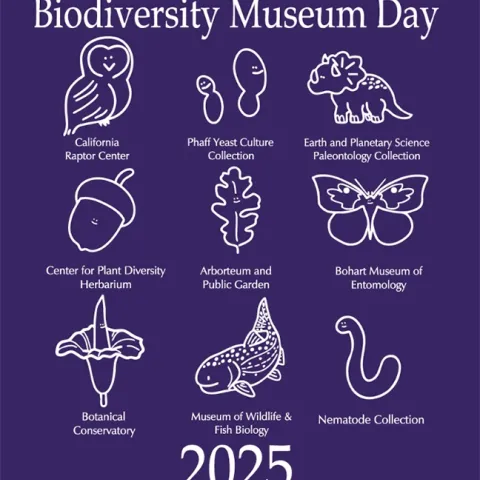
The UC Davis Biodiversity Museum Day scientists and volunteers will be wearing purple T-shirts that feature the nine museums or collections.
Bug Squad: Article

Feb. 8 is UC Davis Biodiversity Museum Day: A Super Science Day

January 13, 2025
By Kathy Keatley Garvey
Have you ever wished that you and your family and friends could visit the UC Davis campus and chat with the scientists about their research and see their work? You can. The 14th annual UC Davis Biodiversity Museum Day, also known as "Super Science Day," is set for Saturday, Feb. 8.
View Article
Primary Image
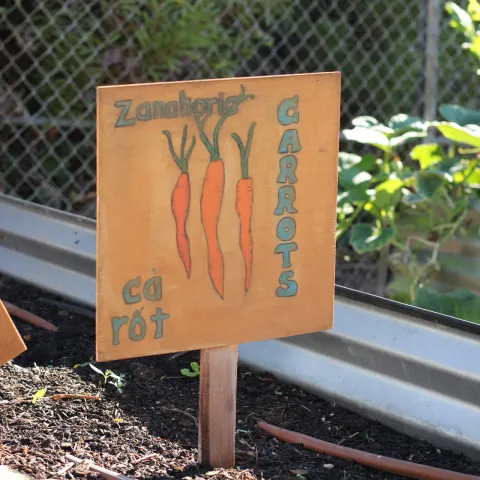
Wooden carrot plant sign in garden bed
UC Master Gardener Program Statewide Blog: Article

From Concrete to Green: How Gardening is Changing California's Cities

January 13, 2025
By Barbra Braaten
Imagine living in a place where parks are scarce and concrete stretches for miles. This is the reality for many Californians - in fact, according to the 2020 U.S. Census, 94.2% live in urban areas, making it America's most urbanized state.
View Article
Primary Image
rat damage citrus bark
Topics in Subtropics: Article

Rats!!!!

January 13, 2025
By Ben A Faber
Rodents, particularly rats, have wreaked havoc in California orchards and vineyards this year. Some growers have reported yield losses, damage to trees and destruction of irrigation lines, electrical wiring and other infrastructure.
View Article
Primary Image
Cymbidium orchids (commons.wikimedia.org)
Napa Master Gardener Column: Article

Repotting Orchids

January 11, 2025
Orchids (Phalaenopsis) are readily available this time of year in nurseries and even grocery stores. They are popular hostess gifts. I find them quite beautiful and I am always tempted to add another one to my collection.
View Article
Primary Image
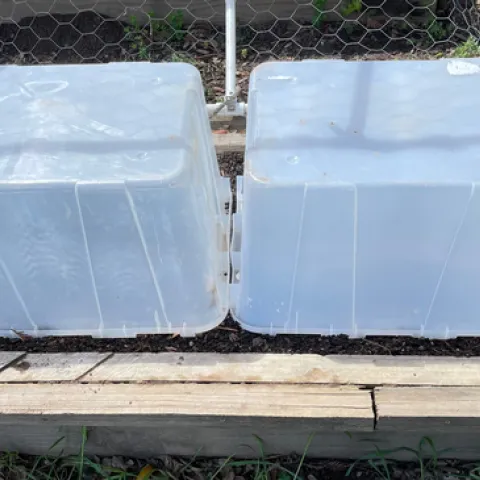
Mini Greenhouses
Spill the Beans: Article

Mini Greenhouses for the Eager Gardener

January 11, 2025
Has the weather been teasing you into thinking you might be able to plant seedlings early? What do you do when you have seedlings that are ready for transplanting into larger containers or into the ground but the last frost is still a month away?
View Article
UC Cooperative Extension Imperial County: Article

January 2025

January 10, 2025
RESTORE GRANT AREAWIDE MONITORING OF KEY INSECT PESTS ACROSS THE IMPERIAL VALLEY: JANUARY 2025 UPDATE IMPACTS OF DEFICIT IRRIGATION STRATEGIES ON THE DESERT ALFALFA PRODUCTION SYSTEMS HOW DO CROSSBRED ANGUS-HOLSTEIN STEERS COMPARE TO PUREBRED HOLSTEIN STEERS IN THE FEEDLOT?
View Article