A Natural Solution for California's Herds: African Catfish Peptides

California's cattle producers and agricultural communities are all too familiar with the rising challenge of antibiotic resistance, making common bacterial infections harder to treat in livestock. But imagine a future where we could tackle these infections with a natural, powerful alternative. Our research points to just that: antimicrobial peptides (AMPs) found in African catfish.

We're really excited about these peptides because African catfish thrive in pathogen-rich freshwater, naturally producing these robust immune compounds in their skin mucus as a defense. This natural origin makes them highly appealing alternatives to synthetic drugs.

Predicted Safety and Potent Action

One of the most compelling aspects of these AMPs is their predicted safety for mammals. Our initial computer analyses suggest that various catfish AMPs are generally recognized as safe (GRAS). We predict they'll be absorbed in the human intestine without causing liver, brain, or heart toxicity. Furthermore, lab tests on a promising peptide, NACAP-II, confirmed it was non-hemolytic, meaning it didn't damage rabbit red blood cells—a strong indicator of its potential safety for mammalian cells.

Beyond safety, these peptides demonstrate effectiveness against problematic bacteria. One study revealed NACAP-II's strong activity against Extended-Spectrum Beta-Lactamase (ESBL)-producing Escherichia coli—a critical concern for both animal and human health due to its resistance to many common antibiotics. Another peptide, ACAP-IV, also showed antibacterial activity against E. coli and Staphylococcus aureus. We believe these AMPs work by directly disrupting bacterial cell membranes, a mechanism that makes it harder for bacteria to develop resistance compared to how they resist traditional antibiotics.
Nutrition Policy Institute News: Article

NPI presents on solid waste reduction achieved by schools transitioning to reusables in school meals at the Green California Schools and Higher Education Summit

November 6, 2024
By Danielle Lee
Nutrition Policy Institute researcher, Celeste Felix, will present evaluation findings showing reductions in solid waste when a large, urban California school district transitioned from reheated pre-packaged school meals served with single-use disposables to freshly prepared meals served with reusab...
View Article
Primary Image
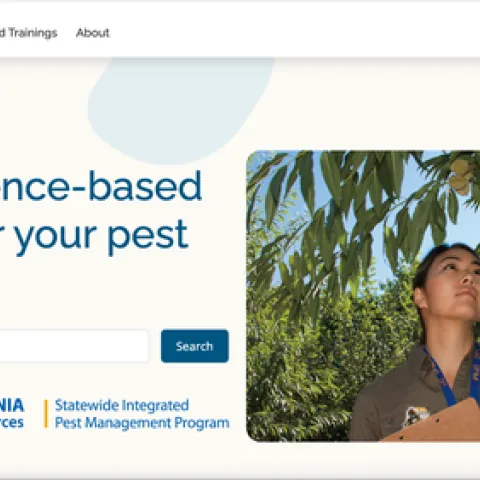
Figure 2. New design of UC IPM’s home page.
Pests in the Urban Landscape: Article

New Look for UC IPM Web Pages

November 6, 2024
By Karey Windbiel-Rojas
Change is in the air. Weather, daylight savings, politics, holiday decorations, and yes, websites. You may have noticed the UC Statewide IPM Program's website is undergoing some style changes.
View Article
Primary Image
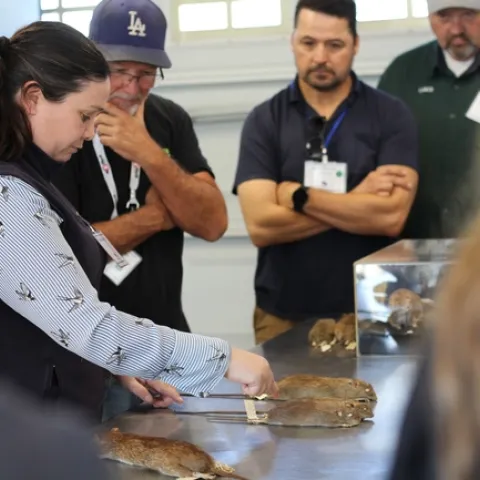
Niamh Quinn teaches participants about physical characteristics that can help pest management professionals identify the different rodent species. All photos by Saoimanu Sope.
ANR Employee News: Article

Pest managers learn to do the ‘rat thing’ at Rodent Academy

November 6, 2024
By Saoimanu Sope
Tail length, fur color, eye size, ear shape and nose structure are some of the characteristics highlighted during the Rodent Speed Dating ID activity at West Coast Rodent Academy (WCRA). If you thought you would find rats at WCRA, you wouldn't be wrong.
View Article
Primary Image
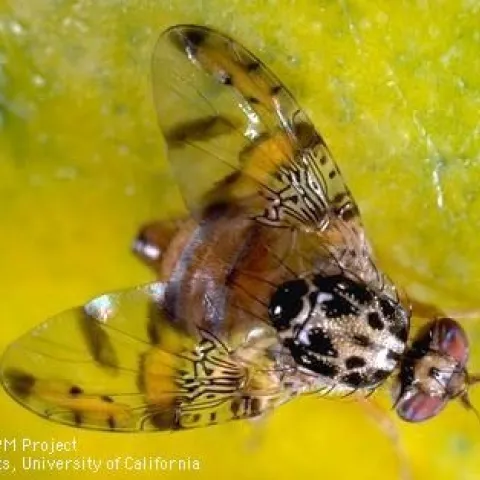
A brown and yellow fly on a yellow-green background.

Invasive Pest Spotlight: Mediterranean Fruit Fly

November 6, 2024
By Cherie Shook
The invasive pest spotlight focuses on emerging or potential invasive pests in California. In this issue we are covering the Mediterranean fruit fly. Mediterranean Fruit Fly Facts The Mediterranean fruit fly, Ceratitis capitata, commonly called Medfly, attacks more than 260 different plant species.
View Article
Primary Image
109614
Kearney news updates: Article

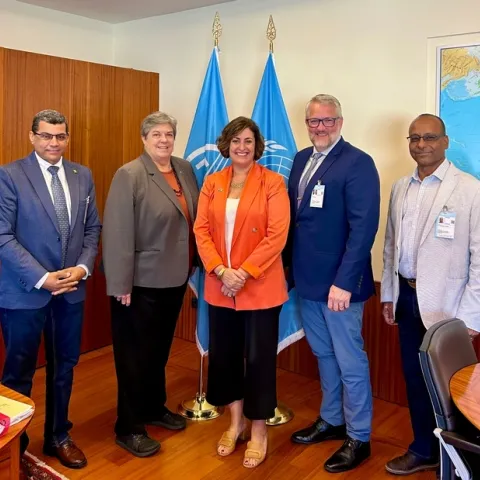
UC ANR to strengthen California agriculture through Mediterranean partnerships

November 6, 2024
By Keith C Byrum
In October, Vice President Glenda Humiston, Associate Vice President Brent Hales, and Research and Extension Center directors Ashraf El-kereamy and Atef Swelam attended three global food and agriculture events in Italy, met with key leaders of the United Nations Food and Agriculture Organization (UN...
View Article
Salinas Valley Agriculture: Article

Artificial Intelligence (AI) for Sustainable Agriculture Workshop

November 6, 2024
By Paramveer Singh, Michael D Cahn
When: December 3rd, 2024 Where: UC Cooperative Extension Monterey County Agriculture Conference Room 1432 Abbott St, Salinas, CA 93901 Join us for our first-ever Workshop on Artificial Intelligence (AI) for Sustainable Agriculture.
View Article
Primary Image
Photo: Paul, pexels
UC Marin Master Gardeners: Article

Dwarf conifers: small stature, big impact

November 6, 2024
When you think of conifers trees and shrubs that produce cones -- you probably picture a towering redwood tree or Monterey cypress sweeping over a blustery cliff.
View Article