A Natural Solution for California's Herds: African Catfish Peptides

California's cattle producers and agricultural communities are all too familiar with the rising challenge of antibiotic resistance, making common bacterial infections harder to treat in livestock. But imagine a future where we could tackle these infections with a natural, powerful alternative. Our research points to just that: antimicrobial peptides (AMPs) found in African catfish.

We're really excited about these peptides because African catfish thrive in pathogen-rich freshwater, naturally producing these robust immune compounds in their skin mucus as a defense. This natural origin makes them highly appealing alternatives to synthetic drugs.

Predicted Safety and Potent Action

One of the most compelling aspects of these AMPs is their predicted safety for mammals. Our initial computer analyses suggest that various catfish AMPs are generally recognized as safe (GRAS). We predict they'll be absorbed in the human intestine without causing liver, brain, or heart toxicity. Furthermore, lab tests on a promising peptide, NACAP-II, confirmed it was non-hemolytic, meaning it didn't damage rabbit red blood cells—a strong indicator of its potential safety for mammalian cells.

Beyond safety, these peptides demonstrate effectiveness against problematic bacteria. One study revealed NACAP-II's strong activity against Extended-Spectrum Beta-Lactamase (ESBL)-producing Escherichia coli—a critical concern for both animal and human health due to its resistance to many common antibiotics. Another peptide, ACAP-IV, also showed antibacterial activity against E. coli and Staphylococcus aureus. We believe these AMPs work by directly disrupting bacterial cell membranes, a mechanism that makes it harder for bacteria to develop resistance compared to how they resist traditional antibiotics.


Primary Image
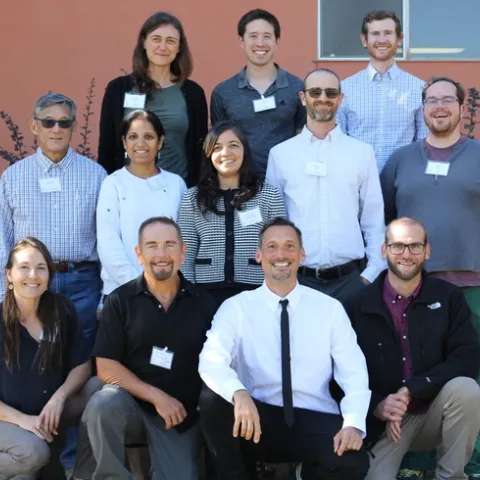
From left to right: (top) Joanna Solins, Eric Middleton, Grant Johnson, (middle) Loren Oki, Aparna Gazula, Johanna del Castillo, Bruno Pitton, Dylan Beal, (bottom) Jessie Godfrey, Don Merhaut, Gerry Spinelli, and Chris Shogren. All photos by Saoimanu Sope.
ANR Employee News: Article

Floriculture and Nursery Workgroup members share knowledge in Watsonville

October 29, 2024
By Saoimanu Sope
In mid-October, the University of California Nursery and Floriculture Alliance (UCNFA) hosted their annual California Nursery Conference in Watsonville, an opportunity to share research, discuss challenges impacting nurseries and greenhouses, and network with industry leaders.
View Article
Primary Image
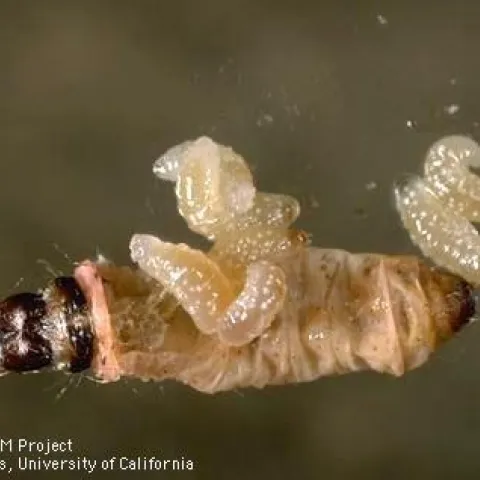
Numerous tiny cream colored larva emerge from a tan caterpillar with a black head.
Pests in the Urban Landscape: Article

Spooky Insect Parasitoids

October 29, 2024
By Lauren Fordyce
Forget the bats, spiders, and black cats. If you want to learn about some truly spooky creatures this Halloween, keep reading! Many people are familiar with insect predators, like lady beetles/ladybugs, that eat other insects.
View Article
Primary Image
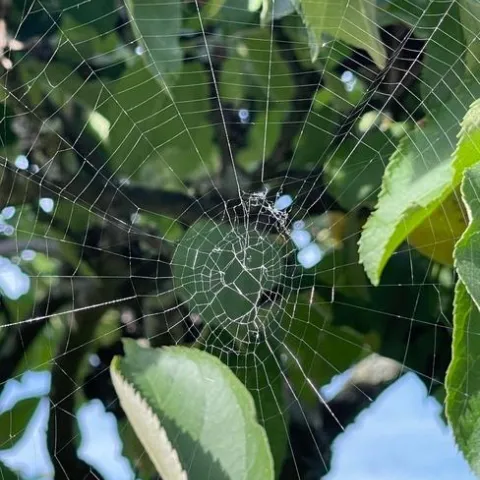
Spiraling spider web hanging from a tree.
The Stanislaus Sprout: Article

Spooktacular Spider Webs!

October 29, 2024
By Anne E Schellman
Halloween is coming! Front yards are sprouting displays of scary witches, ghosts, bats, headstones, and spiders! Spiders usually prefer to hide, however, we often become aware of their presence due to their webs. Spiders who make webs generally do so to catch prey.
View Article
Primary Image
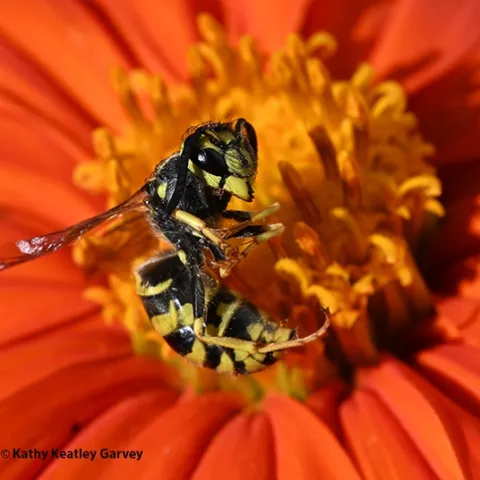
A yellowjacket (expired) placed on a Mexican sunflower, Tithonia rotundifola. (Photo by Kathy Keatley Garvey)
Bug Squad: Article

The Beautiful Coloration of a Western Yellowjacket

October 28, 2024
By Kathy Keatley Garvey
It's been several months since I've seen a Western yellowjacket, Vespula pensylvanica. But there it was, dead. It had drowned in an outdoor water bowl. Easy pickings, you say? Easy photography! It's a beautiful insect with its black and yellow coloration.
View Article
Primary Image
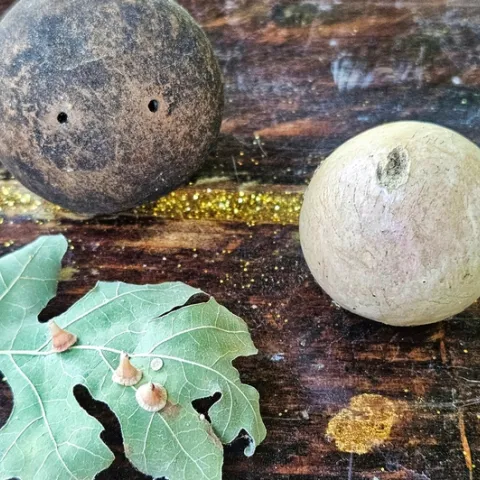
Ball and cone shaped galls - A. Alvarado
Under the Solano Sun: Article

Oak Galls!

October 28, 2024
Our neighboring tree is a wonderful old Oak that majestically towers over our homes, seeming to watch over us and keep us immersed in delightful nature.
View Article