A Natural Solution for California's Herds: African Catfish Peptides

California's cattle producers and agricultural communities are all too familiar with the rising challenge of antibiotic resistance, making common bacterial infections harder to treat in livestock. But imagine a future where we could tackle these infections with a natural, powerful alternative. Our research points to just that: antimicrobial peptides (AMPs) found in African catfish.

We're really excited about these peptides because African catfish thrive in pathogen-rich freshwater, naturally producing these robust immune compounds in their skin mucus as a defense. This natural origin makes them highly appealing alternatives to synthetic drugs.

Predicted Safety and Potent Action

One of the most compelling aspects of these AMPs is their predicted safety for mammals. Our initial computer analyses suggest that various catfish AMPs are generally recognized as safe (GRAS). We predict they'll be absorbed in the human intestine without causing liver, brain, or heart toxicity. Furthermore, lab tests on a promising peptide, NACAP-II, confirmed it was non-hemolytic, meaning it didn't damage rabbit red blood cells—a strong indicator of its potential safety for mammalian cells.

Beyond safety, these peptides demonstrate effectiveness against problematic bacteria. One study revealed NACAP-II's strong activity against Extended-Spectrum Beta-Lactamase (ESBL)-producing Escherichia coli—a critical concern for both animal and human health due to its resistance to many common antibiotics. Another peptide, ACAP-IV, also showed antibacterial activity against E. coli and Staphylococcus aureus. We believe these AMPs work by directly disrupting bacterial cell membranes, a mechanism that makes it harder for bacteria to develop resistance compared to how they resist traditional antibiotics.
Primary Image
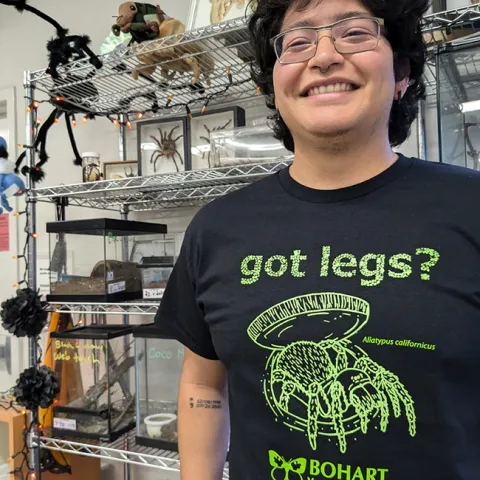
UC Davis student Jakob Lopez, a Bohart Museum employee, wearing the glow-in-the-dark trapdoor spider T-shirt. The cost is $22 plus tax for adult sizes and $18 plus tax for youth. Proceeds support the museum.

Got Legs? Eight of Them?

October 30, 2024
By Kathy Keatley Garvey
Got legs? Got eight legs? No, not eight unless you're a spider (arachnid). If you're human, you can seek out the Bohart Museum of Entomology's "Got Legs?" T-shirt of a trapdoor spider.
View Article
Primary Image
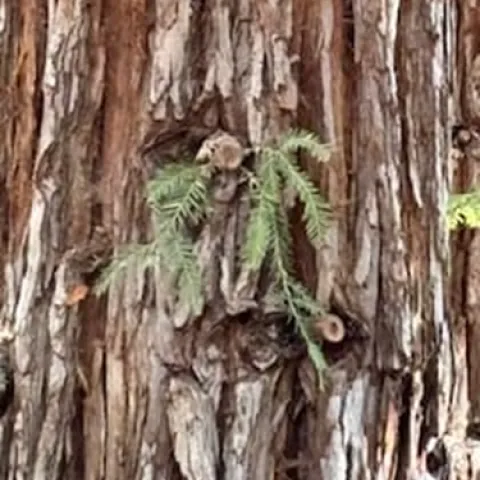
Redwood. photo by Sandra Mohsan
The Savvy Sage: Article

Father and Mother Forest-by Sandra Mohsan

October 30, 2024
By Jennifer M Baumbach
On October 9th I had the most exhilarating experience, went on a Ramble Tour, Davis California, soaked up some forest bathing. Guess who greeted me as I stepped into the redwoods.
View Article
Under the Solano Sun: Article

From the Help Desk

October 30, 2024
This is in response to a query that came into the Help Desk from an HOA member a few weeks ago. She was calling to find out if the Master Gardeners could/would recommend a landscape contractor to redo the landscape of her Association.
View Article
ANR Employee News: Article

Make your voice heard. Complete the ANR@Work Survey

October 30, 2024
By Pamela S Kan-Rice
You should have received an emailed invitation on Oct. 23 to take the ANR@Work Survey 2024. If you have not already completed and submitted the survey, you still have time. The deadline has been extended to Dec. 6. All ANR colleagues are encouraged to complete and submit it.
View Article
Primary Image
Keith Taylor talks about community broadband.
ANR Employee News: Article

Taylor discusses advancing community broadband in webinar

October 30, 2024
By Pamela S Kan-Rice
Advancing Community Broadband, a webinar by Keith Taylor, UC Cooperative Extension community economic development specialist at UC Davis, is available at https://www.youtube.com/watch?app=desktop&v=3M76vXSAk9c.
View Article