A Natural Solution for California's Herds: African Catfish Peptides

California's cattle producers and agricultural communities are all too familiar with the rising challenge of antibiotic resistance, making common bacterial infections harder to treat in livestock. But imagine a future where we could tackle these infections with a natural, powerful alternative. Our research points to just that: antimicrobial peptides (AMPs) found in African catfish.

We're really excited about these peptides because African catfish thrive in pathogen-rich freshwater, naturally producing these robust immune compounds in their skin mucus as a defense. This natural origin makes them highly appealing alternatives to synthetic drugs.

Predicted Safety and Potent Action

One of the most compelling aspects of these AMPs is their predicted safety for mammals. Our initial computer analyses suggest that various catfish AMPs are generally recognized as safe (GRAS). We predict they'll be absorbed in the human intestine without causing liver, brain, or heart toxicity. Furthermore, lab tests on a promising peptide, NACAP-II, confirmed it was non-hemolytic, meaning it didn't damage rabbit red blood cells—a strong indicator of its potential safety for mammalian cells.

Beyond safety, these peptides demonstrate effectiveness against problematic bacteria. One study revealed NACAP-II's strong activity against Extended-Spectrum Beta-Lactamase (ESBL)-producing Escherichia coli—a critical concern for both animal and human health due to its resistance to many common antibiotics. Another peptide, ACAP-IV, also showed antibacterial activity against E. coli and Staphylococcus aureus. We believe these AMPs work by directly disrupting bacterial cell membranes, a mechanism that makes it harder for bacteria to develop resistance compared to how they resist traditional antibiotics.
Primary Image
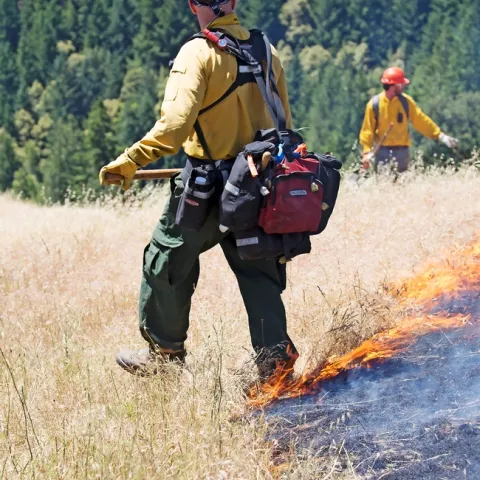
Firefighter stands near burning grasses of a prescribed fire
Green Blog: Article

Reforms needed to expand prescribed burns

November 15, 2023
By Michael Hsu
Prescribed fire, which mimics natural fire regimes, can help improve forest health and reduce the likelihood of catastrophic wildfire. But this management tool is underused in the fire-prone U.S. West and Baja California, Mexico, due to several barriers.
View Article
Primary Image
MG logo-v2014 fulltype
Under the Solano Sun: Article

How Did You Know That?!

November 15, 2023
At the Farmers' Market in Vallejo, I hear the title of this blog a lot. Usually that comment is followed by Wow, you know a lot! The simple answer to that is no, I don't know a lot; but I usually can find out where to look for the answers to plant question puzzles.
View Article
Cooperative Extension San Joaquin County: Article

November 2023 Field Notes Newsletter

November 14, 2023
In this issue: Tree & Vine Fall Weed Management Planting Tomatoes Following Walnut Orchard Recycling Tomato Following Walnut: Considerations & Tips 2023 Delta Rice Recap Protecting Californias Vineyards From Summer Bunch Rot in a Wet Year Compost Application to Alfalfa Virtual Fencing Becoming a Rea...
View Article
Primary Image
French evolutionary biologist Etienne GJ Danchin
Entomology & Nematology News: Article

Etienne Danchin's Nematode Seminar: 'Parasitic Success in the Absence of Sex'

November 14, 2023
By Kathy Keatley Garvey
French evolutionary biologist Etienne GJ Danchin will present the UC Davis Department of Entomology and Nematology's next seminar on nematodes. Danchin will speak on "Parasitic Success in the Absence of Sex: What Have We Learned from Nematode Genomes?" at 4:10 p.m., Monday, Nov.
View Article
Colusa County: Article

Become a Master Gardener!

November 14, 2023
The UC Master Gardener Program of Colusa County invite you to join our team. UC Master Gardeners are trained by experts in their field. You don't need to be an expert in gardening or have a nice garden. We will teach you where to find the information.
View Article
Nutrition Policy Institute News: Article

The School of Public Health at the University of California, Berkeley launches new dietetic internship program for master’s in public health nutrition students

November 14, 2023
By Danielle Lee
The School of Public Health at the University of California, Berkeley was recently granted candidacy for accreditation by the Accreditation Council for Education in Nutrition and Dietetics for their new Berkeley Public Health Dietetic Internship program.
View Article