A Natural Solution for California's Herds: African Catfish Peptides

California's cattle producers and agricultural communities are all too familiar with the rising challenge of antibiotic resistance, making common bacterial infections harder to treat in livestock. But imagine a future where we could tackle these infections with a natural, powerful alternative. Our research points to just that: antimicrobial peptides (AMPs) found in African catfish.

We're really excited about these peptides because African catfish thrive in pathogen-rich freshwater, naturally producing these robust immune compounds in their skin mucus as a defense. This natural origin makes them highly appealing alternatives to synthetic drugs.

Predicted Safety and Potent Action

One of the most compelling aspects of these AMPs is their predicted safety for mammals. Our initial computer analyses suggest that various catfish AMPs are generally recognized as safe (GRAS). We predict they'll be absorbed in the human intestine without causing liver, brain, or heart toxicity. Furthermore, lab tests on a promising peptide, NACAP-II, confirmed it was non-hemolytic, meaning it didn't damage rabbit red blood cells—a strong indicator of its potential safety for mammalian cells.

Beyond safety, these peptides demonstrate effectiveness against problematic bacteria. One study revealed NACAP-II's strong activity against Extended-Spectrum Beta-Lactamase (ESBL)-producing Escherichia coli—a critical concern for both animal and human health due to its resistance to many common antibiotics. Another peptide, ACAP-IV, also showed antibacterial activity against E. coli and Staphylococcus aureus. We believe these AMPs work by directly disrupting bacterial cell membranes, a mechanism that makes it harder for bacteria to develop resistance compared to how they resist traditional antibiotics.

Kern County: Article

Kern County Almond Rootstock Field Day

June 19, 2023
Kern County Almond Rootstock Field Day Tuesday, June 20, 2023 - 7:45am to 10:00am See attached for agenda, registration link, and map Please note: The registration site has been affected by a UC ANR system outage this week, and we apologize for any inconvenience.
View Article
Primary Image
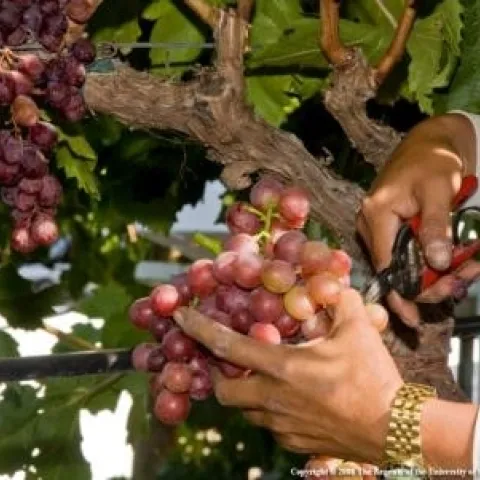
Photo of person harvesting grapes

Grapes for the Home Garden

June 19, 2023
By Help Desk Team
According to someone who knows such things, grapes are one of the most widely cultivated fruit crops in the world. Worldwide, there are over 10,000 different varieties, and whether one's interest is ambience, erosion control, raisins, jelly, table munchies, or wine, grapes nicely fit the bill.
View Article
Primary Image
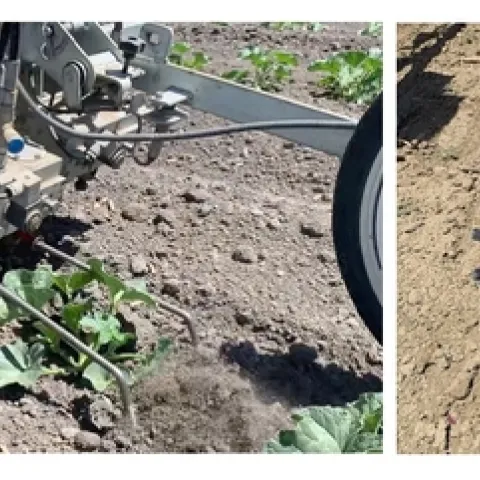
Figure 1. Robovator (left) and finger weeder (right) at WSREC and Dos Palos, CA, 2022.
UC Weed Science (weed control, management, ecology, and minutia): Article

Weed control and cost benefit analysis of automated cultivators and herbicides to control within-row weeds in melons

June 18, 2023
By Clifford S Stoddard
In melons, as with many annual crops, weeds that emerge in the plant row are the most difficult and costly to remove. There are only a few registered herbicides for CA melon production, and efficacy can be marginal depending on weed species and method of incorporation.
View Article
Primary Image
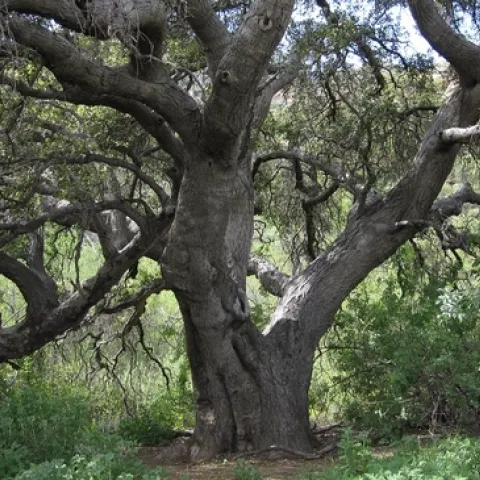
oak-194286 1280 Pixbay

Napa Valley’s Magnificent Old Native Oaks

June 17, 2023
Recently I visited the home of a fellow Master Gardener who lives near Napa's eastern hills off Third Avenue. She has majestic native oaks in front of her home, and I asked her how old those trees might be. She said maybe 200 years.
View Article
Primary Image
Meet Dr. Charlotte Herbert Alberts and her family: her husband George, and their children, Griffin, 3, and Marcy, 7 months.
Bug Squad: Article

The Day that Mama Became a Wizard

June 16, 2023
By Kathy Keatley Garvey
Mortarboards are really "wizard hats." Just ask Griffin Alberts, 3, whose mother, Charlotte Herbert Alberts, received her doctorate in entomology June 15 at the UC Davis Graduate Studies Program commencement ceremony in the University Credit Union Center.
View Article