A Natural Solution for California's Herds: African Catfish Peptides

California's cattle producers and agricultural communities are all too familiar with the rising challenge of antibiotic resistance, making common bacterial infections harder to treat in livestock. But imagine a future where we could tackle these infections with a natural, powerful alternative. Our research points to just that: antimicrobial peptides (AMPs) found in African catfish.

We're really excited about these peptides because African catfish thrive in pathogen-rich freshwater, naturally producing these robust immune compounds in their skin mucus as a defense. This natural origin makes them highly appealing alternatives to synthetic drugs.

Predicted Safety and Potent Action

One of the most compelling aspects of these AMPs is their predicted safety for mammals. Our initial computer analyses suggest that various catfish AMPs are generally recognized as safe (GRAS). We predict they'll be absorbed in the human intestine without causing liver, brain, or heart toxicity. Furthermore, lab tests on a promising peptide, NACAP-II, confirmed it was non-hemolytic, meaning it didn't damage rabbit red blood cells—a strong indicator of its potential safety for mammalian cells.

Beyond safety, these peptides demonstrate effectiveness against problematic bacteria. One study revealed NACAP-II's strong activity against Extended-Spectrum Beta-Lactamase (ESBL)-producing Escherichia coli—a critical concern for both animal and human health due to its resistance to many common antibiotics. Another peptide, ACAP-IV, also showed antibacterial activity against E. coli and Staphylococcus aureus. We believe these AMPs work by directly disrupting bacterial cell membranes, a mechanism that makes it harder for bacteria to develop resistance compared to how they resist traditional antibiotics.
Primary Image
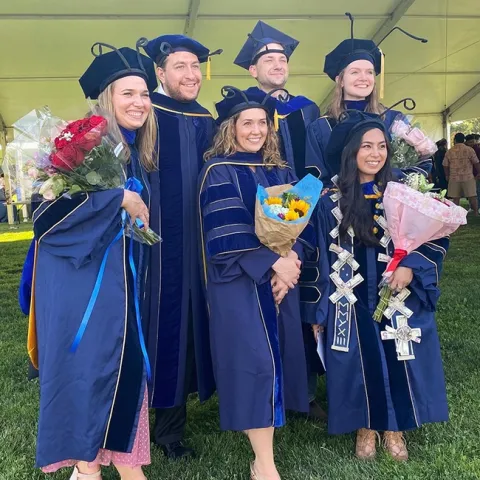
Roof top garden at the SPUR Center, Denver.
ANR Adventures: Article

WEDA and WAAESD meet in Denver

April 4, 2023
By Deanne Meyer
Ever wonder how Extension and Ag Experiment Directors share information? The Western Extension Directors Association (WEDA) and Western Association of Agricultural Experiment Station Directors (WAAESD) met in Denver last week.
View Article
Primary Image
After several months of rain induced torpor, the Central Coast is jolted into action.
Strawberries and Caneberries: Article

Things are Hotting Up on the Central Coast

April 4, 2023
By Mark P Bolda
And BOOM the berry season is underway just a few days after the last rain. Most of the flood water has receded, and the industry is on the move. I'm getting pulled right along with it and already initiated two trials in the past two days, with plenty more coming.
View Article
Primary Image
Lexie Martin of the Rachel Vannette lab
Entomology & Nematology News: Article

Record: Four Students in Department Win Highly Competitive NSF-GRSP Fellowships

April 4, 2023
By Kathy Keatley Garvey
Three doctoral students and one undergraduate student in the UC Davis Department of Entomology and Nematology are winners of highly competitive fellowships from the National Science Foundation's Graduate Research Fellowship Program (NSF-GRFP) grants, a record high achievement for the department.
View Article
Primary Image
Eucalyptus. photos by Karen Metz
Under the Solano Sun: Article

Camellia Grove

April 4, 2023
The middle of March my husband and I were in Sacramento to see a concert at the Safe Credit Union Center for the Performing Arts. We had arrived just a little early and decided to walk around the block till the venue opened.
View Article
Primary Image
Figure 1. Dose–responses curves of branched broomrape and Egyptian broomrape seed germination in response to doses of three different ammonium products under three exposure durations of 10 minutes, one hour, and 24 hours. A three-parameter logistic model (Eq.1) was fitted to germination data. Lines are fitted values, and solid circles indicate observed germination averaged across two experimental runs with three replicates each (i.e., n =6). Error bars indicate 95% confidence intervals. Model parameter esti
UC Weed Science (weed control, management, ecology, and minutia): Article

Farm machinery sanitation: a way to reduce broomrape seed spread among fields

April 3, 2023
By Brad Hanson
California is the largest producer of processing tomato in the US (Winans et al. 2020). However, the profitability of the tomato industry in California is seriously threatened due to the presence of the parasitic weed branched and Egyptian broomrape (https://ucanr.edu/blogs/blogcore/postdetail.
View Article