A Natural Solution for California's Herds: African Catfish Peptides

California's cattle producers and agricultural communities are all too familiar with the rising challenge of antibiotic resistance, making common bacterial infections harder to treat in livestock. But imagine a future where we could tackle these infections with a natural, powerful alternative. Our research points to just that: antimicrobial peptides (AMPs) found in African catfish.

We're really excited about these peptides because African catfish thrive in pathogen-rich freshwater, naturally producing these robust immune compounds in their skin mucus as a defense. This natural origin makes them highly appealing alternatives to synthetic drugs.

Predicted Safety and Potent Action

One of the most compelling aspects of these AMPs is their predicted safety for mammals. Our initial computer analyses suggest that various catfish AMPs are generally recognized as safe (GRAS). We predict they'll be absorbed in the human intestine without causing liver, brain, or heart toxicity. Furthermore, lab tests on a promising peptide, NACAP-II, confirmed it was non-hemolytic, meaning it didn't damage rabbit red blood cells—a strong indicator of its potential safety for mammalian cells.

Beyond safety, these peptides demonstrate effectiveness against problematic bacteria. One study revealed NACAP-II's strong activity against Extended-Spectrum Beta-Lactamase (ESBL)-producing Escherichia coli—a critical concern for both animal and human health due to its resistance to many common antibiotics. Another peptide, ACAP-IV, also showed antibacterial activity against E. coli and Staphylococcus aureus. We believe these AMPs work by directly disrupting bacterial cell membranes, a mechanism that makes it harder for bacteria to develop resistance compared to how they resist traditional antibiotics.

Primary Image
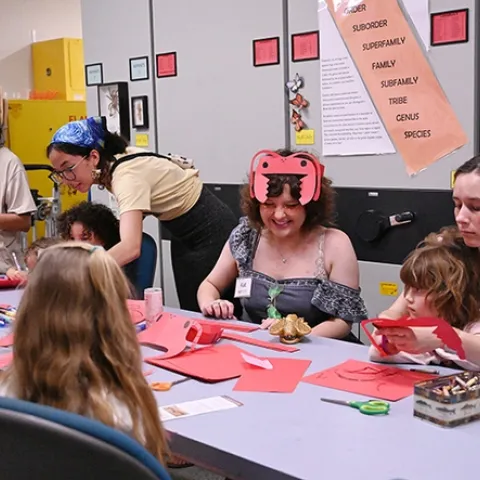
The Jason Bond lab held a mythbuster session at the Bohart Museum of Entomology. From left are doctoral candidates Xavier Zahnle and Emma Jochim who led the discussion, and moderator Iris Quayle, a first-year PhD student. (Photo by Kathy Keatley Garvey)
Entomology & Nematology News: Article

'Mythbusters' Dispel Spider Myths at Bohart Museum Open House

March 20, 2023
By Kathy Keatley Garvey
"I just got bit by a brown recluse spider in California." No, you didn't--unless you recently returned from a state where they are established or handled one shipped from that area. There are no established populations of Loxoceles reclusa in California.
View Article
Primary Image
George Rendell
ANR Employee News: Article

In memoriam: George Rendell

March 20, 2023
By Pamela S Kan-Rice
George D. Rendell, UC Cooperative Extension 4-H youth advisor emeritus and long-time director of UCCE in Los Angeles County, died on Feb. 19 in Long Beach. He was 90.
View Article
Primary Image
Youth with rabbit. In front of a judge.
Youth Development Insights: Article

To Help Youth Cultivate a Growth Mindset, Focus on Exhibition, Not Competition

March 20, 2023
By Steven Worker
A key component for youth on their thriving pathway is cultivating a growth mindset. Youth with a strong growth mindset view challenges as opportunities to learn and grow. When young people possess a growth mindset, they are more resilient, and better able to adapt to challenging situations.
View Article
UC Cooperative Extension - Madera County: Article

Crop Manage workshop April 19

March 20, 2023
A crop manage and hands-on pressure chamber training workshop will be held at the Kearney Agricultural Research and Extension Center on April 19. Please see the attached PDF for the agenda and the sign-up link.
View Article
Primary Image
Photo 2
Spill the Beans: Article

Shovels

March 20, 2023
by Bob Niklewicz PT MG. What is the difference between a shovel and a spade? To save time I will tell you. Photo 1. The tool on the left side is a SHOVEL, with the SPADE on the right. These are two different tools.
View Article
Primary Image
Adriana Bankston UC DC Government Relations, Karmjot Randhawa County Director Fresno, Madera, Kings and Tulare, Kamal Lyon UC DC Government Relations, Ismael Herrara CARET representative, CA Forward, Dean David Ackerly UCB, Erika Ninoyu, Sr Legislative Assistant Barbara Lee's staff, Gina Banks Daly Government Relations, UCB, Mike Mellano CARET representative, Cut Flower Grower, Missy Gable Master Gardener Program Director, Deanne Meyer, Brandon Minto Government Relations, UCD.
ANR Adventures: Article

UC ANR Advocates in Washington

March 19, 2023
By Deanne Meyer
It's only been a week since our CARET group met in DC. THANK YOU to our CARET representatives Ismael Herrera and Mike Mellano for making time to travel to DC, walk up and down the halls of the House of Representatives as well as the Senate to meet with staff of our representatives and senators.
View Article
Primary Image
Fungicide treatment phytophthora
Topics in Subtropics: Article

Excessive Rain Promotes Phytophthora Diseases in Citrus Orchards

March 19, 2023
By Hung K Doan
California is in a severe winter storm making conditions ideal for diseases caused by Oomycetes, also called water molds, especially Phytophthora species, which thrive in waterlogged soils and areas with standing water for periods of time.
View Article
Primary Image
Field of ripe processing tomatoes (UC IPM)
UC Weed Science (weed control, management, ecology, and minutia): Article

Weed management critical needs for processing tomatoes in CA

March 19, 2023
By Gale Perez
The Pest Management Strategic Plan for Processing Tomatoes in California (see attachment) was published in May 2021 and encompasses a wealth of information on pest issues and farming practices for processing tomatoes in California.
View Article