A Natural Solution for California's Herds: African Catfish Peptides

California's cattle producers and agricultural communities are all too familiar with the rising challenge of antibiotic resistance, making common bacterial infections harder to treat in livestock. But imagine a future where we could tackle these infections with a natural, powerful alternative. Our research points to just that: antimicrobial peptides (AMPs) found in African catfish.

We're really excited about these peptides because African catfish thrive in pathogen-rich freshwater, naturally producing these robust immune compounds in their skin mucus as a defense. This natural origin makes them highly appealing alternatives to synthetic drugs.

Predicted Safety and Potent Action

One of the most compelling aspects of these AMPs is their predicted safety for mammals. Our initial computer analyses suggest that various catfish AMPs are generally recognized as safe (GRAS). We predict they'll be absorbed in the human intestine without causing liver, brain, or heart toxicity. Furthermore, lab tests on a promising peptide, NACAP-II, confirmed it was non-hemolytic, meaning it didn't damage rabbit red blood cells—a strong indicator of its potential safety for mammalian cells.

Beyond safety, these peptides demonstrate effectiveness against problematic bacteria. One study revealed NACAP-II's strong activity against Extended-Spectrum Beta-Lactamase (ESBL)-producing Escherichia coli—a critical concern for both animal and human health due to its resistance to many common antibiotics. Another peptide, ACAP-IV, also showed antibacterial activity against E. coli and Staphylococcus aureus. We believe these AMPs work by directly disrupting bacterial cell membranes, a mechanism that makes it harder for bacteria to develop resistance compared to how they resist traditional antibiotics.

Primary Image
2023 Weed Day and Weed Science School announcement

ANNOUNCEMENT :: UC Weed Science 2023 events

May 27, 2023
By Gale Perez
Have you registered for... Weed Day 2023 link :: https://wric.ucdavis.edu/events/weed_day_2023.html Weed Science School 2023 link :: https://wric.ucdavis.edu/events/weed_science_school_2023.
View Article
Primary Image
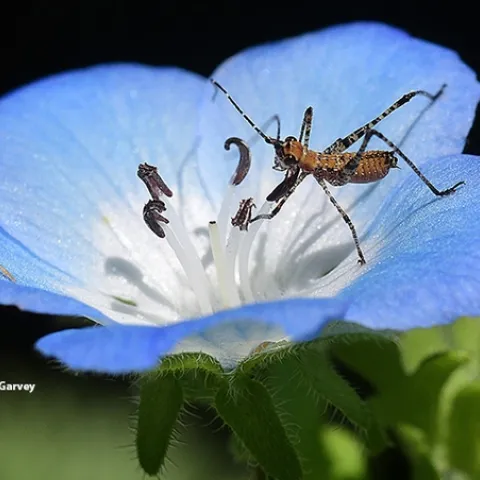
A katydid nymph nestled in a baby blue eyes blossom, Nemophila menziesii, in Vacaville, Calif. (Photo by Kathy Keatley Garvey)
Bug Squad: Article

Katydid: She Did, She Didn't, and Then She Did

May 26, 2023
By Kathy Keatley Garvey
In the blink of an eye... There it was, nestled inside a baby blue eyes blossom, Nemophila menziesii, which is a spring-blooming plant native to California, Oregon and Baja California. "It?" A katydid nymph, a wingless critter with long black-and-white banded antennae.
View Article
Thrips/TSWV Fresno: Article

2023 Second Report (May 26)

May 26, 2023
By Neil McRoberts
General Situation After the wet winter and extended cool spring, the annual summer weather pattern finally seems to have established itself. Temperatures for the next 10 days will see daily maximum values in the mid to high 80'sF, reaching the mid 90's by the first few days of June.
View Article
Thrips/TSWV Merced: Article

2023 Second Report (May 26)

May 26, 2023
By Neil McRoberts
General Situation After the wet winter and extended cool spring, the annual summer weather pattern finally seems to have established itself. Temperatures for the next 10 days will see daily maximum values in the low 80's F, reaching the low 90's by the first few days of June.
View Article
Thrips/TSWV Stanislaus county: Article

2023 Second Report (May 26)

May 26, 2023
By Neil McRoberts
General Situation After the wet winter and extended cool spring, the annual summer weather pattern finally seems to have established itself. Temperatures for the next 10 days will see daily maximum values in the mid 70's to mid 80's F, reaching 90F by the first few days of June.
View Article
Thrips/TSWV Eastern San Joaquin Co.: Article

2023 Second Report (May 26)

May 26, 2023
By Neil McRoberts
General Situation After the wet winter and extended cool spring, the annual summer weather pattern finally seems to have established itself. Temperatures for the next 10 days will see daily maximum values in the mid 70's to 80F, reaching the mid 80's by the first few days of June.
View Article
Thrips/TSWV Western San Joaquin Co.: Article

2023 Second Report (May 26)

May 26, 2023
By Neil McRoberts
General Situation After the wet winter and extended cool spring, the annual summer weather pattern finally seems to have established itself. Temperatures for the next 10 days will see daily maximum values in the mid 70's to 80F, reaching the mid 80's by the first few days of June.
View Article
Thrips/TSWV status in Yolo & Colusa: Article

2023 Second Report (May 26)

May 26, 2023
By Neil McRoberts
General Situation After the wet winter and extended cool spring, the annual summer weather pattern finally seems to have established itself. Temperatures for the next 10 days will see daily maximum values in the mid to high 80's, reaching the low 90's by the first few days of June.
View Article