A Natural Solution for California's Herds: African Catfish Peptides

California's cattle producers and agricultural communities are all too familiar with the rising challenge of antibiotic resistance, making common bacterial infections harder to treat in livestock. But imagine a future where we could tackle these infections with a natural, powerful alternative. Our research points to just that: antimicrobial peptides (AMPs) found in African catfish.

We're really excited about these peptides because African catfish thrive in pathogen-rich freshwater, naturally producing these robust immune compounds in their skin mucus as a defense. This natural origin makes them highly appealing alternatives to synthetic drugs.

Predicted Safety and Potent Action

One of the most compelling aspects of these AMPs is their predicted safety for mammals. Our initial computer analyses suggest that various catfish AMPs are generally recognized as safe (GRAS). We predict they'll be absorbed in the human intestine without causing liver, brain, or heart toxicity. Furthermore, lab tests on a promising peptide, NACAP-II, confirmed it was non-hemolytic, meaning it didn't damage rabbit red blood cells—a strong indicator of its potential safety for mammalian cells.

Beyond safety, these peptides demonstrate effectiveness against problematic bacteria. One study revealed NACAP-II's strong activity against Extended-Spectrum Beta-Lactamase (ESBL)-producing Escherichia coli—a critical concern for both animal and human health due to its resistance to many common antibiotics. Another peptide, ACAP-IV, also showed antibacterial activity against E. coli and Staphylococcus aureus. We believe these AMPs work by directly disrupting bacterial cell membranes, a mechanism that makes it harder for bacteria to develop resistance compared to how they resist traditional antibiotics.

Primary Image
This photo is of a camouflaged very difficult to see Corydalis hemidicentra growing in SW China.

Tricky Plants That You May Never See!

February 3, 2023
By Janet S Hartin
What do Fritillaria devlavayi plants and chameleons have in common? Think evolution and ensuring their survival for years to come. If you thought about their ability to camouflage themselves, you're right! Plants have a will to live similar to humans and other animals.
View Article
Primary Image
Sticky-monkeyflower. Brent McGhie
The Real Dirt: Article

Planting for Pollinators

February 3, 2023
Winter is a great time to plant a native pollinator garden. Pollinators are the buzzing, flying creatures responsible for the formation of many of the fruits and vegetables that we humans love to eat.
View Article
Primary Image
The newly launched Crowdfunding site for the UC Davis Biodiversity Museum Day looked like this early today.
Bug Squad: Article

UC Davis Biodiversity Museum Day Officials Launch Crowdfunding Site

February 2, 2023
By Kathy Keatley Garvey
If you'd like to support the 12th annual UC Davis Biodiversity Museum Day, set Saturday, Feb. 18 on the UC Davis campus, you can do so in memory of a loved one--or to honor a friend or family member--by accessing the newly launched crowdfunding site.
View Article
UC Master Gardener Program Statewide Blog: Article

Give Your Garden Some Love! February Gardening Tips

February 2, 2023
By Skylar Peters
Valentine's Day is just around the corner, and what better way to celebrate than to show your garden a little love? February means it is time to start planning and preparing your spring and summer garden.
View Article
Contra Costa County Cooperative Extension: Article

51st Quad-County Walnut Institute

February 2, 2023
University of California Cooperative Extension 51st Quad-County Walnut Institute February 28, 2023 * 7:30 AM - 12:00 PM Robert J. Cabral Agricultural Center, Evelyn Costa Assembly Room 2 2101 E. Earhart Ave.
View Article
Primary Image
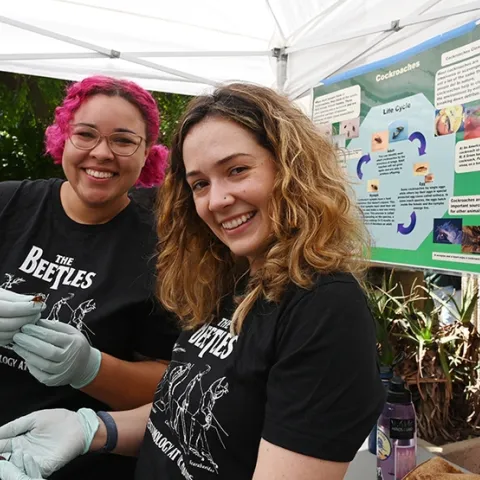
The UC Davis Biodiversity Museum Day will showcase 11 museums or collections. (Photos by Kathy Keatley Garvey)

UC Davis Biodiversity Museum Day: Crowdfunding Underway

February 2, 2023
By Kathy Keatley Garvey
Crowdfunding is underway for the 12th annual UC Davis Biodiversity Museum Day, a major all-volunteer project hailed as a "Super Science Day." The event, set Saturday, Feb. 18, will showcase 11 museums or collections on campus. It's free and family friendly.
View Article
Primary Image
Not through Feb 20, 2023 SNAP can be used for hot foods in select counties including San Luis Obispo and Santa Barbara
Healthy Youth, Families, and Communities: Article

Severe winter storms, power outages, and CalFresh Food

February 2, 2023
By Shannon Klisch
It has been several weeks since we experienced flooding and power outages in San Luis Obispo and Santa Barbara counties but that doesn't mean that everything is back to normal. Many people experienced power outages and damage from flooding.
View Article
Primary Image
Mummy nuts remaining on the trees may serve as a reservoir of navel orangeworm
Nut, Olive and Prune Programmatic News: Article

How late is too late for winter NOW sanitation?

February 2, 2023
By Elizabeth J Fichtner
The removal of nuts remaining on almond trees from the prior year's crop is an important winter sanitation practice for the management of navel orangeworm (NOW), Amyelois transitella.
View Article